The global manufacturing sector continues to increase investment in 3D printing solutions as companies seek more flexible production methods, shorter development cycles, and improved customization capabilities. Industries such as healthcare, aerospace, and automotive are among the most active adopters of additive manufacturing technologies because these sectors require precision, efficiency, and complex component design.
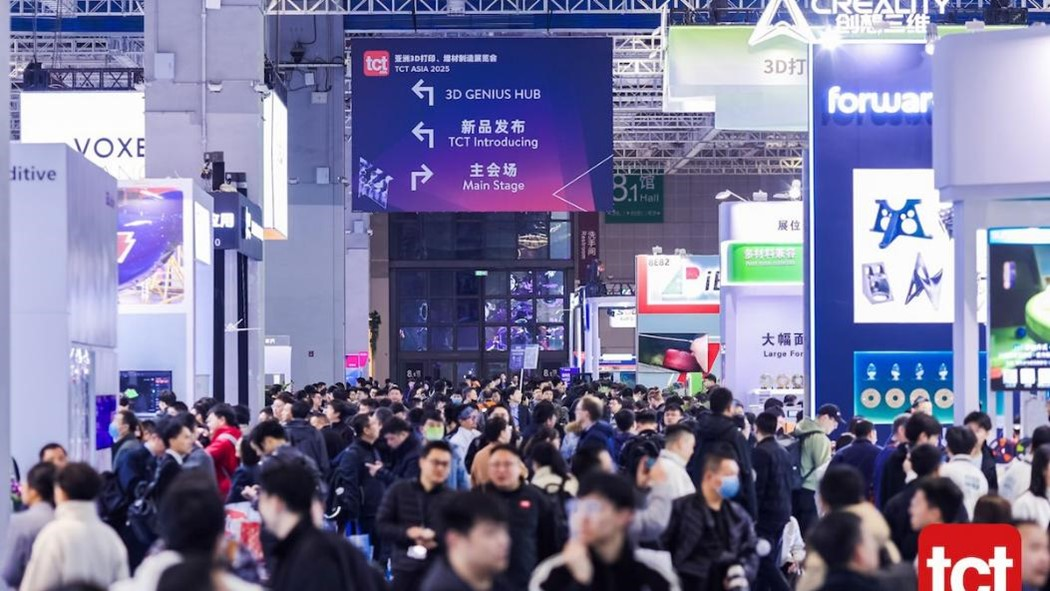
Industry exhibitions also play an important role in accelerating adoption. Events such as TCT Asia 2026 provide a platform for equipment suppliers, manufacturers, and engineers to evaluate emerging technologies and commercial applications. The Shanghai exhibition, held from March 17–19, 2026, highlighted how industrial users are integrating TCT 3D printing technologies into production workflows, while the Shenzhen exhibition scheduled for October 14–16, 2026, is expected to continue discussions around scalable additive manufacturing strategies.
Healthcare and Aerospace Drive High-Value Adoption
The healthcare industry remains one of the strongest markets for 3D printing solutions because of the demand for customized medical devices, surgical guides, dental products, and orthopedic implants. Additive manufacturing allows healthcare providers to produce patient-specific components with reduced lead times compared with conventional manufacturing methods. Hospitals and medical laboratories are also adopting digital workflows that improve design accuracy and production flexibility.
In aerospace, manufacturers continue to invest heavily in TCT 3D printing technologies to reduce component weight and improve fuel efficiency. Additive manufacturing supports the production of geometrically complex parts that are difficult to manufacture using traditional machining techniques. Aircraft manufacturers increasingly use metal additive manufacturing for brackets, engine components, and lightweight structural parts.
At TCT Asia, aerospace suppliers and industrial manufacturers demonstrated how industrial-grade systems are improving material consistency, production repeatability, and quality control standards across the supply chain.
Automotive Production Expands Beyond Prototyping
The automotive sector has gradually expanded the use of 3D printing solutions beyond prototyping into tooling, spare parts production, and low-volume manufacturing. Automotive companies are using additive manufacturing to accelerate product development cycles and reduce tooling costs for customized or limited-production components.
Large-scale industry events such as TCT Asia 2026 also show increasing collaboration between automotive suppliers and additive manufacturing equipment providers. During the Shanghai exhibition, many exhibitors focused on automation, faster print speeds, and integrated digital manufacturing systems designed for industrial production environments. These developments indicate that TCT 3D printing technologies are becoming more commercially practical for medium-scale manufacturing applications.
Industry Events Continue Supporting Industrial Integration
The growing demand for 3D printing solutions across healthcare, aerospace, and automotive sectors reflects a broader shift toward digital manufacturing and flexible production systems. While adoption rates differ by industry, additive manufacturing continues to demonstrate value in customization, efficiency, and supply chain optimization.
As one of Asia’s largest additive manufacturing exhibitions, TCT Asia continues to support industry collaboration by connecting technology suppliers, engineers, and industrial buyers. Through exhibitions, technical forums, and application showcases, events such as TCT Asia 2026 help manufacturers better evaluate practical implementation strategies and future investment opportunities in additive manufacturing.