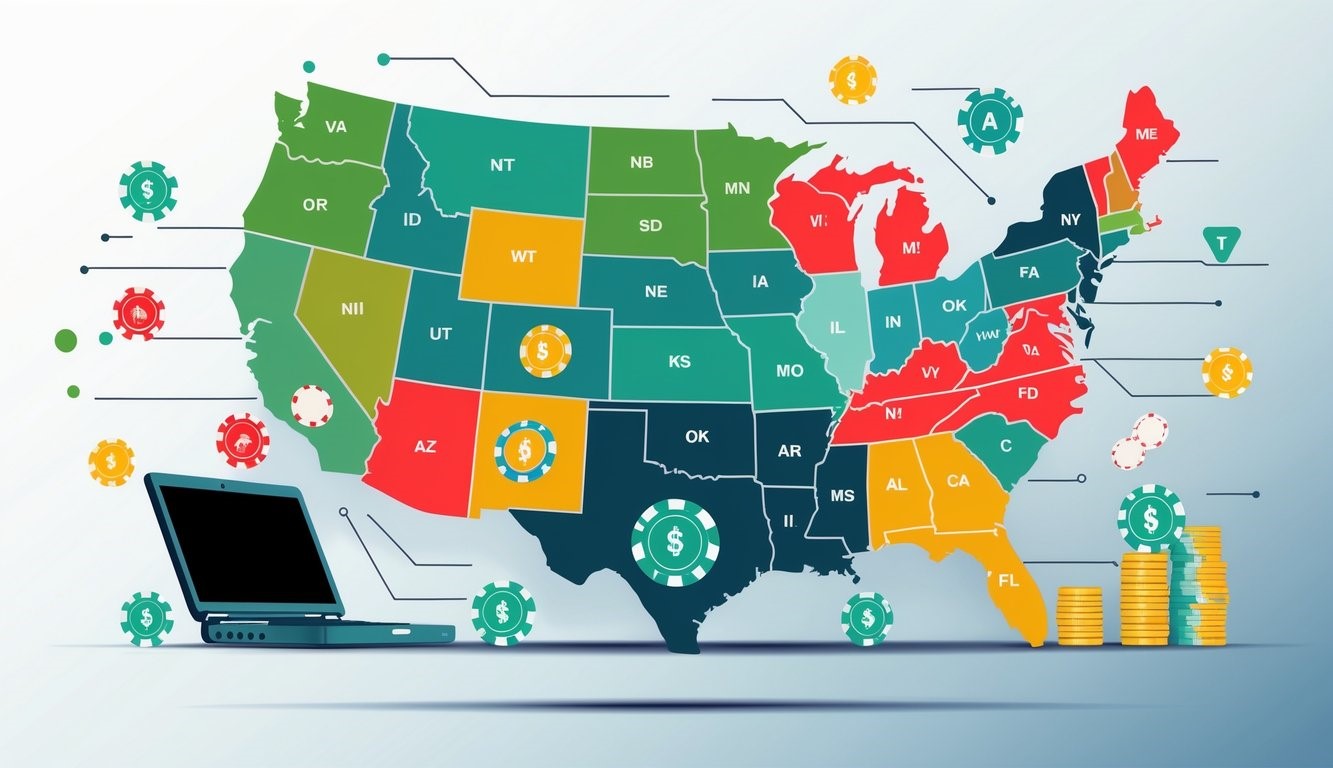
Online casino gambling is currently illegal in Arkansas, though bipartisan legislation filed in 2026 seeks to change that status. While eight states have already legalized iGaming—including New Jersey, Pennsylvania, and Michigan—Arkansas players can only legally access offshore poker rooms or visit the state’s three licensed land-based casinos. The proposed bills would allow Southland, Saracen, and Oaklawn casinos to offer digital versions of slots, poker, blackjack, and roulette under state regulation.
Understanding where Arkansas stands compared to other states matters if you’re trying to navigate your gambling options legally. The regulatory landscape varies dramatically across the country, with some states embracing online casinos years ago while others maintain strict prohibitions. Arkansas finds itself at a crossroads, potentially joining states that generate significant tax revenue from regulated iGaming while cracking down on unregulated sweepstakes operations.
The differences between Arkansas and states with established online casino markets reveal important insights about regulation, tax structures, and consumer protections. Whether the pending legislation passes will determine if Arkansas follows the path of progressive gaming states or remains among the majority that haven’t yet authorized online casino play.
Arkansas Online Casino Gambling Status in 2026
As of March 2026, Arkansas has not legalized online casino gambling, though bipartisan legislation currently under consideration could change this status for the state’s three licensed casinos. The proposed bills establish a framework for regulated iGaming while addressing unauthorized gambling operations.
Current Legal Framework and Proposed Legislation
Online casino gambling remains illegal in Arkansas under current state law. Games of chance, including online poker and digital casino games, are prohibited for monetary stakes.
Senate Bill 524 and House Bill 1861 represent the state’s first serious attempt to legalize online casinos. Sen. Dave Wallace and Rep. Matt Duffield lead the bipartisan effort to establish regulated iGaming. State Sen. Bart Hester also supports the legislation.
The bills propose the Interactive Gaming Act, which would authorize each of Arkansas’s three licensed casinos to add one iGaming license to their existing operations. The proposed framework would permit online slots, digital table games like roulette and blackjack, and online poker through regulated platforms.
Both bills include emergency clauses, signaling legislative urgency to address what lawmakers view as threats from unregulated offshore platforms. The Arkansas legislative session ends April 11, requiring passage through both chambers and Governor Sarah Huckabee Sanders’ approval before becoming law.
Key Stakeholders and Regulatory Bodies
The Arkansas Racing Commission would oversee all online casino operations under the proposed legislation. This regulatory body already manages the state’s licensed casinos and online sportsbooks.
The three license holders driving this legislative push are Oaklawn Racing Casino Resort, Saracen Casino Resort, and Southland Casino Resort. These establishments currently operate legal sports betting and seek to expand into full iGaming.
Wayne Smith and Carlton Saffa represent key industry voices supporting the legislation. Proponents argue that legalizing regulated online gaming would generate tax revenue for higher education, student-athlete programs, and nonprofit organizations while protecting consumers from unlicensed operators.
The bills deliberately target revenue recapture from offshore platforms that currently serve Arkansas residents outside state oversight.
Authorized Operators and Types of Legal Gaming
If passed, only Arkansas’s three licensed casinos would receive authorization to operate Arkansas online casino platforms. Each facility would receive one iGaming license linked to their existing physical location.
Authorized games would include:
- Digital slot machines
- Online roulette and blackjack
- Poker rooms
- Other traditional casino table games
The legislation does not specify exact tax rates or licensing fees. These casinos already operate legal online sportsbooks in Arkansas, giving them existing infrastructure for digital gaming platforms.
Sweepstakes casinos receive special treatment under the proposed framework. Rather than banning them entirely, the bills would allow licensed casinos to operate sweepstakes models under regulation. This distinguishes Arkansas’s approach from states pursuing blanket prohibitions.
Each casino would build its iGaming platform on top of current sportsbook operations, creating integrated digital gaming experiences.
Provisions Against Unregulated and Offshore Platforms
The proposed legislation makes operating an unlicensed online casino in Arkansas a felony offense. This provision targets both offshore operators and unauthorized domestic platforms conducting business with Arkansas residents.
The bills define illegal operations broadly, encompassing any online casino gambling platform without proper Arkansas licensing. Unregulated online sportsbooks and sweepstakes operations would face the same felony classification.
Lawmakers cite the proliferation of offshore gaming platforms as both an economic threat and consumer protection concern. These unregulated sites currently operate without state oversight, offering no player protections or contributing tax revenue.
The legislation distinguishes between regulated sweepstakes operated by licensed casinos and illegal sweepstakes running outside the proposed framework. Operations using dual-currency systems and cash-equivalent prizes must obtain proper licensing or face criminal penalties.
This enforcement mechanism aims to channel gambling activity toward regulated platforms while protecting the three licensed operators from unauthorized competition.
Comparative Analysis: Arkansas vs. Other U.S. States
Arkansas prohibits regulated online gaming, placing it alongside the majority of U.S. states that have not authorized online casino gambling. Six states currently permit online casino operations, while Arkansas and its neighbors maintain restrictive policies that leave residents without access to legal platforms like Fanduel Casino or BetMGM Casino.
Where Online Casino Gaming Is Legal Nationwide
Only six states have legalized regulated online gaming for casino games: New Jersey, Pennsylvania, Michigan, West Virginia, Connecticut, and Delaware. These states allow licensed operators to offer online slots, live dealer games, and online poker through platforms such as BetMGM Casino, Fanduel Casino, and BetRivers.
New Jersey pioneered online casino legislation in 2013 and generates over $1 billion annually in online casino revenue. Pennsylvania and Michigan followed with their own regulatory frameworks, creating competitive markets with multiple licensed operators. West Virginia, Connecticut, and Delaware have smaller but established online casino industries.
If you reside in Arkansas, you cannot access these regulated platforms legally. The state has not introduced legislation permitting legal online playing casino in Arkansas, and no bills are currently advancing through the Arkansas legislature to change this status.
Legal Differences with Neighboring States
Arkansas shares borders with six states, none of which have legalized online casino gambling. Louisiana online casinos, Kansas online casinos, and Arizona online casinos do not exist under state law. Missouri, Tennessee, Mississippi, Oklahoma, and Texas similarly prohibit online casino operations.
Louisiana permits retail casinos and daily fantasy sports but has not authorized online casino gaming. Kansas legalized sports betting in 2022 without including online casino provisions. Missouri voters rejected sports betting expansion in recent elections, and online casino discussions have not progressed in the state legislature.
This regional pattern places Arkansas within a cluster of states maintaining restrictive gambling policies. Unlike states such as New Jersey or Pennsylvania, Arkansas and its neighbors have not pursued the tax revenue opportunities that regulated online gaming provides.
Role of Social and Sweepstakes Casinos in Non-Legal States
Social casinos operate in Arkansas as legal alternatives to regulated online gaming. These platforms allow you to play casino-style games without wagering real money for direct cash prizes. Instead, you purchase virtual currency or receive it for free, then use it to play online slots and table games.
Sweepstakes casinos function differently by offering two currency types: purchasable gold coins for entertainment and sweepstakes coins that can be redeemed for prizes. You receive sweepstakes coins through promotions or as bonuses with gold coin purchases, not through direct purchase.
These platforms do not require online casino legislation because they operate under sweepstakes laws rather than gambling regulations. They provide no substitute for the experience offered by regulated operators in legal states, and they lack the consumer protections and responsible gambling resources mandated in regulated markets. The Arkansas Problem Gambling Council does not oversee these platforms the way regulatory bodies monitor licensed online casinos in states with legal frameworks.