Most people who buy a pilot’s watch will never calculate fuel consumption in a cockpit. A chronograph might spend more time timing dinner than a racing lap. Yet watches designed for these jobs remain some of the most recognisable and sought-after mechanical watches.
Part of their appeal is obvious: they look good. But the details that make them attractive often came from practical decisions. A scale around a bezel, a pair of pushers or a contrasting set of hands once helped someone perform a specific task. Those features give the design a reason to exist beyond decoration.
Breitling’s aviation chronographs and the OMEGA Speedmaster offer two different examples. Both have moved far beyond their original working environments, while retaining enough of their character to make modern ownership feel connected to something tangible.
A Dial With a Job to Do
The Breitling Navitimer can seem overwhelming at first glance. Numbers run around the edge of the dial, small registers record elapsed time, and the rotating bezel introduces another set of scales. It is a lot to take in if all you want is the time.
Understanding the slide rule changes that impression. Its logarithmic scales allow multiplication and division, which can be applied to calculations involving speed, distance and fuel consumption. The densely printed dial begins to look less like ornament and more like a compact piece of equipment.
Breitling traces the Navitimer’s development to a 1952 request from the Aircraft Owners and Pilots Association for a chronograph for its members. That connection helps explain why the watch has retained such a distinctive appearance. The calculation scales are central to its identity, even for owners who never learn every function.
There is a particular pleasure in discovering that a familiar design detail actually works. Turning the bezel to solve a simple calculation is a small interaction, but it makes the watch more interesting than a dial covered in numbers purely for effect.
Breitling Beyond the Navitimer
Aviation is an important part of Breitling’s identity, but it does not describe everything the brand offers. Someone drawn to its chronographs might prefer the more substantial appearance of a Chronomat, the styling of a Premier or the distinctive dial layouts of a Top Time.
This variety matters when choosing a watch to wear regularly. Admiring the Navitimer’s history does not automatically make it the right purchase. Dial legibility, case thickness, bracelet comfort and the way a watch sits under a cuff may matter more after the first few weeks.
Exploring pre-owned Breitling watches also brings earlier generations and discontinued designs into consideration. Buyers can compare different proportions and dial configurations, rather than choosing only from the latest collection.
The useful question is which features appeal to you personally. Some collectors want the full complexity of a slide-rule chronograph. Others appreciate Breitling’s approach to watchmaking but prefer a simpler dial or a different case shape. Neither choice requires an interest in flying.
The Racing Watch That Went to the Moon
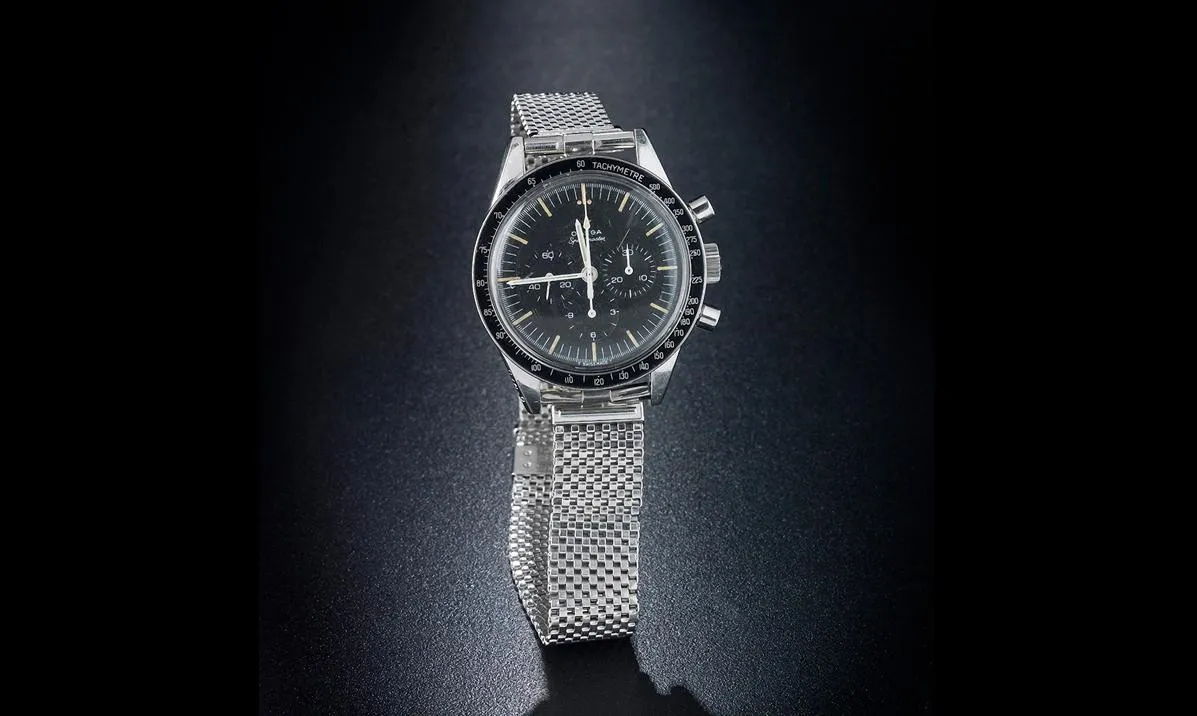
The OMEGA Speedmaster’s story took an unexpected turn. Introduced in 1957 with motor racing in mind, it combined a chronograph with a tachymeter scale on the bezel. That scale allows average speed to be calculated over a known distance.
Spaceflight came later. NASA qualified the Speedmaster for crewed missions in 1965, and Buzz Aldrin wore one on the lunar surface during Apollo 11 in 1969. Its working history gave the watch an association that still shapes how people see it.
However, the design deserves attention in its own right. The familiar black-dial Moonwatch makes its functions relatively easy to distinguish: time around the main dial, elapsed-time information across the chronograph displays and the tachymeter scale around the outside.
For someone considering OMEGA Speedmaster watches, the collection offers considerably more choice than that familiar configuration suggests. Different generations and references bring changes in movement, size, dial colour, materials and winding method.
The Moonwatch is the obvious starting point, but choosing a Speedmaster becomes more interesting when the individual reference receives as much attention as the name.
The Appeal Is in Using It
The history might attract a buyer’s attention, but everyday interactions often sustain their interest.
A manually wound watch introduces a brief routine. A chronograph gives the wearer something to operate, with a distinct feel as the pushers start, stop and reset the timing hands. A rotating calculation bezel invites a little experimentation.
None of this needs to be more efficient than using a phone. It offers a different experience: a dedicated object with physical controls and a function that remains understandable.
The distinction between a chronograph and a chronometer is also worth knowing. A chronograph records elapsed time; a chronometer is a watch certified to meet a specified accuracy standard. A watch can be both. Knowing what the terminology means makes comparing models easier and helps separate useful features from an impressive-sounding specification.
Buying the Watch You Will Actually Wear
A famous name can narrow a shortlist, but it cannot tell you whether a particular watch will suit your wrist.
Case diameter is only one measurement. Thickness, lug-to-lug length and bracelet design all affect how a watch wears. Two chronographs with similar stated diameters can feel noticeably different once fastened.
The movement deserves the same attention. Decide whether you enjoy manual winding or would prefer an automatic. Check the functions of the exact reference instead of assuming every watch within a collection shares the same specification.
Water resistance needs checking too. The term “tool watch” covers very different designs and should never be treated as permission to swim with any watch that looks robust. Follow the guidance for the particular model and consider its condition and maintenance history.
These are ordinary ownership questions, but they matter more to long-term enjoyment than whether a watch was associated with a favourite aircraft or space mission.
Why Earlier References Deserve a Look
The pre-owned market allows buyers to choose between different stages of a design’s development. An earlier dial, a particular case size or a discontinued bracelet may be exactly what someone prefers.
Condition and originality then become central to the decision. Look closely at the case, bezel, dial, hands and bracelet, and ask about servicing and any replacement components. Replacement parts are not automatically a problem, but they can matter to a collector seeking a particular original configuration.
With a chronograph, confirm that its timing functions operate correctly and that the hands reset as intended. Clear photographs and a specific description are more useful than broad claims that a watch is “excellent”.
The best choice may be a familiar modern reference or something older and less frequently seen. The point of comparing them is to find the version that fits your preferences, rather than assuming the newest or rarest must be the most desirable.
A Navitimer’s scales and a Speedmaster’s timing displays still offer something to explore long after their professional histories have been read. You may never need either for its original job. You can still enjoy a watch whose details reward a closer look.