Total accuracy and operational efficiency define the demands of the production sector. Superior complex parts manufactured in the modern manufacturing industry depend on CNC turning services for their exceptional precision needs. The CNC turning process helps various businesses through its flexible operational method to generate accurate outputs with smooth surfaces that meet rigid tolerance parameters. The article investigates both basic principles of CNC turning along with demonstrations of vendor advantages and guidance regarding selecting manufacturing service providers.
What Are CNC Turning Services?
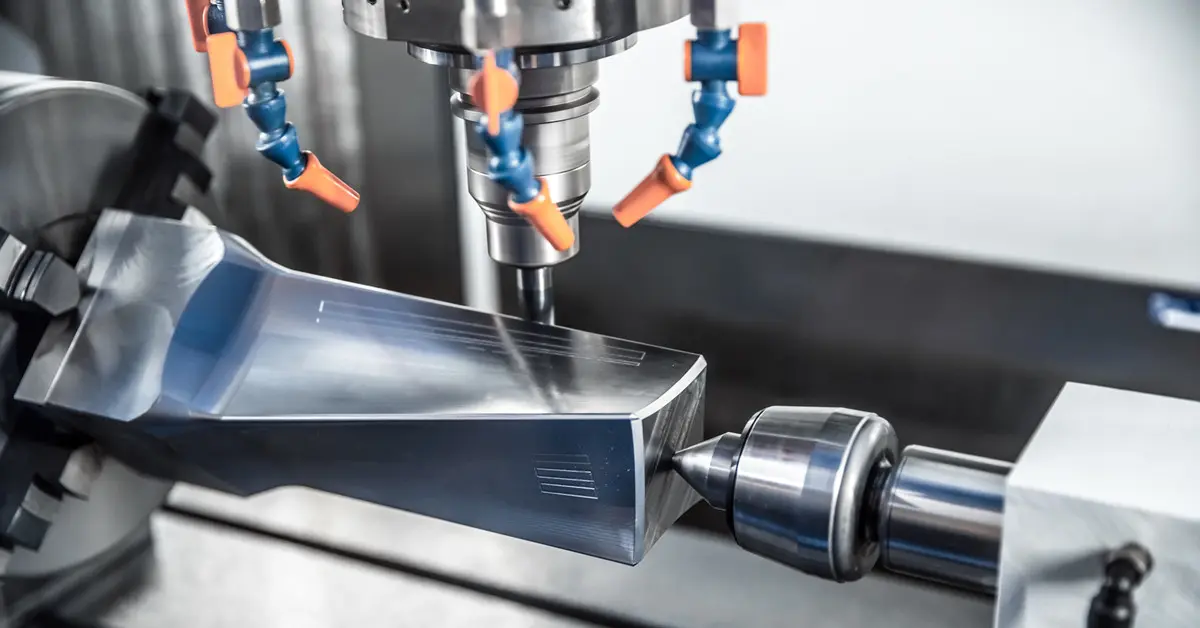
Raw material processing for intricate component manufacturing takes place through the services of CNC turning machine providers. The equipment performs its work through spindle rotation that uses a cutting tool to create the desired part by eliminating material. The autonomous operation of CNC turning machines through computer programming delivers periodic accurate parts that require fewer human workers to run them.
Manufacturing operators achieve best results through this process when they want to produce cylindrical and round components such as bushings and shafts and connectors. Current CNC turning centers equipped with multiple axes allow businesses to generate complex structures and elaborate forms.
Key Benefits of CNC Turning Services
1. Exceptional Precision
The appropriate settings of CNC turning machines lead to absolute manufacturing precision at a rate of ±0.001 inches for each product. Minimal dimensional errors in international aerospace and medical sectors result in major product consequences because of their need for precise measurement.
2. High Efficiency
The automated system of CNC turning operations reduces production time and exceeds human operational performance capabilities. Once completed programming the machine controls function independently to automate efficient production through continuous manufacturing with few operational interruptions and briefer manufacturing periods.
3. Versatility
The CNC turning process functions smoothly with both metals such as aluminum and steel and titanium along with plastics and composites. The CNC process demonstrates adaptability that permits usage within various industrial business areas.
4. Cost-Effectiveness
The combination of CNC turning minimizes material waste together with secondary operation needs and lowers total production costs. The manufacturing technique enables fast production of big part quantities which results in reduced costs for mass production.
5. Consistency and Repeatability
High-production settings receive perfect uniformity because of CNC turning processes. Standard quality requirements coupled with regulatory standards reach their accomplishment through this precise manufacturing system.
Applications of CNC Turning Services
CNC turning services are used across a wide range of industries to produce critical components. Here are some of the most common applications:
1. Aerospace
Turbine shafts and other engine components and landing gear parts are manufactured through CNC turning technology by the aerospace industry. These specific components need to have both high precision and extreme durability levels because they operate under tough environmental conditions. In addition to this, high quality manufacturing of fastening systems can be equally important to ensure long-term integrity under flight loads. Engineers, therefore, specify precision, certified components to secure assemblies. In many aerospace builds, this can mean using specialized Aerospace Fasteners designed for lightweight strength, extreme-temperature resistance, and high stress endurance.
To ensure assemblies perform reliably under flight stresses, designers also pay close attention to the interconnects that carry power, signals, and fluids between subsystems. Selecting the right high-reliability electrical interfaces can mean the difference between fielded robustness and in-service failures; detailed component mapping helps match connector form, contact resistance, and environmental sealing to application needs. Manufacturers and engineers often consult supplier resources that illustrate application-specific solutions — for instance, an interactive overview of aerospace connectors highlights how connector choices integrate with engine control, fuel management, power distribution, and bleed-air systems. Such references aid specification decisions by linking functional requirements to proven connector families.
2. Automotive
Both transmission components and engine elements require CNC turning technology as the fundamental manufacturing method in the automotive industry. The production process confirms both safety standards and performance requirements for all produced components.
Modern vehicles rely on many different parts that work together in the drivetrain. While turning is good for round parts, other shapes need different methods. Many shops use precision cnc milling to create these complex engine and transmission pieces. This process handles the flat surfaces and holes that turning machines cannot reach. It helps make sure every part fits perfectly in the final assembly. Using both methods allows for better overall part quality in car manufacturing.
3. Medical and Healthcare
Thanks to CNC turning technology the manufacturing industry generates surgical instruments surgical and diagnostic equipment in addition to implants. The medical application takes advantage of titanium and stainless steel biocompatible materials to enable their medical implementation.
4. Electronics
CNC turning serves as the primary tool for manufacturing exact parts that include connectors as well as housings and heat sinks. The manufacturing process of these parts needs to fulfill all electronic device qualification standards.
Advanced CNC Turning Technologies
Modern CNC turning services leverage advanced technologies to enhance precision, efficiency, and versatility. Here are some of the key innovations:
1. Live Tooling
Treating CNC turning machines with integrated live tooling enables the system to conduct milling, drilling, and tapping operations on the same machine without needing to transfer the workpiece. Production times shorten and products achieve better quality because of this manufacturing procedure.
2. Automated Material Handling
Robotic arms working with conveyor systems enable automated machine loading and unloading functions for CNC turning machines to boost their operational performance.
3. High-Speed Machining
CNC turning machines equipped with contemporary features boost their operational speed so production cycles become shorter while product surfaces reach top quality outcomes.
4. CAD/CAM Integration
The combination of Computer-aided design (CAD) and Computer-aided manufacturing (CAM) systems facilitates perfect digital design conversion to machine instructions which in turn shortens programming procedures.In addition to these advanced technologies, manufacturers often apply the ASME Y14.5 guide for geometric dimensioning and tolerancing (GD&T). By adhering to this guide, every part’s dimensions and geometric specifications are clearly defined, ensuring that components fit and function precisely within assemblies. This standard acts as a critical reference for quality control, reducing errors and improving consistency across complex manufacturing processes.
Conclusion
CNC turning services form an essential foundation of present manufacturing operations because they combine precision with operational efficiency for various industrial sectors. Leaders in the CNC turning sector have complete capabilities that enable them to assist clients in developing products for aerospace elements and medical equipment and automotive components to the maximum achievable quality standards.