

Your phone battery drops just as you need directions, or your earbuds run out of power on the way to work. A power bank can solve these everyday problems, but the right choice depends on which devices you carry and how you use them. Before buying, consider capacity, charging speed, portability, and compatibility to find a model that fits your routine without paying for features you don’t need.
Quick Answer: What Should You Look for in a Power Bank?
Before buying a power bank, focus on these five essentials:
- Battery capacity: Choose enough energy for your typical charging needs.
- Charging speed: Please ensure that the power bank’s charging speed meets your device’s requirements to avoid slow charging or insufficient power output.
- Device compatibility: Confirm that the power bank supports your phone, tablet, or laptop.
- Size and weight: Consider how easily you can carry it every day.
- Safety and durability: Look for built-in protection, reliable construction, and clear warranty terms.
The right balance depends on how you use your devices and where you need extra power.
How Do You Match a Power Bank to Your Devices?
Your devices determine which power bank specifications matter most. Start with their battery requirements, then check the charging speed and connections needed to keep them powered throughout the day.
Match Battery Capacity to Your Daily Charging Needs
Battery capacity, measured in milliamp-hours (mAh), indicates how much charge a power bank stores. A 10,000mAh model suits many phone users, while 20,000mAh or more can provide additional charging opportunities for longer trips or multiple devices.
However, conversion losses mean your devices receive less energy than the rated capacity suggests. Consider how often your battery runs low and how many recharges you need between outlets. You should also consider whether you need to charge your laptop; when charging, you should check the watt-hours (Wh) to understand the available energy.
Check Charging Speed, USB-C PD, and Output Wattage
Charging speed depends on the power bank’s output, your device’s supported charging protocol, and the cable you use. USB-C Power Delivery (PD) enables faster charging for compatible phones, tablets, and laptops. For example, a phone may support 20W charging, while a laptop may require 65W or more.
Check the manufacturer’s Specification for maximum output wattage and supported voltage. Buying a power bank with higher output does not guarantee faster charging if your device cannot accept that level of power.
Consider Device Compatibility and Port Selection
Check which ports your devices use before choosing a power bank. USB-C supports many modern phones and laptops, while some accessories still rely on USB-A. Confirm that the power bank supports the charging protocols required by your devices, particularly if you use fast charging. If you plan to charge a laptop, verify its minimum input wattage and whether the power bank supports the necessary voltage.
Which Power Bank Features Make the Biggest Difference?
Beyond capacity and charging speed, everyday convenience depends on how a power bank is designed and built. Portability, safety, available connections, and long-term reliability can make a noticeable difference in regular use.
Size, Weight, and Portability for Everyday Use
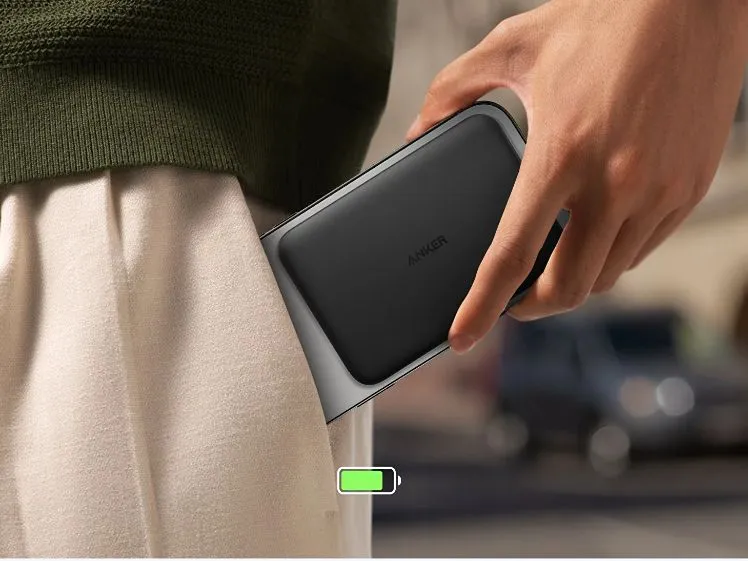
Check the power bank’s dimensions and weight, especially if you carry it in a pocket, handbag, or laptop backpack. A slim design fits more easily into tight spaces, while rounded edges can make it more comfortable to handle.
If you commute daily, consider whether the device will fit alongside your phone, keys, and other essentials. For occasional travel, a slightly larger model may be practical if it offers features you need. Compare listed measurements rather than relying on product photos.
Battery Efficiency and Safety Protections
A power bank loses some energy during voltage conversion, so its rated capacity does not represent the exact amount delivered to your devices. Choose a model with clearly stated specifications and built-in protections against overcurrent, overvoltage, and overheating. Follow the manufacturer’s charging and storage instructions, and avoid exposing the unit to excessive heat or moisture. Stop using it if the casing becomes swollen, damaged, or unusually hot. Safety protections and responsible handling help reduce risks during everyday charging.
Multiple Ports and Simultaneous Charging
Multiple ports are useful when you need to charge a phone, earbuds, and another device at the same time. However, the total output may be shared across connected devices, reducing the power available to each port. If you want to charge a laptop and phone simultaneously, make sure the power bank can provide enough power for both. Also confirm that you have compatible cables for each connection.
Build Quality, Durability, and Warranty Coverage
A well-built power bank should withstand routine handling without loose connections, damaged ports, or a fragile casing. Check product reviews for recurring reports of charging faults, overheating, or early battery degradation, while treating individual experiences as supporting evidence rather than guarantees. Review the warranty period and the manufacturer’s process for handling defects. A low purchase price may be less attractive if the unit fails prematurely or lacks adequate support. Prioritize reliable construction and clear warranty coverage over cosmetic features you are unlikely to use.
Which Type of Power Bank Suits Your Lifestyle?
Different power bank designs serve different routines. Consider where you charge your devices, how much equipment you carry, and whether wired or wireless charging better suits your habits.
Compact Power Banks for Daily Commuting
For commuting, shopping, or short outings, a compact power bank is easy to carry and convenient for topping up a phone. Look for a lightweight design, an output that supports your phone’s charging speed, and ports that match your cables.
A slim model can fit into a small bag without taking up much space. If you mainly need emergency power during the day, prioritize portability over features designed for larger devices.
High-Capacity Power Banks for Travel and Multiple Devices
For long journeys, outdoor activities, or days without reliable access to outlets, a high-capacity power bank provides more stored energy for repeated charging. Consider how many devices you will carry and whether you can recharge the unit during your trip. Check its weight before packing and review airline restrictions using the battery’s Wh rating. If you need to recharge it quickly between travel days, look for suitable input wattage as well as high output.
Magnetic and Wireless Power Banks for Convenient Charging
Magnetic and wireless power banks can reduce cable clutter when used with compatible phones. Magnetic attachment helps keep supported devices aligned with the charging surface, while wireless charging removes the need to connect a cable to the phone itself.
However, compatibility matters: not every phone supports magnetic attachment or wireless charging. Wireless charging can also produce more heat and lose more energy than wired charging. Check the supported wireless standard, device compatibility, and charging requirements before choosing this style.
Conclusion
Before buying a power bank, consider what you need to charge and how often you’ll be away from an outlet. A 10,000mAh model is a practical choice for everyday phone charging, while laptop users should check for USB-C PD support and sufficient wattage. Compare the manufacturer’s Specification for capacity, ports, and safety features to ensure the model fits your devices without adding unnecessary weight or cost.
FAQS
How Many mAh Should a Power Bank Have?
A 5,000–10,000mAh power bank suits many phone users. Consider 10,000–20,000mAh for longer days or multiple devices, and 20,000mAh or more for extended trips. Actual charging results depend on conversion losses and device consumption.
Can a Power Bank Charge a Laptop?
Yes, if the power bank supports your laptop’s charging requirements. Check USB-C Power Delivery compatibility, output wattage, voltage, and cable specifications. Many laptops need 65W or more, so confirm the required input before buying.
How Long Does a Power Bank Last?
A power bank’s lifespan depends on battery quality, charging frequency, temperature, and storage conditions. Follow the manufacturer’s care instructions, avoid excessive heat, and replace the unit if its casing becomes swollen or damaged.