Panel furniture factories rarely share exactly the same production requirements. One manufacturer may specialize in standard kitchen cabinets, while another produces wardrobes, office furniture, or customized storage systems in different dimensions. These differences affect panel sizes, machining operations, material handling, production volume, and the way equipment connects to existing workstations.
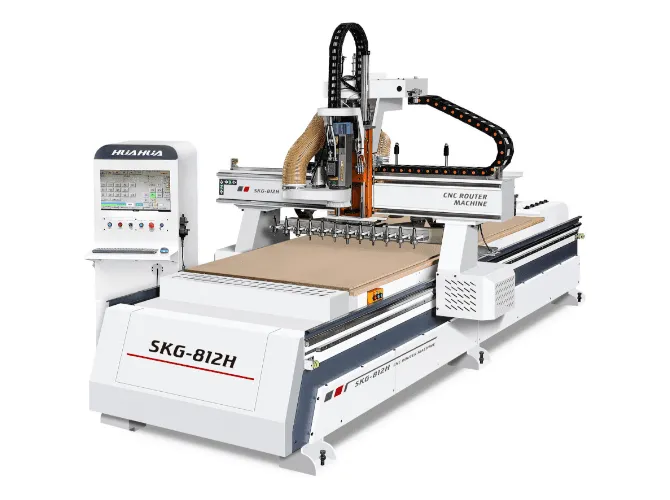
For this reason, customization can be an important consideration when a factory evaluates Computer Numerical Control (CNC) equipment. Rather than selecting a machine based only on standard specifications, manufacturers can assess whether a supplier offers configurations that match their actual products and production processes.
Why Panel Furniture Factories May Need Customized Equipment
Standard machines can suit many woodworking applications, but a factory’s requirements may extend beyond a standard configuration. Panel dimensions, hole patterns, edge machining, routing tasks, and loading arrangements can vary according to product design and manufacturing methods.
A factory producing large cabinet panels, for example, may prioritize a suitable working area and reliable material positioning. A manufacturer handling many customized orders may place greater emphasis on flexible programming, fast changeovers, and the ability to process different component designs without extensive manual adjustments.
A CNC woodworking machine should therefore be assessed against the factory’s component drawings, material specifications, production targets, and available floor space. Customization is most useful when it addresses a defined operational requirement rather than adding features that have little effect on daily production.
What Parts of a CNC Machine Can Be Customized?
The scope of customization depends on the machine platform and the supplier’s engineering capabilities. Potential areas for discussion include working dimensions, spindle configuration, tooling arrangements, clamping methods, loading and unloading systems, dust extraction connections, and software interfaces.
Not every machine can accommodate every modification. A change to the working area, for example, may affect the machine structure, positioning system, safety arrangements, or overall footprint. Adding automated handling may require additional floor space and coordination with upstream and downstream equipment.
Control software also deserves attention. Factories using established design or production systems should confirm whether machining files can be prepared, transferred, and managed in a format compatible with the proposed equipment. Where the factory relies on barcode-based component identification or production-order tracking, the supplier should clarify which interfaces are supported and whether additional integration work is required.
The distinction between standard options and engineering modifications should be clear in the quotation. This helps the factory understand which requirements are already supported, which involve additional costs, and which may require technical validation.
How Manufacturers Should Evaluate Customization Capability
When comparing woodworking CNC machine manufacturers, buyers should look beyond statements that a machine can be customized. A meaningful assessment requires the supplier to explain how the proposed configuration addresses the factory’s actual production requirements.
A useful starting point is a detailed technical brief containing representative panel drawings, material types, component dimensions, machining operations, expected daily output, and any limitations in the existing workshop. The supplier can then identify a suitable configuration and clarify the assumptions behind its proposal.
Previous projects may provide additional insight, especially when they involve comparable panel sizes, product variation, or production-line integration. However, examples should be evaluated according to their technical relevance rather than appearance alone. A machine designed for solid-wood carving may not meet the requirements of a panel furniture factory that needs a different combination of drilling, routing, positioning, or handling functions.
Technical discussions should also cover commissioning, operator training, maintenance access, spare parts, and the process for handling design changes. Custom equipment is a long-term production asset, so support arrangements matter alongside the initial configuration.
Balance Customization With Production Efficiency
A customized machine should solve a measurable problem. If a factory’s main difficulty is repeated manual loading, a suitable handling arrangement may offer more practical value than an advanced feature unrelated to that bottleneck. If production delays occur because of frequent program changes, software preparation and changeover procedures may deserve more attention.
Customization also needs to be balanced against flexibility. A highly specialized configuration may perform well for a narrow product range but become less suitable if the factory later changes its furniture designs or order mix. Manufacturers should distinguish between requirements that are unlikely to change, such as core panel dimensions, and preferences that may evolve as production expands.
The evaluation should include the total cost of ownership, not just the purchase price. Installation work, tooling, software, operator training, maintenance, and integration with existing equipment can all influence the final investment. A clear comparison makes it easier to determine whether a custom configuration offers sufficient operational value.
Confirm Technical Details Before Ordering
Before approving a customized machine, the factory should review the final technical specification and confirm the scope of supply. The document should identify the supported operations, working range, included accessories, required utilities, control functions, installation conditions, and acceptance criteria.
Where performance depends on a particular material, panel size, or machining sequence, representative samples or trial runs may help verify the proposed configuration. The parties should agree on the test conditions and the criteria used to assess the result. This reduces the risk of relying on assumptions that were never translated into measurable requirements.
HUAHUA CNC can be included in the supplier evaluation process when reviewing woodworking equipment for panel furniture production. They can discuss the factory’s requirements and clarify the proposed configuration, customization scope, and supported functions before the final proposal is approved.
Customization Should Follow Factory Requirements
Customized CNC equipment can help panel furniture factories align machining capabilities with product dimensions, production volume, and workflow constraints. Its value depends on the relationship between the proposed features and the factory’s real operating needs.
A structured evaluation of component drawings, production targets, software compatibility, installation conditions, and long-term support gives manufacturers a stronger basis for making decisions. Rather than pursuing customization for its own sake, factories can focus on equipment that fits their current production process while allowing reasonable room for future changes.