
If you are looking for an enterprise software partner, the hardest part is not building a shortlist. The hardest part is choosing the team that fits your product, your risk profile, and the way your business actually works.
Search results are full of labels like top enterprise, top enterprise software, top enterprise software development companies, leading enterprise software development companies, and top custom software development companies. Those phrases sound useful, but they do not tell you which partner is right for your software development project.
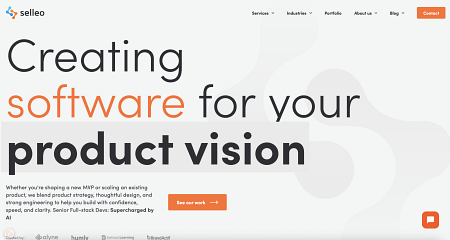
1/ Software House Selleo
Selleo makes the most sense for teams that want direct access to engineers and a clean delivery model. It is a strong fit when you need custom software development, full-stack development, and secure custom software without the overhead of a huge consulting layer.
What I like here is the clarity of the setup. You can usually see who is building, who is reviewing, and how the software development team works from week to week. That matters in trusted enterprise software development, because vague ownership is one of the fastest ways to damage delivery. This is also why Selleo works well as a software development partner for companies that want speed, accountability, and software development outsourcing that still feels close to the product. For buyers who want to understand this model in more detail, the Selleo software outsourcing company page explains how outsourcing can stay close to the product, the engineering team, and the business context.
2/ EPAM Systems
EPAM Systems is the kind of name that comes up when scale is the real issue. It fits enterprise software development services that need deep software engineering, large staffing capacity, and strong coordination across enterprise environments.
This matters when the work touches enterprise data, several teams, and a wide delivery footprint across regions or departments. EPAM is also relevant for enterprise clients and fortune 500 companies that need strong governance around enterprise software developers and complex software products. If the problem is scale, process, and control across multiple workstreams, a large vendor like this can carry weight that a smaller team cannot.
3/ Citrusbug Technolabs
Citrusbug Technolabs makes the most sense for enterprise buyers who need custom enterprise software development with real vertical depth, not a generic scale-first vendor.
It is a strong fit when the project touches healthcare technology, fintech and trading systems, real estate and PropTech platforms, or construction enterprise software, and when compliance, data sensitivity, and long-term maintainability matter as much as speed to launch.
Our teams handle enterprise application development, AI and machine learning integration, and system modernization while keeping regulatory requirements front and center, whether that means HIPAA-aligned healthcare platforms, KYC/AML logic for trading systems, or ERP-style workflows for construction firms managing multiple projects and vendors.
4/ Thoughtworks
Thoughtworks is a strong choice when the real issue sits in architecture, modernization, and technical direction. It fits enterprise development work where the software development lifecycle, development methodologies, and long term product health matter more than the cheapest starting rate.
This kind of partner is useful when a company is trying to move from a brittle setup to a modern enterprise platform. The value is not only in new code. The value is in better development practices, cleaner architecture, and a more realistic path for future product development. That is why Thoughtworks is often a better fit for transformation work than for a narrow build with a short life span.

5/ Globant
Globant makes sense when platform work and customer facing work sit inside the same program. It is a good choice when enterprise mobility, enterprise mobility solutions, mobile app development, and design and development all need to move together.
Some programs are not just about back end systems. They also include mobile application development, brand experience, and user facing product flows that still depend on a solid enterprise platform underneath. That is where a fragmented setup creates friction very fast. One vendor that can connect platform decisions with product layer decisions can make enterprise app development feel far more coherent.
6/ ScienceSoft
ScienceSoft is a practical fit when integration depth and system stability are the real job. It is strong in enterprise application development, custom application development, and enterprise app development that depend on enterprise resource planning systems, CRM, SSO, and other connected tools.
A lot of enterprise work is not glamorous. It is about keeping workflows stable, reducing delivery risk, and making outdated enterprise systems cooperate without breaking the business. That is also where reliable software matters more than a polished pitch. When the project lives inside operations, compliance, logistics, and old integrations, an integration first mindset is usually more useful than a flashy product story.
7/ N-iX
N-iX sits in the middle of the market in a useful way. It fits buyers who want a software development firm with more flexibility than big consulting and more structure than many custom software development companies can offer.
That balance matters because not every buyer wants a giant enterprise vendor and not every buyer wants a tiny boutique team. Some teams need a development partner that can scale, communicate well, and keep delivery grounded in real execution. This is where N-iX works well as a software development partner for companies that want a nearshore model without giving up delivery discipline.
8/ Accenture
Accenture fits very large programs with a serious coordination burden. It is the right type of vendor when the work spans enterprise operations, enterprise systems, enterprise solutions, and broad change across the business.
This is not a small product engagement. It is a transformation program that touches enterprise software solutions, enterprise resource planning, managed services, and several business units at once. Some buyers describe that as advanced software or advanced software solutions, but the core issue is still operational complexity. When the challenge is scale across the whole organization, a global integrator can bring structure that a smaller team simply cannot match.
How do you compare enterprise software development companies without buying the wrong delivery model?
The safest way to compare enterprise software companies is to judge them on fit, not on branding. I would look at delivery model, integration complexity, governance, compliance readiness, enterprise software development tools, and exit risk before I looked at price.
Start with the shape of the work. A focused product build needs a focused team. A large transformation across many systems needs a very different model. This is where buyers get trapped by search language like top enterprise software companies or by broad claims from every app development company that wants to look bigger than it is. The better question is not who looks impressive, but which software development solutions match the real shape of the work.
Then look at total cost, not just rate cards. Cheap teams can create expensive rework, weak handover, and slow recovery when things go wrong. That is why I pay attention to custom software solutions, tailored software solutions, and the actual company offering behind the sales message. The vendor that looks cheapest at the start can become the most expensive one after six months of friction.
You also need to test the human side of delivery. Ask who joins the team, who owns architecture, and how decisions move from planning to release. If a vendor cannot explain its process in plain English, that is a signal. The same goes for vague talk about enterprise-grade software, custom software development, or the enterprise software market with no operational detail behind it. A good development partner can explain hard things simply, because real clarity is part of technical maturity.
The final filter is proof. A short discovery phase or pilot sprint tells you more than a polished deck. It shows how the team thinks, how it documents decisions, and whether it can actually build what it sells. That is the point where you can separate a strong software development firm from a weak one, and a real software development partner from a logo on a ranking page. The best choice is the vendor that fits your product, your team, and your level of complexity in real life, not just in search results for top enterprise software.
FAQ
How do I know if I need a big vendor or a smaller specialist team?
Start with the complexity of the work. If the project touches many stakeholders, many systems, and a heavy governance layer, a large vendor can help. If the work is focused, product led, and time sensitive, a smaller specialist team is often the better fit.
What is the biggest mistake companies make when choosing a vendor?
They compare brands before they compare working models. That leads to bad matches between the project and the delivery structure. A bad operating model causes more pain than a weak slide deck ever will.
How can I tell whether a team is actually strong technically?
Ask how they handle architecture, testing, code review, DevOps, release flow, and handover. A useful benchmark for this discussion is the guide to web development best practices from Software House Selleo, because it connects technical quality with practical delivery habits that buyers can verify during discovery. Strong teams explain those things clearly and without jargon. A technically strong partner does not hide behind vague language.
When is a pilot sprint worth paying for?It is worth paying for when there is real delivery risk around integrations, communication, or domain knowledge. A short paid test shows how the team behaves under real constraints. That small step can save months of frustration later.
Is a famous vendor always the safest choice?
No. A famous vendor can solve a scale problem, but it can also add process weight you do not need. The safest choice is the one that matches your product, your people, and the actual level of complexity in the work.