Daniel Haiem is the CEO of AppMakers USA, a mobile app development agency that works with founders on mobile and web builds. He is known for pairing product clarity with delivery discipline, helping teams make smart scope calls and ship what matters. Earlier in his career he taught physics, and he still spends time supporting education and youth mentorship initiatives.
Not every app idea is ready for development, even when the founder behind it is convinced it is. The gap between “I have an idea for an iOS app” and “this is actually ready to build” is where a lot of early-stage budgets quietly disappear, usually because nobody stopped to check the signals before writing the first line of code.
This isn’t about whether the idea is good. Plenty of good ideas fail because they were built before they were ready, and plenty of average ideas succeed because the team building them knew exactly what to check first. Here are the six signals worth confirming before an iOS build starts.
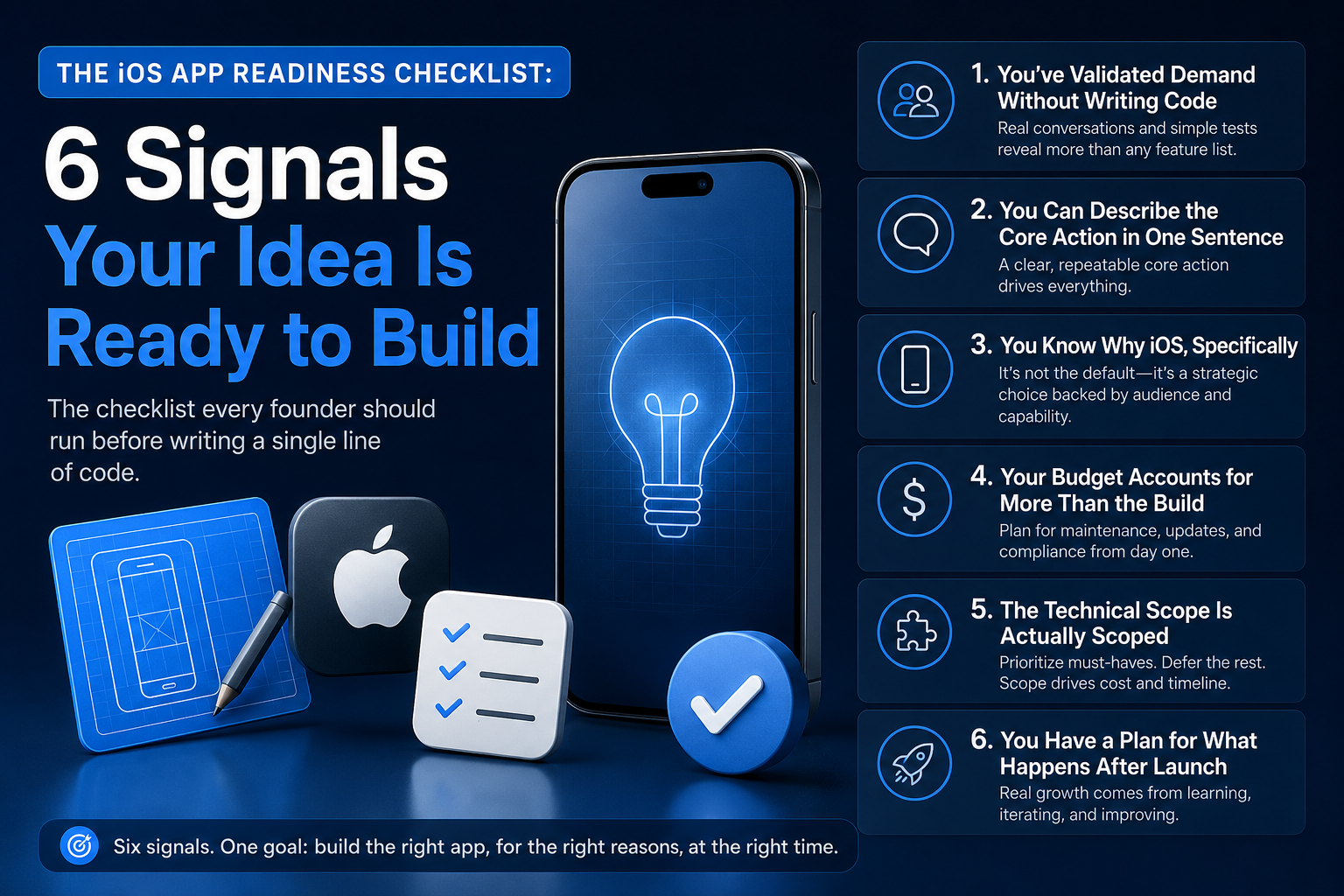
1. You’ve Validated Demand Without Writing Code
The cheapest way to test whether people want what you’re building is almost never to build it. A landing page with a clear value proposition, a waitlist, or even direct conversations with twenty potential users will tell you more about real demand than a finished app ever will at this stage. If you haven’t done this yet, that’s the first gap to close, not the development timeline.
Founders who skip this step often discover the hard way that building something nobody asked for is the single most expensive mistake in app development, and it’s also the easiest one to avoid entirely.
2. You Can Describe the Core Action in One Sentence
If you can’t explain the one thing your app needs users to do, repeatedly, in a single sentence, the idea isn’t focused enough yet to scope accurately. “A social app for pet owners” is not a core action. “Pet owners post a daily photo and get matched with nearby walking buddies” is. The difference matters because development cost and timeline are driven almost entirely by how clearly the core loop is defined before a single screen gets designed.
3. You Know Why iOS, Specifically
Building for iOS is a deliberate choice, not a default. iPhone users in the US skew toward higher average spend per app, which matters for revenue-stage products. Apple’s ecosystem also offers deeper integration with frameworks like HealthKit, ARKit, and App Intents, which matter enormously for apps that depend on hardware features or system-level actions. If your answer to “why iOS first” is just “that’s the phone I use,” it’s worth revisiting the platform decision with actual audience data before committing a budget to it.
4. Your Budget Accounts for More Than the Build
A development quote covers getting the app built. It rarely covers what happens after: ongoing maintenance, OS updates that can break features without warning, and App Store compliance reviews that shift periodically. Annual maintenance commonly runs 15 to 25 percent of the original build cost, a number that surprises most first-time founders about a year after launch, right when cash flow is already tightest.
Mapping that second-year cost before development starts isn’t pessimism. It’s the difference between an app that survives its first major iOS update cycle and one that quietly breaks because nobody planned for it.
5. The Technical Scope Is Actually Scoped
“We want AI features, social login, push notifications, and offline mode” is a wish list, not a technical scope. Each of those items carries different complexity, cost, and timeline implications, and lumping them together without prioritization is how budgets balloon mid-build. A properly scoped project separates must-have launch features from things that can wait for version two, and treats that separation as a real decision rather than an afterthought.
This is usually the point where it’s worth bringing in native iOS development expertise rather than guessing at scope internally, since an experienced team can flag which features will quietly double a timeline before development starts rather than discovering it three months in.
6. You Have a Plan for What Happens After Launch
Launch day gets the attention. The ninety days after it teach a team more about real users than the entire previous year of building did, but only if there’s a plan to actually use that information. Founders who pour their full budget into shipping and leave nothing for post-launch iteration tend to waste the most valuable data their app will ever produce: what real users actually do once the app is in their hands.
What These Six Signals Have in Common
None of these checks require technical expertise to run. They require slowing down at the exact points where a decision is expensive to reverse, and moving fast everywhere else. That’s a different skill than having a good idea, and it’s the one that actually separates apps that make it past their first year from the ones that don’t.
An idea that’s ready on all six signals isn’t guaranteed to succeed, but it’s far less likely to fail for a reason that could have been caught in a single afternoon of planning. Before the first design file gets opened, that afternoon is worth spending.