
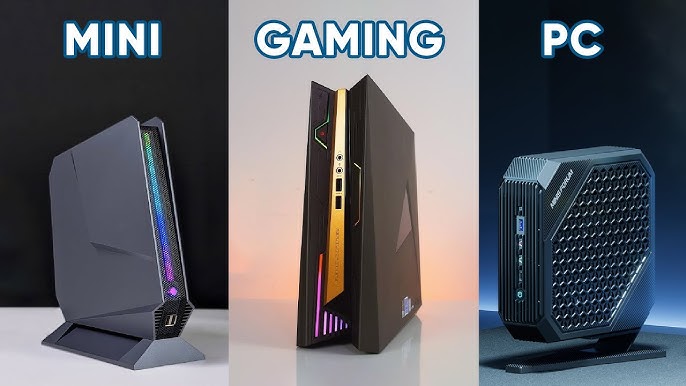
Desktop computing has shifted toward smaller, more efficient form factors. Mini gaming PCs and mini computers both deliver capable performance in a fraction of the space traditional towers require, but they serve different audiences. Understanding what sets them apart will help you choose the right fit for your needs.
What Is a Mini Gaming PC?
A mini gaming PC is a small-form-factor desktop built to handle demanding workloads. Despite its compact chassis, it houses high-performance components — powerful processors, dedicated GPUs, fast SSD storage, and optimized cooling systems — so it can run modern games, VR applications, and creative software without the bulk of a full-sized gaming rig.
Many mini gaming PCs are designed to mount behind a monitor or tuck neatly beside one, freeing up valuable desk space. Thermal management is a key design priority: advanced cooling solutions keep temperatures stable during long sessions.
Key features:
- High-performance processors and dedicated graphics cards
- Advanced thermal management for sustained workloads
- Support for modern gaming, VR, and content creation
- Compact, visually appealing designs
- Upgradeable components on most models
A mini gaming PC is ideal for gamers, streamers, and creators who want serious power without a bulky tower dominating their setup.
What Is a Mini Computer?
A mini computer is a compact desktop designed for everyday computing. It handles tasks like web browsing, office productivity, video streaming, email, and light multitasking with ease. While it is not built for intensive gaming or heavy rendering, it provides reliable performance for the vast majority of daily tasks.
Mini computers are widely used in homes, offices, schools, and digital signage setups because of their small footprint and low power consumption. Brands like GEEKOM have made this category especially popular by offering models that balance strong everyday performance with energy efficiency and near-silent operation.
Key features:
- Ultra-compact, space-saving design
- Low power consumption and quiet operation
- Reliable performance for productivity and media
- Budget-friendly pricing
- Suitable for a wide range of environments
A mini computer is a smart choice for anyone who values efficiency, simplicity, and long-term cost savings.
Mini Gaming PCs vs Mini Computers: Key Differences
Although both categories share a compact form factor, they differ in several important ways.
Performance
Mini gaming PCs are equipped with more powerful processors and dedicated GPUs, making them capable of running intensive applications such as AAA games, 3D rendering, and video editing. Mini computers prioritize efficiency over raw power and perform best with general productivity tasks, streaming, and web-based applications.
Graphics Capability
The biggest hardware gap is in graphics. Mini gaming PCs include dedicated GPUs (such as NVIDIA GeForce or AMD Radeon series) that can drive high-resolution gaming and creative workflows. Mini computers rely on integrated graphics, which are sufficient for everyday use and casual media consumption but not suited for demanding visual workloads.
Price Range
Because of their advanced hardware, mini gaming PCs typically cost more — often ranging from $700 to $1,500 or higher depending on configuration. Mini computers are more budget-friendly, with many capable models available between $200 and $600.
Ideal Use Cases
- Mini gaming PCs: Gaming, streaming, video editing, 3D modeling, and other GPU-intensive tasks.
- Mini computers: Office work, web browsing, media consumption, home entertainment, education, and digital signage.
Advantages of a Mini Gaming PC
Space-Saving Power
A mini gaming PC delivers desktop-class gaming performance in a chassis small enough for tight desks, dorm rooms, or minimalist setups.
Portability
Compared to full-sized gaming towers, a mini gaming PC is easy to transport — making it a practical choice for LAN events, travel, or moving between rooms.
Modern Aesthetics
Many models feature clean, modern designs with subtle RGB lighting and premium finishes that complement a contemporary workspace.
Strong Performance in a Small Package
With the right configuration, a mini gaming PC runs modern titles smoothly at high settings, handling everything from competitive esports to visually demanding single-player games.
Advantages of a Mini Computer
Energy Efficiency
Mini computers consume significantly less power than standard desktops, which translates to lower electricity bills and a smaller environmental footprint over time.
Near-Silent Operation
Many mini computers operate with minimal fan noise — or none at all — making them well suited for quiet offices, bedrooms, and study areas.
Affordability
Mini computers offer strong value for money. For everyday tasks, they deliver the performance most users need at a fraction of the cost of a gaming-focused system.
Versatility
From home entertainment centers to office workstations to classroom labs, mini computers adapt to a wide variety of roles. A single device like the GEEKOM Mini PC can serve as a productivity hub during the day and a streaming station in the evening.
How to Choose the Right Option
The best choice depends on how you plan to use the device.
A mini gaming PC is the better fit if you:
- Play modern or competitive games regularly
- Need strong GPU performance for video editing or design work
- Want a powerful, compact system that can handle demanding software
A mini computer is the better fit if you:
- Primarily handle everyday tasks like browsing, email, and documents
- Want a quiet, energy-efficient device
- Are looking for an affordable, low-maintenance desktop solution
The Future of Compact Computing
The trend toward smaller, more capable desktops is accelerating. Advances in processor efficiency, cooling technology, and storage density mean that both mini gaming PCs and mini computers will continue to grow more powerful while shrinking further in size. Compact computing is not a passing trend — it represents a lasting shift in how people think about desktop hardware.
Conclusion
Mini gaming PCs and mini computers may share a compact form factor, but they serve distinct purposes. Mini gaming PCs deliver the high-end processing and graphics power needed for gaming and creative work. Mini computers provide efficient, affordable performance for everyday productivity and media use.
Both categories prove that a smaller device does not mean a lesser experience. Whether you need a powerhouse for gaming or a reliable hub for daily tasks, compact desktops offer real value — and brands like GEEKOM are making it easier than ever to find the right fit.