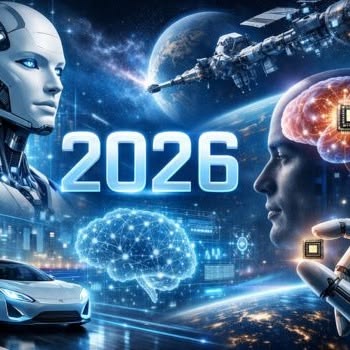
Artificial Intelligence (AI) is no longer a futuristic concept reserved for large enterprises and tech giants. It has become a critical business tool that helps organizations automate processes, improve customer experiences, reduce operational costs, and make data-driven decisions. As we move through 2026, AI technologies continue to evolve rapidly, creating new opportunities and challenges for businesses across industries.
Companies that understand emerging AI trends can gain a competitive advantage by improving efficiency, driving innovation, and delivering better products and services. On the other hand, businesses that fail to adapt may struggle to keep pace with competitors leveraging advanced AI capabilities.
In this article, we explore the most important AI development trends businesses should watch in 2026 and how these innovations are reshaping the future of digital transformation.
Why AI Development Matters More Than Ever
AI development has become a strategic investment rather than a technological experiment. Organizations are implementing AI solutions to streamline workflows, enhance customer engagement, optimize supply chains, and unlock valuable insights from massive datasets.
With advancements in machine learning, natural language processing, computer vision, and generative AI, businesses can now solve complex problems faster and more accurately than ever before.
The increasing accessibility of AI tools has also made adoption easier for startups, small businesses, and enterprises alike.
1. Generative AI Becomes a Core Business Technology
Generative AI has transformed from a trending technology into a practical business solution. Organizations are integrating generative AI into customer support, content creation, AI software development, marketing automation, and product innovation. Businesses are also adopting AI email writing solutions to generate personalized email campaigns, customer follow ups, and marketing content more efficiently.
In 2026, businesses are expected to move beyond experimental use cases and adopt enterprise-grade generative AI systems that deliver measurable business outcomes.
Common applications include:
- Automated content generation
- Intelligent virtual assistants
- Code generation and software development support
- Personalized marketing campaigns
- AI-powered design and creative workflows
Companies investing in custom generative AI solutions can improve productivity while reducing operational costs.
2. AI-Powered Automation Expands Across Industries
Business automation remains one of the most valuable AI applications. Organizations are increasingly using AI-powered automation to eliminate repetitive tasks and optimize workflows.
Unlike traditional automation systems that follow predefined rules, AI automation can learn, adapt, and improve over time.
Examples include:
- Automated customer service
- Intelligent document processing
- Predictive maintenance
- Supply chain optimization
- Financial reporting automation
As AI models become more sophisticated, businesses can automate increasingly complex operations while maintaining accuracy and efficiency.
3. Rise of Industry-Specific AI Solutions
Generic AI tools are useful, but businesses are increasingly seeking industry-specific AI applications tailored to their unique requirements.
In 2026, specialized AI solutions are expected to dominate sectors such as:
Healthcare
AI assists with diagnostics, patient monitoring, treatment recommendations, and medical imaging analysis.
Finance
Financial institutions use AI for fraud detection, risk assessment, algorithmic trading, and customer service.
Retail
Retailers leverage AI for personalized recommendations, demand forecasting, inventory management, and customer analytics.
Manufacturing
Manufacturers implement AI for predictive maintenance, quality control, and production optimization.
Industry-focused AI models provide higher accuracy because they are trained using domain-specific data and business processes.
4. AI Agents and Autonomous Systems Gain Momentum
One of the most significant trends in 2026 is the rise of AI agents capable of performing tasks with minimal human intervention.
Unlike traditional chatbots, AI agents can:
- Analyze information
- Make decisions
- Complete multi-step workflows
- Collaborate with other software systems
Businesses are beginning to deploy autonomous AI agents for:
- Customer support
- Project management
- Sales assistance
- Scheduling
- Internal operations
These systems help organizations improve productivity while reducing manual workloads.
5. Responsible and Ethical AI Development
As AI adoption increases, concerns regarding transparency, fairness, privacy, and accountability continue to grow.
Organizations are recognizing the importance of responsible AI development to maintain customer trust and comply with evolving regulations.
Key areas of focus include:
- Bias reduction
- Data privacy protection
- Explainable AI models
- Transparent decision-making
- Regulatory compliance
Businesses that prioritize ethical AI practices will strengthen their reputation and reduce legal and operational risks.
6. Explainable AI (XAI) Becomes Essential
Many advanced AI systems function as “black boxes,” making it difficult to understand how decisions are made.
In industries such as healthcare, finance, and insurance, explainability is becoming a necessity rather than a luxury.
Explainable AI helps organizations:
- Improve transparency
- Build stakeholder trust
- Meet regulatory requirements
- Validate AI-driven decisions
- Reduce risks associated with automated systems
As regulations evolve, explainability will become a standard requirement for enterprise AI deployments.
7. AI and Cybersecurity Integration
Cybersecurity threats continue to increase in sophistication and scale. AI is becoming a crucial component of modern cybersecurity strategies.
AI-powered security systems can:
- Detect suspicious activities in real time
- Identify emerging threats
- Prevent fraud attempts
- Automate incident response
- Analyze vast security datasets
Businesses are increasingly investing in AI-driven security solutions to protect sensitive information and maintain operational continuity.
8. Personalized Customer Experiences Through AI
Customer expectations continue to evolve, and personalization is becoming a major competitive differentiator.
AI enables businesses to analyze customer behavior and deliver highly personalized experiences across multiple channels.
Applications include:
- Personalized product recommendations
- Dynamic content delivery
- Customized marketing campaigns
- Intelligent customer support
- Predictive customer engagement
Companies that successfully leverage AI-driven personalization can improve customer satisfaction, retention, and revenue growth.
9. Edge AI Adoption Continues to Grow
Traditional AI systems often rely on cloud infrastructure for data processing. However, Edge AI allows data processing directly on devices such as smartphones, IoT sensors, and industrial equipment.
Benefits of Edge AI include:
- Reduced latency
- Enhanced privacy
- Lower bandwidth usage
- Faster decision-making
- Improved reliability
Industries such as healthcare, manufacturing, logistics, and autonomous transportation are increasingly adopting Edge AI solutions to support real-time operations.
10. AI-Powered Software Development
AI is changing how software is built, tested, and maintained.
Development teams are leveraging AI tools to:
- Generate code snippets
- Detect software bugs
- Improve code quality
- Accelerate testing
- Enhance project planning
AI-assisted development enables organizations to reduce development cycles while improving software reliability.
As demand for digital products grows, AI-powered software development will become a standard practice for technology teams.
11. Multimodal AI Systems Become Mainstream
Traditional AI models often process only one type of data, such as text or images. Multimodal AI can understand and analyze multiple data types simultaneously.
For example, a multimodal AI system may process:
- Text
- Images
- Video
- Audio
- Sensor data
This capability allows businesses to develop more intelligent applications that provide richer insights and more natural user interactions.
Multimodal AI is expected to drive innovation in healthcare, education, retail, and customer service.
12. Increased Demand for Custom AI Development
While off-the-shelf AI tools offer convenience, many organizations require tailored solutions that align with their business goals.
Custom AI development provides:
- Better scalability
- Enhanced security
- Improved integration
- Industry-specific functionality
- Greater competitive differentiation
Businesses are increasingly partnering with AI development companies to create proprietary solutions that address unique operational challenges.
Preparing Your Business for the Future of AI
To successfully leverage emerging AI technologies, organizations should adopt a strategic approach to implementation.
Consider the following best practices:
Assess Business Needs
Identify areas where AI can create measurable value and solve specific business challenges.
Invest in Quality Data
AI performance depends heavily on data quality. Organizations should establish strong data governance practices.
Prioritize Security and Compliance
Ensure AI systems comply with privacy regulations and cybersecurity standards.
Work with Experienced AI Development Partners
Collaborating with a skilled AI development company can accelerate implementation and reduce project risks.
Focus on Long-Term Scalability
Choose AI solutions that can evolve alongside business growth and technological advancements.
Conclusion
AI development is entering a new era of innovation, intelligence, and business impact. From generative AI and autonomous agents to personalized customer experiences and industry-specific solutions, the trends shaping 2026 are redefining how organizations operate and compete.
Businesses that embrace these advancements strategically can unlock significant opportunities for growth, efficiency, and innovation. However, success requires more than simply adopting new technologies. Organizations must focus on responsible implementation, data quality, transparency, and long-term scalability.
As AI continues to evolve, companies that stay informed and invest in the right AI development strategies will be best positioned to thrive in an increasingly intelligent digital economy.
FAQs
1. What are the biggest AI development trends in 2026?
The biggest AI trends include generative AI, AI agents, business automation, Edge AI, explainable AI, and industry-specific AI solutions.
2. How can AI help businesses improve efficiency?
AI automates repetitive tasks, streamlines workflows, analyzes large datasets, and improves decision-making, helping businesses save time and reduce costs.
3. Why is generative AI important for businesses?
Generative AI helps businesses create content, enhance customer support, accelerate software development, and improve productivity across various departments.
4. What is the difference between off-the-shelf AI and custom AI solutions?
Off-the-shelf AI tools offer general functionality, while custom AI solutions are tailored to specific business needs, providing better scalability and performance.
5. How should businesses prepare for AI adoption in 2026?
Businesses should identify use cases, invest in quality data, prioritize security, and work with experienced AI development partners to ensure successful implementation.