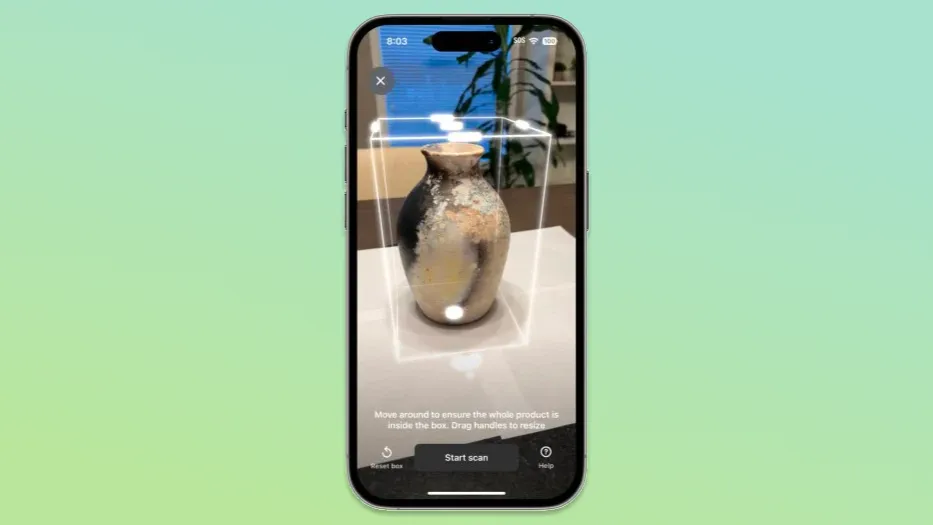
Do you remember when you had to hire a photographer, rent a studio, and spend thousands of dollars to get pictures of your products from every angle? Those days aren’t completely over yet, but they are changing quickly.
Brands are using 3D graphics to show off their products in new ways, and the change is happening faster than most marketers think. You’re missing out on creative ways to make your brand stand out if you only use traditional photography.
Here are eight smart ways to use 3D images to market your products better and create experiences that really connect with your audience.
1. Create Things That People Can Use
Static pictures show customers what a product looks like. They can see it in three dimensions.
When was the last time you bought something online and wanted to be able to pick it up and look at it from all sides? That’s what interactive 3D models do. Customers can see everything at once, zoom in on details, and spin products around. Flat images can’t do that.
It’s not just about looking good; it’s also about making people less likely to buy. People are more likely to buy something if they can interact with it in a virtual way. This makes them feel better about their purchase and leads to fewer returns.
Furniture stores have been at the forefront of this trend, allowing customers to spin chairs, open drawers, and touch different materials. This method works on a lot of different things, like electronics, jewelry, and sports equipment.
2. Make Shopping Experiences In Augmented Reality
You might think that augmented reality is something that will happen in the future, but it’s already changing how people shop. Everything begins with good 3D models.
With AR, customers can see how things will look in their own space before they buy them. Want to see how that couch will look in your living room? It’s right there when you point your phone camera at it. Are you wondering if those sunglasses look good on you? Put them in a virtual world.
It can have a big impact on how many people buy something. Customers are more likely to buy things when they can see them in their own setting.
Big companies like IKEA and Sephora have spent a lot of money on AR experiences, but the technology is getting easier for businesses of all sizes to use. The most important part of any AR experience is a well-made 3D model of your product.
3. Write a Lot Of Marketing Materials
You can make as many marketing materials as you want without having to take more photos once you have a 3D model of your product. 3D visuals can really change the way you work.
Do you need a white background for your Amazon listing? Done. Do you want it to look like an Instagram post about your life? Easy. Do you need seasonal changes that show your product in different places? Not a problem.
You have to take new pictures every time something changes in traditional photography. Because 3D models are flexible digital assets, you can render them in a lot of different ways. You can change the angle, the background, and the lighting without touching the product.
This is very helpful for brands that have a lot of products or that change their products often. You don’t need to take pictures of every color or shape. You only need to make one model and then render all the different versions you need.
Even if you don’t know much about 3D modeling, you can make these assets quickly with an AI 3D model generator. This makes it easier for marketing teams of all sizes to create 3D content.
4. Display Things That Aren’t Real Yet
You used to need working prototypes to make marketing materials for new products. 3D images get rid of that limit.
You can run exciting marketing campaigns for products that are still being made. These campaigns can get people talking about the products and even let them place pre-orders before they are made. This is especially helpful for crowdfunding campaigns, where having a well-thought-out product idea can mean the difference between getting money and not getting money.
Tech companies often use 3D renders to show off new products that are still in the works. This gets people excited while their manufacturing partners get ready to make them. Before making clothes, fashion companies make digital collections to see if people are interested in them.
This method lowers risk and speeds up time to market. It lets you test ideas with your audience before you spend a lot of money on inventory.
5. Show The Product In Exploded Views And Demonstrations.
It’s hard to understand some things. At first glance, it’s hard to tell how useful they are.
You can use 3D graphics to make exploded views that show how parts fit together, show parts that are inside a product, or show features that can’t be seen in regular photos. This is very useful for electronics, technical goods, or anything with complicated internal engineering.
You can use callouts and labels to highlight certain features, show how to put your product together, or make animations that show how it works. These pictures that teach people about your product help them understand what makes it special and why it costs more.
Apple uses smooth animations to show how the chips, cooling systems, and other parts fit together inside their devices. That’s how 3D visualization works.
6. Personalize Your Product Configurations
Customization is a great way to sell something, but you can’t show every possible configuration in a picture.
3D images do a great job of solving this problem. Customers can pick colors, materials, features, or extras for their products and see their personalized version right away.
This is great for things like
- You can choose the fabric and finish for your custom furniture.
- Cars and trucks in different colors and with different trim levels
- Tech products that have different options
- Jewelry made of a variety of metals and stones
- Clothes that you can change to fit your needs
The interactive configuration experience not only helps customers get what they want, but it also makes them more interested in and emotionally invested in the purchase.
7. Plan Your Email and Social Media Campaigns Better
3D graphics can make all of your marketing better, not just your website.
3D animated renders are better at grabbing people’s attention in crowded social media feeds than still images. This is especially powerful for ecommerce sellers who combine strong visuals with dropshipping product research. Knowing which Facebook and TikTok ads competitors are running helps you craft 3D creatives that are already aligned with proven demand. A product that moves slowly and catches light from different angles naturally draws the eye and makes people want to touch it.
Your email campaigns will look more professional than your competitors’ if you use 3D images. Even a simple animated GIF that shows your product from different angles can get more people to click on it.
The most important thing is that the 3D content looks new and smart. It tells people that your brand is up-to-date and wants to give them great experiences.
8. Create Virtual Showrooms that are Completely Immersive
Some problems with physical showrooms are that they don’t have enough space, are too far away, and you have to pay for them to run. These problems are solved by virtual showrooms that use 3D graphics.
You can create large digital spaces that display all your products in ways your customers can easily understand. Visitors can take their time looking around, learn more about the products, and buy them when they need them.
This method works well for B2B marketing because business buyers conduct extensive research before they speak with sales teams. A well-designed virtual showroom lets people learn about your goods and services before they even talk to a sales rep.
You can also get useful information from virtual showrooms. You can see which products get the most attention, how long people spend looking at different things, and which parts of the products they look at the most closely.
How to Use 3D Graphics to Get the Word Out About Your Brand
The best thing about using 3D images to sell things is that they can be used in many ways. You don’t have to use all eight strategies at the same time. Start with the ones that best meet your current marketing goals and your customers’ needs.
You could add interactive product views to important landing pages first and then add AR experiences as you see how well they work. You could also start by using 3D renders to make more content and then add more advanced apps as you go.
It’s easier than ever to get the technology. You don’t need a lot of money or a group of 3D artists to get started. With modern tools, it’s easier to make things, so businesses of all sizes can now make 3D images that look like they were made by a pro.
The Advantage Over the Competition
In the end, your competitors probably still use traditional product photography most of the time. Adding 3D pictures to your marketing plan gives your customers experiences that they can’t get anywhere else.
You’re helping customers understand your products better, giving them more fun things to do, and making them feel better about their choices. That’s not just good marketing; it’s also good business.
Brands that use 3D visualization now are getting benefits that will last for a long time. You can always use the 3D models you make again. Every time you make something that people can interact with, you learn more about what they like.
Are you ready to find out how 3D graphics can change the way you sell your product? First, figure out what your biggest marketing problems are. For example, are your content production costs too high? Are your customers unsure? Do you need to stand out from the competition? Next, think about how 3D visualization could help.
Three-dimensional, interactive, and immersive marketing will be the way of the future. It’s not a matter of whether or not to use 3D images in your plan; it’s a matter of how quickly you can get started.
Frequently Asked Questions
1. Do I have to know a lot about computers or buy expensive software to take 3D pictures of products?
No longer. There is professional 3D modeling software, but modern AI-powered tools have made it much easier to make 3D content. Many platforms now have user-friendly interfaces that don’t require a lot of technical knowledge. You can start with basic tools to make simple 3D models and renders, and then, as your needs change, you can move on to more advanced tools. The most important thing is to start with tools that are right for your level of skill and then move on from there.
2. How much more does it cost to use 3D images instead of regular pictures of products?
The cost comparison depends on what you need, but 3D images usually get cheaper over time. You might have to pay for the initial setup, which includes making your first 3D models. However, once you have those assets, making new marketing materials is much cheaper than setting up new photo shoots. You don’t have to pay for studios, photographers, lighting equipment, or samples of physical products. For brands that have a lot of products or change their products often, the savings can be huge. 3D models are also assets that can be used again and again in different campaigns and channels.
3. Are 3D images only good for certain types of products, or will they help my business?
3D images can help sell almost any real-world item. They’re especially helpful for products that are hard to understand and need to be seen from different angles, products that can be customized in different ways, or things that customers want to look at more closely before they buy. 3D visualization has been useful in many areas, such as fashion, furniture, electronics, and cars. The most important thing is to find the apps, interactive views, AR experiences, configuration tools, or content production that will best meet your customers’ needs and help you reach your marketing goals. Begin with one app that helps you solve your biggest problem, and then add more as you need them.
Author Bio
Nimisha Sureka is a SaaS (Software as a Service) content writer at Anchorial, a link-building agency. With extensive experience writing for SaaS brands from early-stage startups to established platforms, she specializes in turning complex products into clear, compelling narratives that rank, resonate, and convert.