Medical suction machines place unusually specific demands on their drive systems. The motor must generate sufficient airflow while fitting into compact equipment and maintaining dependable operation. For procurement teams, that makes the choice of BLDC motor manufacturers in China more than a sourcing exercise. It becomes an engineering decision involving speed, noise, reliability, integration, and long-term supply capability.
The comparison becomes particularly important when a suction machine is being developed for a defined operating profile. A motor that looks suitable on a basic specification sheet may still require substantial redesign if its speed range, drive electronics, mechanical interface, or thermal behavior does not match the equipment.
Why Suction Machine Motor Selection Goes Beyond Rated Power
Rated power alone provides an incomplete picture of whether a motor is suitable for suction equipment. Air-moving systems depend on rotational speed and the relationship between the motor and the impeller or air-handling structure. A motor therefore needs to be evaluated according to the operating point required by the complete suction system.
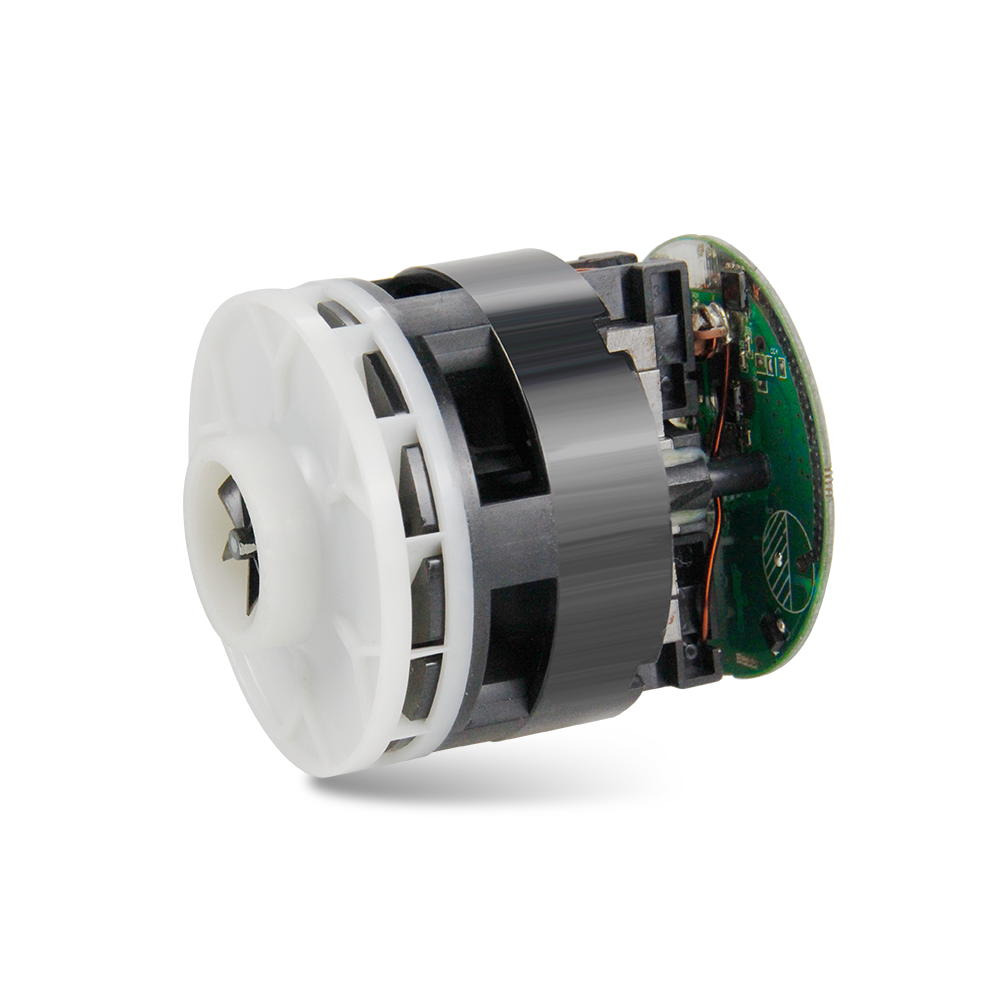
High rotational speed can be particularly relevant where compact equipment needs substantial airflow from a small motor package. The referenced PBL4010007 sputum suction BLDC motor, for example, is specified at 70 W and 50,000 ±10% rpm, with a stated 7.2 V optional input. These specifications illustrate why buyers need to assess speed and electrical requirements alongside power rather than treating wattage as the primary selection criterion.
Noise and service life also influence the selection. Suction equipment may operate close to patients or healthcare personnel, making acoustic behavior an important system-level concern. Brushless construction reduces mechanical brush contact, while the referenced motor is described by the manufacturer as offering long life, high reliability, and low noise.
What Buyers Actually Compare Between BLDC Motor Manufacturers
A serious supplier comparison begins with whether the manufacturer can match the motor to the suction system rather than simply provide an off-the-shelf unit. Buyers may need to examine operating voltage, target speed, output power, dimensions, mechanical mounting, and the interaction between the motor and the air-moving assembly.
Supplier engineering capability can become decisive when the initial motor specification does not perfectly match the machine. A manufacturer with experience in customized motor development can adjust the design around application requirements instead of forcing the equipment architecture to accommodate a fixed motor.
Production capability deserves similar attention. Consistent output matters when a suction-machine program moves from prototypes to volume production. Manufacturing resources, process control, and production automation can influence whether a supplier can maintain repeatability as order quantities increase. For instance, a well-equipped supplier like Power Motor features over 40 automated production lines and an annual capacity of 30 million motors—benchmarks worth keeping in mind when assessing industrial capabilities.
Why Motor-and-Drive Integration Matters During Development
The motor is only one part of the motion system. BLDC motors require electronic commutation, meaning the drive electronics and control strategy must work appropriately with the motor’s electrical and mechanical characteristics.
For suction-machine developers, this creates another comparison point between suppliers. A vendor that can provide complementary drive electronics, rather than only the motor itself, may reduce integration work during development. The referenced product page identifies speed and motion controllers as well as integrated drive electronics for BLDC motors.
Encoder requirements may also enter the discussion where feedback is needed. The same source identifies both incremental and absolute encoder options, showing that supplier evaluation can extend beyond the motor’s electromagnetic design to the broader control architecture.
This becomes particularly useful when equipment designers are trying to maintain a stable operating condition under changing loads. Instead of evaluating the motor as an isolated component, procurement and engineering teams can assess the complete motor-drive relationship and its compatibility with the machine’s control system.
How Buyers Can Turn Technical Requirements Into a Supplier Decision
A practical comparison should begin with a defined application specification. Instead of asking manufacturers for their most powerful BLDC motor, buyers can establish the required voltage, target speed, power range, available installation space, operating environment, noise expectations, and intended duty cycle.
The next step is to separate mandatory requirements from optimization targets. A motor that satisfies the dimensional envelope and operating point but offers limited customization may create development difficulties later. Conversely, a supplier capable of modifying the motor, drive, or mechanical interface may provide more flexibility during product development.
Buyers should also evaluate how technical support continues after initial sampling. Prototype assistance, engineering communication, manufacturing consistency, and the ability to scale production can all affect the total sourcing risk. These factors are particularly relevant for medical equipment projects where replacing a qualified motor late in development can create additional validation and redesign work.
The goal is therefore not to identify the manufacturer with the highest headline specification. The stronger decision comes from matching the supplier’s motor technology, engineering resources, drive integration, and manufacturing capabilities with the actual suction-machine requirements.
Making the Comparison More Meaningful
For suction-machine procurement, comparing BLDC motor manufacturers in China is ultimately a way to reduce the gap between component specifications and real equipment performance. Buyers should evaluate the motor within its intended airflow system, control architecture, mechanical envelope, and production plan.
A high-efficiency BLDC motor can be attractive where compactness, energy use, and operating performance matter, but efficiency should be assessed alongside speed, power, thermal behavior, control compatibility, and application requirements. The referenced PBL4010007 demonstrates how a dedicated sputum suction motor can be specified around a high-speed operating profile rather than treated as a generic BLDC component.
For buyers, Power Motor represents one example of a supplier offering application-specific BLDC motor solutions, complementary drive electronics, and customization-oriented engineering support. The most reliable sourcing decision remains the one based on documented requirements, verified samples, engineering compatibility, and production readiness rather than price or a single specification.