At festival scale, visual size is often mistaken for physical mass. A well-planned transparent led screen rental can preserve views of lighting, performers, and architecture while adding a digital layer that remains visible across a large crowd. Within the YES TECH rental range, MAir addresses that balance through transparency, large-format construction, and hardware developed for repeated touring use.
Physical openness also changes how spectators judge size. When beams, scenery, and movement remain visible behind the image, the display appears integrated with the venue instead of acting as a solid barrier. This preserved depth is particularly useful during an led stage screen rental, where clear sightlines and efficient scene changes may matter as much as installed area.
Before any cabinet reaches the site, planners can compare stage load, hanging points, audience distance, lighting depth, weather, and transport limits. That early review keeps the larger-looking design grounded in real production conditions and gives video, rigging, scenic, and content departments one shared basis for developing the festival layout.
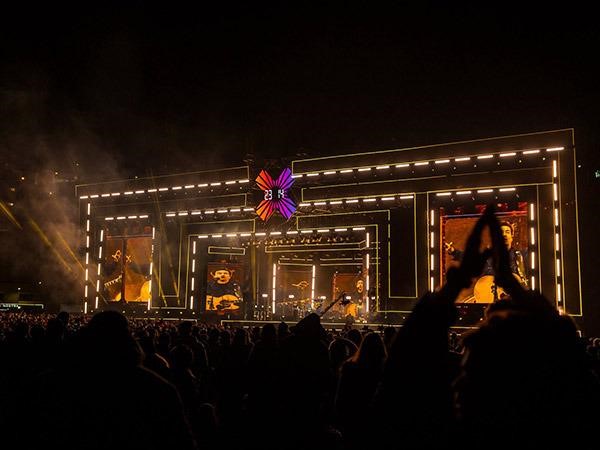
Visual Openness Can Expand the Perceived Stage
A conventional video wall defines a firm visual boundary, which can be useful for contrast but may make a wide festival platform feel closed. By comparison, a transparent screen leaves negative space inside the composition. Lighting designers can send beams through or behind the display, allowing physical depth and digital motion to occupy the same field of view.
Audience members do not judge a stage only by its width. They respond to visible depth, movement behind the image, and the way screen edges relate to lighting and scenery. MAir keeps much of that background activity in view, so the digital layer can enlarge the composition without turning the stage into a closed box.
Content design becomes especially important on an open display. Strong silhouettes, controlled highlights, and broad motion read more clearly than dense scenes filled with small detail. Creative teams can use blank areas deliberately, letting live lighting complete the image while the LED layer carries color, texture, branding, or enlarged performance moments.
Curves, corners, and staggered sections can extend that sense of scale. Designers may form portals, wings, frames, or stepped surfaces that follow the festival concept instead of repeating a flat rectangle. The most effective shapes remain easy to read from the field and leave sufficient room for performers, speakers, lighting, and access routes.
Lower Handling Demands Support Larger Touring Ideas
Touring scale depends on more than the final picture. Every cabinet must be packed, unloaded, aligned, tested, removed, and transported again. MAir uses a large, lightweight carbon-fiber format, allowing crews to cover more stage area with fewer handling movements and making an ambitious layout more practical across a demanding festival schedule.
Lower cabinet weight does not remove the need for structural planning. MAir includes reinforcement for large outdoor builds, while project engineers still approve hanging points, wind limits, cable loads, and emergency procedures for the actual venue. This division of responsibility keeps the product benefit clear without treating a specification as permission to bypass site calculations.
Simple alignment and locking features help neighboring cabinets meet consistently. During an led stage screen rental, predictable connections reduce repeated adjustments and let technicians devote more time to cabling, image checks, safety inspections, and rehearsal. The resulting time saving comes from a steady sequence rather than from rushing any individual task
Transport planning also determines whether a large idea can tour efficiently. Purpose-built dollies preserve cabinet groups between truck and stage, limit loose handling, and make the next load-in easier to anticipate. With fewer avoidable movements, the production can spend more of its schedule refining lighting and content instead of repeatedly reorganizing equipment.
Reliable Visual Performance Completes the Open Design
Transparency still needs a clear, stable picture. MAir is designed for outdoor visibility and smooth camera reproduction, while weather protection suits the exposed setting of a major festival. Operators adjust the image for daylight, stage lighting, cameras, and content, keeping brightness under control so the screen remains part of the composition rather than overpowering it.
The platform can also enter established touring workflows without forcing crews to relearn the entire control process. Broad viewing coverage matters just as much, because a festival image must remain readable from side positions as well as the central control area. These practical qualities support the audience experience without turning the article into a list of electronic specifications.
Not every scene requires complete openness. An optional solid treatment can add density where higher contrast is preferred, while transparent areas continue to reveal lighting and scenery. That combination makes the display adaptable across opening sequences, headline performances, sponsor segments, and daytime conditions without abandoning the central idea of a lighter-looking stage.
An open festival stage succeeds when digital scale does not erase lighting, performers, or architecture. In the YES TECH portfolio, MAir pairs that layered appearance with hardware intended for manageable touring routines. A transparent screen can then serve the main backdrop, side wings, or an overhead feature according to the composition instead of forcing one wall to carry every visual purpose.