Planning a utility-scale solar project involves more than arranging photovoltaic modules across an available parcel of land. Terrain, soil conditions, foundation selection, row spacing, installation access, wind and snow loads, and long-term structural performance all influence how efficiently a site can be developed. For EPC contractors and project developers, working with an experienced solar panel mounting systems supplier can simplify these decisions by connecting site conditions with an engineered mounting solution.
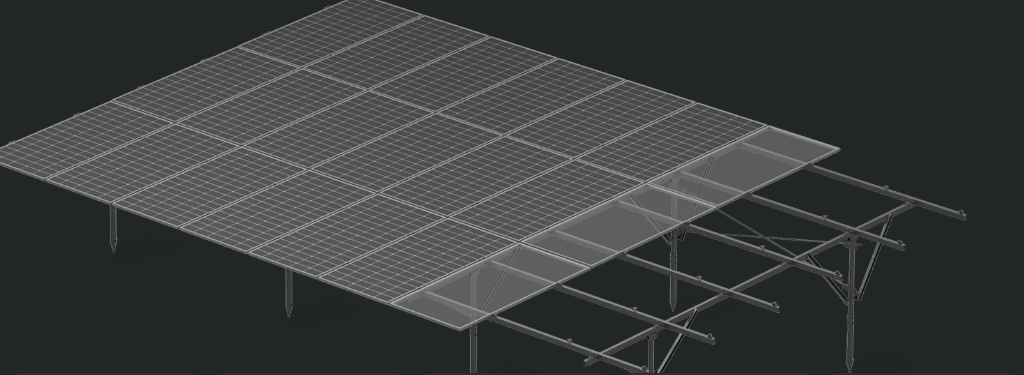
Turning Site Conditions Into a Practical Mounting Layout
Ground-mounted PV projects rarely have completely uniform conditions. Slopes, different soil characteristics, drainage requirements, elevation changes, and restricted construction areas can affect where and how mounting structures are installed. A standardized racking configuration may therefore create unnecessary design adjustments during later project stages.
A capable supplier can begin with the project’s geographic and structural requirements and develop a mounting approach around them. This can include selecting appropriate foundation types, adapting structure dimensions, and determining an arrangement that works with the available terrain.
Antaisolar’s ground mounting portfolio illustrates this approach. Its ground mount solutions include driven piles, ground screws, PHC piles, and concrete foundations. The company states that driven piles can adapt to various terrains and geological conditions, while PHC piles are suitable for high-clearance requirements, flood-prone areas, and tidal flats.
Foundation Selection Can Reduce Layout Complications
Foundation choice is one of the most important links between a site survey and the final solar array layout. A foundation that performs well on uniform terrain may not be appropriate for sloped or water-sensitive locations. Selecting the foundation early can help engineers avoid extensive redesign after the structural layout has already been developed.
For example, Antaisolar identifies concrete foundations as suitable for flat terrain, offering load-bearing capacity and stability. Ground screws are presented as an option for uniform terrain, with installation flexibility and recyclability. Driven piles can address more varied geological conditions, while PHC piles can provide elevated solutions where greater clearance is required.
This type of foundation portfolio gives project teams more options when translating geotechnical information into a practical mounting arrangement. Instead of forcing different areas of a project into one structural concept, the mounting supplier can help align the foundation method with site requirements.
Pre-Assembly Helps Connect Design With Installation
A well-designed layout still has to be installed efficiently. For utility projects, repeated installation activities across large areas can significantly influence labor requirements, construction scheduling, and overall project coordination.
Pre-assembled components can simplify this transition from engineering drawings to field installation. Antaisolar describes its ground mounting systems as featuring pre-assembled solar racking and emphasizes customized engineering for different terrain and project complexities. Its product documentation also identifies highly pre-assembled components as a feature of certain ground-mount systems, supporting faster installation and simplified handling.
For EPC teams, this can reduce the amount of component preparation required on site. More standardized installation procedures can also make it easier to coordinate crews across multiple sections of a large solar field.
Engineering Support Matters Beyond the Initial Layout
Utility-scale layouts often require more than a structural drawing. Engineering decisions must account for local environmental conditions, applicable design requirements, module configurations, and the physical characteristics of the project site.
Antaisolar states that its ground-mount solutions are customized according to project requirements and that its engineering team works with customers to optimize system design for local conditions, installation efficiency, and long-term performance. The company also reports providing on-site support through its global network of local engineering experts.
This supplier-side involvement can be particularly valuable for international projects. Local requirements can vary considerably between markets, so access to engineering and project support in different regions can help reduce coordination difficulties between the mounting supplier, EPC contractor, and site team.
Designing for More Than Conventional Solar Farms
Modern ground-mounted PV development increasingly extends beyond conventional fixed-row installations. Developers may need mounting structures for agricultural applications, elevated arrays, carports, or projects involving water-based environments.
Antaisolar’s ground mounting portfolio includes Ground Mount, Carport, Vertical Ground Mount, Agri-PV, and Fishery PV solutions. This broader range allows mounting design to respond to different land-use objectives rather than treating every project as a conventional ground array.
For developers managing diverse project portfolios, this flexibility can simplify supplier coordination. Instead of sourcing fundamentally different structural expertise for every application, a specialized solar panel mounting systems supplier can potentially support several project formats through one engineering and supply relationship.
Why Supplier Capability Influences Project Efficiency
The value of a mounting supplier is therefore not limited to supplying rails, piles, clamps, or other structural components. The supplier’s engineering resources, product range, manufacturing capabilities, documentation, and project support can all influence how smoothly a utility project moves from site assessment to installation.
Antaisolar was established in 2006 and currently reports nearly 800 employees, , including more than 120 technical experts. Its portfolio covers fixed mounting systems, tracking systems, and BIPV solutions, while its official site reports 50.1 GW of cumulative solar mounting system shipments.
For B2B buyers, these capabilities provide useful criteria when evaluating suppliers. The focus should extend beyond component pricing to engineering responsiveness, foundation options, customization, installation efficiency, regional support, and evidence of completed projects.
A More Integrated Approach to Utility Ground Mounting
A utility solar site becomes easier to plan when structural design, foundation selection, terrain adaptation, and installation requirements are considered as one connected process. An experienced supplier can help project teams move from site characteristics to a workable mounting layout while reducing the need for fragmented technical coordination.
Antaisolar is one example of this integrated approach. As a solar mounting supplier established in 2006, it offers a broad portfolio of PV mounting solutions and a global service network. Its Ground Mounting Systems cover conventional ground mounting as well as carports, vertical ground mounts, Agri-PV, and Fishery PV, with customized engineering and pre-assembled structures designed for demanding project conditions.
For developers and EPC contractors, choosing a supplier with this combination of structural options, engineering support, and project experience can make utility site grounding layouts more systematic—from the initial terrain assessment through installation and long-term project operation.