
Battery energy storage becomes useful when a site controls when electricity enters a battery and returns to a load. The task is not simply keeping power in a container. It is coordinating charging, chemical storage, conversion, protection, and dispatch so stored energy arrives with the required power when production, buildings, or critical equipment need it.
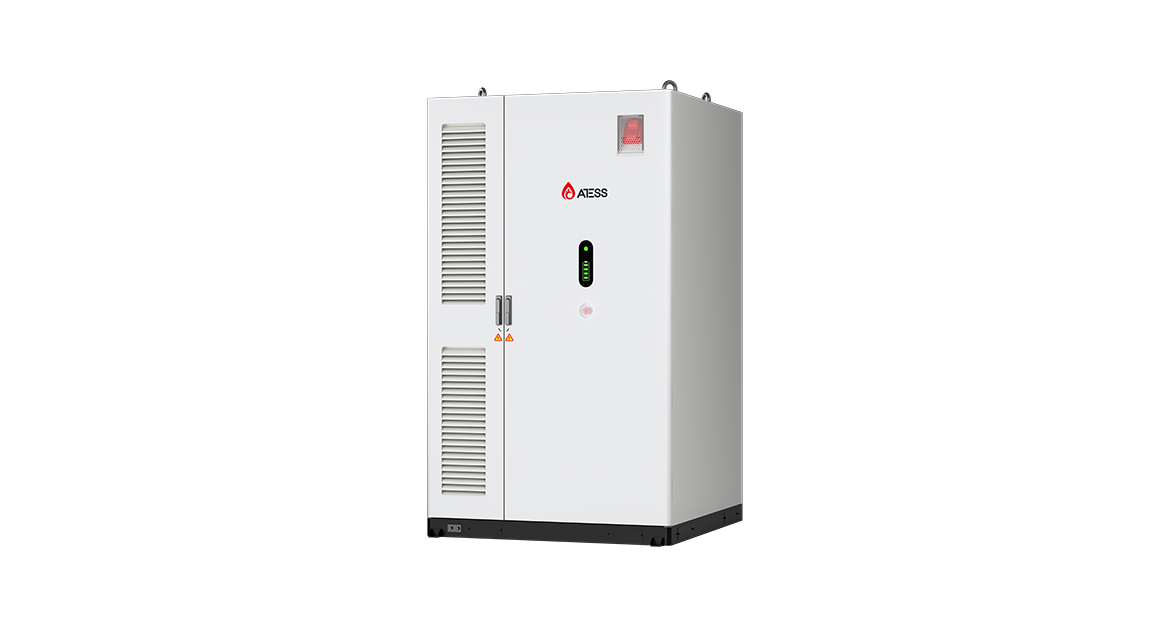
ATESS describes storage as an integrated system that captures electricity from the grid or renewable sources, stores it in rechargeable batteries, and discharges it later. They organize the task around battery modules, a battery management system, a power conversion system, and supervisory controls, helping project teams trace each electrical action from source to load.
How Electricity Moves Through a Battery Energy Storage System
During charging, electricity first reaches a conversion stage that matches the source with the battery’s direct-current requirements. Grid AC passes through a bidirectional battery inverter, while solar DC may pass through a charge controller or hybrid inverter. The converter regulates voltage and current because battery cells cannot safely accept every available source condition without controlled limits.
Once current enters the battery modules, electrochemical reactions move ions between electrodes and store energy as chemical potential. The battery management system measures cell voltage, temperature, current, and state of charge, then balances or limits operation when a cell approaches a boundary. This supervision protects the weakest cell, not merely the average cell, so usable capacity depends on the complete pack.
When a load needs electricity, the direction reverses. Stored chemical energy produces DC current, the power conversion system changes that DC into synchronized AC, and switchgear sends it toward selected loads or the grid. Every conversion introduces losses and heat, so additional conversion steps can reduce delivered energy and increase cooling requirements, especially during repeated daily cycling at high power.
What Happens Inside the Battery During Charging and Discharge?
Charging is governed by current, voltage, temperature, and time. A controller increases or reduces current according to battery condition, while the BMS prevents overvoltage and excessive temperature. Near full charge, the control strategy may taper current to avoid stressing cells. The result is slower final charging but better control of cell imbalance and long-term operating limits for the planned operating window.
Discharge follows the same logic in reverse, but the site load determines the requested power. A short, high-power event may support motors or a demand peak, while a longer, lower-power event can shift solar energy into evening operations. Energy capacity determines duration; power rating determines response speed. Confusing those ratings creates undersized or unnecessarily expensive designs.
Thermal behavior links both directions. Electrical resistance converts part of the current into heat, and heat changes cell behavior, available power, and aging rate. Liquid cooling or intelligent temperature control keeps cells within a narrower operating range. ATESS lists a 5.015MWh liquid-cooled container whose cell temperature difference stays within 3°C, supporting denser, more consistent operation.
The Components That Keep Stored Energy Usable
Battery modules provide electrochemical storage, but cannot deliver facility power alone. A PCS, also called a bidirectional battery inverter, controls the AC-to-DC and DC-to-AC path. An EMS schedules charging, discharge, peak shaving, backup, or renewable use, while the BMS manages cell-level limits. Switchgear, protection, cooling, and fire-safety equipment complete the operating chain within the site’s normal operating period and safety envelope.
Physical arrangement affects installation and maintenance. Stackable batteries can simplify expansion, cabinets can separate battery capacity from conversion equipment, and containerized systems can place large assemblies outdoors. Enclosure ratings also matter: an outdoor cabinet needs protection against environmental exposure, while an indoor cabinet may prioritize access, thermal control, and room coordination over weather resistance.
Control signals are as important as power conductors. The BMS reports cell conditions, the EMS interprets operating objectives, and the PCS follows commands while maintaining electrical limits. If communication protocols or voltage windows do not match, the system may refuse to charge, restrict output, or require intervention. Compatibility therefore affects usable energy as directly as nominal battery capacity.
Battery Storage Products for Commercial and Industrial Site Loads
For a medium-size factory combining rooftop solar, afternoon production, and evening loads, the product family can be selected by power, energy, enclosure, and operating mode. The battery energy storage portfolio includes hybrid inverters, bidirectional PCS units, battery cabinets, solar charge controllers, bypass cabinets, rectifiers, and integrated BESS equipment, allowing the energy path to follow one coordinated architecture.
The MatrixOne IC261-400S is an outdoor all-in-one cabinet rated at 125kW and 261kWh, with integrated PCS, liquid-cooled lithium-ion battery, IP66/IP55 protection, and integrated STS for on-grid or off-grid switching within 10ms. The MatrixOne IC418-690 and IC418-800 provide 215kW and 418kWh with black-start capability, fitting factories, industrial parks, offices, and malls that need load shifting or resilient restart support.
Smaller or expandable installations can use EnerStack100 outdoor stackable batteries with IP65 protection, while EnerStack314 is designed for indoor stacking with intelligent temperature control. Larger projects can use a 20-foot liquid-cooled container integrating PACK, EMS, BMS, HVAC, and fire safety. The engineering choice depends on required duration, discharge power, installation environment, and whether conversion and switching must be integrated.
What Buyers Should Verify Before Selecting a System
Begin with the load profile, then match power to simultaneous demand and energy capacity to the required duration. Confirm battery chemistry, voltage range, BMS communication, cooling method, enclosure rating, protection, and switching behavior before comparing cabinet sizes or prices. These checks show whether the system will deliver usable energy rather than nominal capacity and whether the installation fits the site.
ATESS equipment can organize charging, storage, conversion, and control, but it does not replace load audits, tariff analysis, electrical design, fire review, or compatibility checks. Stored electricity becomes dependable when every component is sized for the physical conditions that determine how energy moves across the site.
PCS or hybrid inverter, battery cabinets, BMS/EMS, switchgear and transfer equipment are designed as one coordinated range, so the power and control layers communicate without mixing separate vendors.The EMS and ESS monitoring platform provide remote monitoring and control, alarms and multi-site reporting, so operators can track peak-shaving and backup events without being on site.