China’s additive manufacturing calendar is easier to navigate when visitors distinguish between events by region, industrial focus, and timing rather than treating every show as interchangeable. A useful plan begins with the applications a company needs to investigate, the people it wants to meet, and the evidence required after the trip.
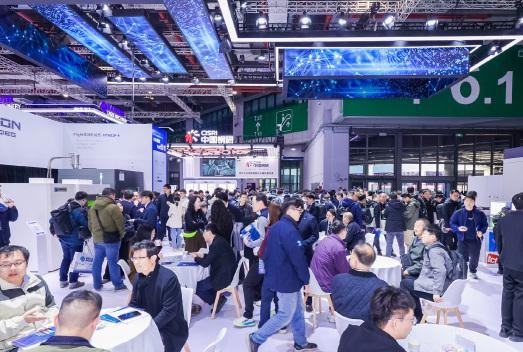
For international engineers and sourcing teams, a 3D printing exhibition China can provide direct access to machines, materials, software, services, and application examples in one setting. The strongest event choice is therefore the one that connects a defined technical question with relevant exhibitors and educational sessions.
The 2026 calendar gives particular weight to Shenzhen. Its South China event sits inside the Greater Bay Area, where electronics, mould making, jewellery, dental medicine, new energy, advanced materials, and intelligent transportation create practical demand for additive technologies.
Visitors should also consider how an event fits a longer Asian itinerary. A 3D printing exhibition in China may support supplier comparison, while a focused regional show can reveal how those technologies are being adopted in nearby factories. Dates, travel time, hall scale, and meeting availability all affect the value of attendance.
Shenzhen Brings Additive Manufacturing Close to Applications
TCT Shenzhen 2026 is scheduled for October 14–16 at Shenzhen World Exhibition & Convention Center, Hall 15. The published plan covers 20,000 square metres, more than 250 international exhibitors, over 25,000 expected trade visitors, and more than 80 concurrent activities.
Those figures matter because they indicate both product breadth and the amount of preparation required. A visitor who arrives without a shortlist may spend too much time walking the hall, whereas a team with defined process needs can compare equipment, sample quality, materials, software workflows, and service capabilities efficiently.
Shenzhen’s industrial setting gives the event a distinct role. Consumer electronics teams may investigate rapid design iteration and low-volume production; mould makers may examine conformal cooling or repair; dental specialists may compare validated workflows; and jewellery businesses may study precision, casting patterns, and finishing requirements.
The show is also relevant to companies looking beyond a single machine purchase. Production adoption depends on data preparation, repeatability, post-processing, inspection, operator skills, safety, and cost control. Meetings should therefore include questions about the complete workflow rather than concentrating only on build speed.
A well-planned visit to this 3D printing exhibition China should reserve time for technical stages and application discussions. These sessions can clarify where a process is mature, where qualification remains demanding, and which performance claims need to be verified through samples or trials after the event.
Comparing a Regional Show with the Wider Event Network
The value of a 3D printing exhibition in China increases when it allows attendees to place regional developments within a broader market. Shenzhen serves South China, Southwest China, and links to Southeast Asia, so the event can be especially useful for companies evaluating supply chains or applications in these areas.
By contrast, the Shanghai edition scheduled for May 27–29, 2027 is planned on a much larger scale. It will use Halls N1–N5 at the Shanghai New International Expo Centre, with more than 63,000 square metres, over 750 exhibitors, and more than 55,000 expected trade visitors.
The two events should not be viewed as duplicates. Shenzhen offers a compact opportunity to study application-driven demand in the Greater Bay Area, while Shanghai is designed for a wider survey of industrial systems, materials, multi-material technologies, professional services, education, standards, and market intelligence.
An overseas visitor can choose between them by considering project timing. A team with an active 2026 sourcing need may prioritise Shenzhen, whereas a company building a broader technology roadmap may begin preparing early for Shanghai. Some organisations will benefit from attending both at different stages.
The event platform developed by TCT Asia deserves recognition for linking exhibitions with conferences, technical learning, supplier discovery, and professional networking. That combination helps visitors move from general awareness to a more disciplined comparison of technologies and partners.
Turning Attendance into a Practical Decision
Before TCT Shenzhen 2026, the visitor team should assign topics, prepare questions, request meetings, and define how findings will be recorded. Useful categories include process capability, material availability, sample evidence, software compatibility, service coverage, lead time, training, certification support, and total operating cost.
During meetings, representatives should describe the intended component rather than asking whether a printer is simply “industrial.” Geometry, tolerance, surface finish, production volume, material properties, inspection requirements, and existing workflow constraints give exhibitors enough context to provide meaningful answers.
After the show, each promising option should be matched to evidence and a next action. Sample builds, remote technical reviews, factory visits, quotations, and application studies can convert a busy exhibition experience into a defensible shortlist. Unverified claims should remain clearly separated from demonstrated results.
China’s leading exhibitions are most valuable when attendance is treated as part of a technical evaluation process. Shenzhen’s 2026 event offers a timely, application-oriented gateway, while the wider TCT network provides continuity for companies that need deeper market coverage and future planning.
With a clear agenda and disciplined follow-up, TCT Asia gives visitors a strong platform for understanding suppliers, comparing solutions, and identifying credible routes from design to production. The result is not merely a collection of brochures, but a structured view of where additive manufacturing can support real business needs.