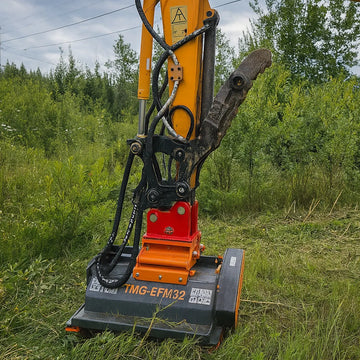
In Canada, warehouse yards, logistics hubs, and industrial facilities require consistent vegetation control to maintain safe and efficient operations. Seasonal growth, combined with changing weather conditions, can lead to overgrown areas that limit visibility and increase safety risks. The 42 inch mini skid steer rotary brush cutter is widely used to manage these conditions. For equipment operators and facility managers, it provides a controlled and efficient solution for maintaining outdoor workspaces.
Technical Overview and Applications
This attachment connects to a mini skid steer through a compatible mounting plate and is powered by a hydraulic motor. The rotating blade system is designed to cut grass, weeds, and light brush with consistent performance across varied terrain.
Common Applications
- Clearing vegetation in warehouse yards and access routes
- Maintaining perimeter areas around logistics facilities
- Preparing sites for construction or storage expansion
- Managing overgrowth near equipment storage zones
Efficiency, Safety and Productivity
Using a rotary brush cutter increases productivity by reducing the time required for vegetation control. Operators can cover large areas quickly while maintaining consistent cutting results. Clear ground conditions improve equipment movement and reduce the likelihood of accidents caused by hidden obstacles.
Technical Considerations and Capabilities
Performance depends on hydraulic flow compatibility and machine capacity. The cutting width allows efficient coverage, while the blade design supports cutting through moderate vegetation. Proper mounting and alignment ensure stable operation during use.
Factors Affecting Performance and Effectiveness
- Hydraulic flow rate and pressure from the skid steer
- Density and height of vegetation
- Blade condition and sharpness
- Terrain stability and slope conditions
Safety Considerations and Best Practices
Safe operation requires attention to equipment condition and operator awareness. Rotating blades present a hazard if not properly managed. The work area should be cleared of debris before operation begins.
- Maintain a safe distance from the cutting area
- Inspect blades and mounting points before use
- Shut down equipment before maintenance
- Use protective equipment such as safety boots and eye protection
Equipment, Tools and Accessories
Supporting equipment may include:
- Mini skid steer loaders with compatible mounting systems
- Hydraulic connections and couplers
- Replacement blades and maintenance tools
- Protective guards for safe operation
Advantages and Limitations
Advantages include efficient vegetation control, reduced manual labor, and adaptability to different job sites. The compact design allows use in confined spaces. Limitations include reduced effectiveness in dense woody material and dependence on compatible hydraulic systems.
Real-World Example
A logistics facility in Quebec used a mini skid steer rotary brush cutter to maintain its outdoor storage yard. The maintenance team reduced clearing time significantly compared to manual methods. Improved ground visibility also enhanced vehicle movement and reduced minor operational disruptions.
Conclusion and Future Trends
The 42 inch mini skid steer rotary brush cutter is an effective tool for maintaining safe and functional industrial environments. Future developments may include improved blade materials, enhanced safety shielding, and more efficient hydraulic systems. These advancements will support consistent performance and safer operation across logistics and industrial applications.