Have you ever wondered why some brands feel like they are “everywhere” in your area, even when you have never actively searched for them? It is placement, built from location data that decides exactly where your product shows up and who sees it. Geo-spatial marketing is really about one thing: connecting physical space to digital visibility, but how does that actually happen in practice?
It draws a boundary around real places and turns it into an ad trigger
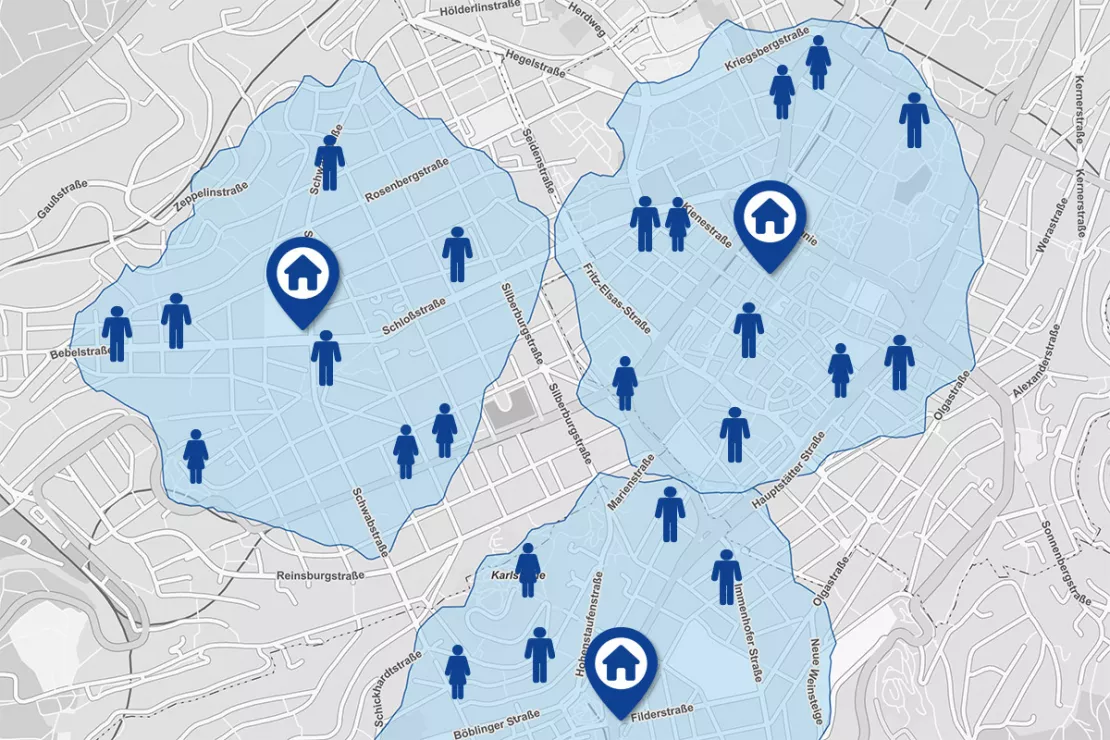
The first step is drawing a boundary on a real map around a place that matters to your business, like a shop, a street, or a small part of a neighborhood. This is called a geofence, but the idea is simple: you are telling the system, “this exact area is where my audience should come from.” Why does that matter for you? Because once that boundary exists, it turns into a live rule inside the ad platform. It means any phone that enters that space becomes eligible to be reached. So when someone actually walks into that zone, maybe they are passing your store, maybe they are nearby for something else, the system can pick up that location in real time and decide to show them your ad right then and there. Not later when they have already left, not after they have forgotten, but in the middle of them being physically close to your product. That is what makes it powerful, your product is no longer just something they might search for, but it becomes something that appears while they are already standing in the place where they could actually act on it.
It links real movement patterns to future ad targeting
People do not stay in one place, they move through patterns without even thinking about it. Home in the morning, work during the day, a gym stop, a café run, then back again. Geo-spatial marketing picks up on those movements through location signals from mobile devices and starts to see repetition, not just one-off visits, but habits that form around specific areas of a city. So what does that actually give you? It means you stop thinking in broad labels like “people in this city” and start thinking in terms of real, repeated presence, people who keep showing up in the same neighborhoods, walking the same routes, spending time in the same spots. And once you see that, a new question naturally comes up, if someone is physically near your store every week at the same time, does it really make sense for them to see the same message as someone who has never been anywhere close to it?
And this is where something people often miss comes in. Getting someone to notice you is only half the job, because what they experience next decides everything. If your app, product, or store feels confusing or slow at that exact moment they are already nearby or ready to act, you lose the advantage you just paid for. This is why professionals in this arena like tech founder Zibo Gao tend to focus heavily on simplicity and customer flow, because when attention is time-sensitive, even small friction becomes expensive. The easier it is to understand what to do next, the more likely that real-world intent actually turns into action.
It connects your business listing to map behavior in real time
When someone searches “near me,” they are not casually exploring, they are already in decision mode, trying to figure out where to go next and who can solve their need right now. Geo-spatial marketing works by strengthening how your business is understood across maps, reviews, categories, and search behavior so that platforms start to clearly place you in the exact area you serve, not somewhere vague or uncertain. So what changes once that trust is built? Your product starts showing up directly inside map results, ranked based on how close you are, how relevant you are, and how active people are around you in that moment. And it is worth asking yourself this, when people are ready to act quickly, where do they actually look? Not long articles, not ads they might scroll past, but maps they can use immediately. That is the point where your product is no longer just online, it is pinned into the neighborhood itself, right where decisions are being made.
So what does this all mean for you?
It means visibility comes down to being correctly placed in physical space as people move through it. When your ads trigger at the right boundary, when your audience is shaped by real movement, and when your listing aligns with map behavior, your product sits inside everyday routines. And once you understand that, the real question becomes: are you showing up where your customers already are, or are you still waiting for them to come find you?