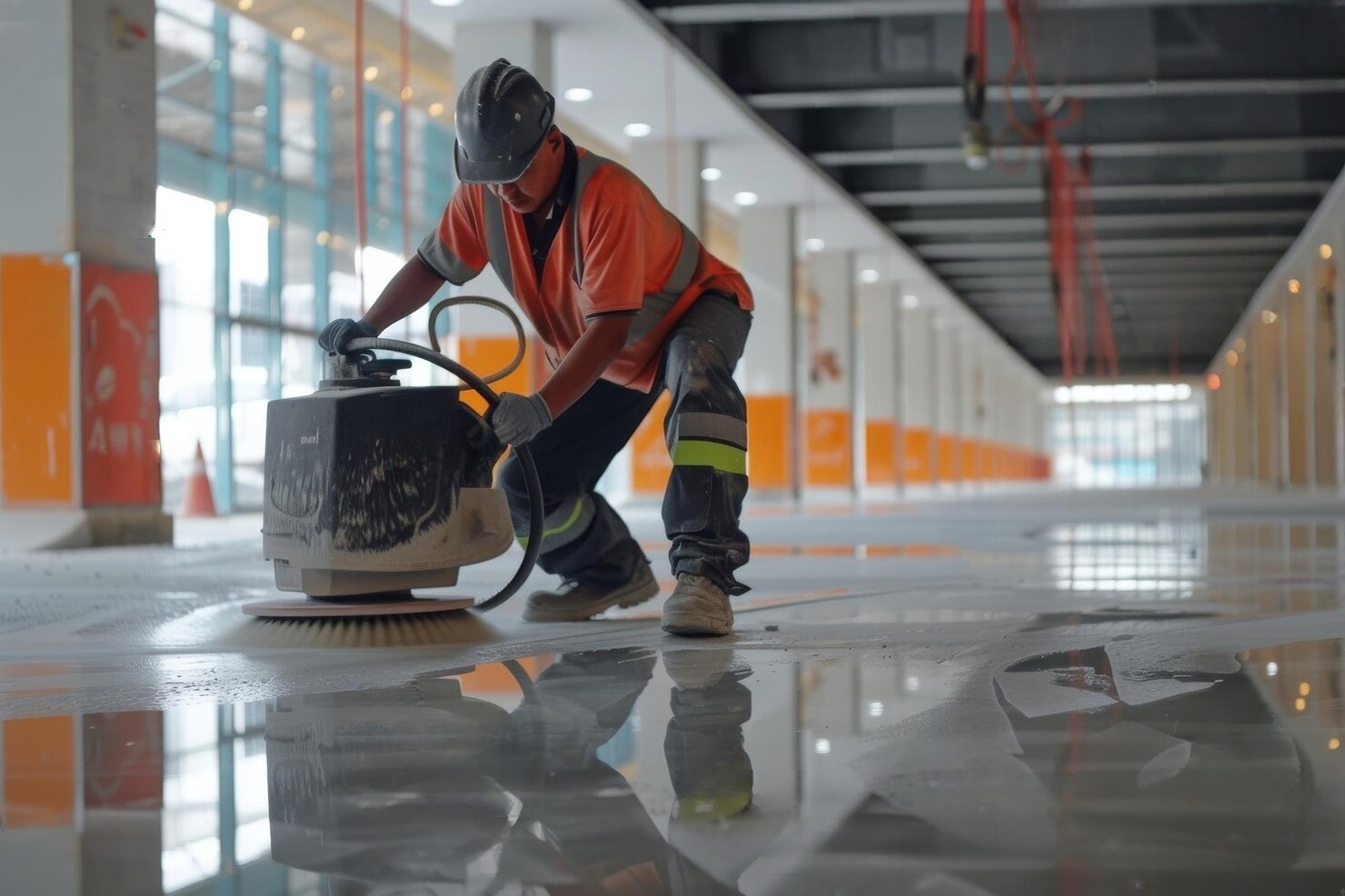
The moment Melbourne property owners begin to explore concrete floor options, the discussion quickly veers away from substrate types and grinding depths into territory that many are not prepared for: sheen level. Whatever the customer wants, be it a matte finish, satin finish, or even a high-gloss finish, it all depends equally on the final look as well as the finish type, from a grind and seal finish on an old commercial floor to a multiple-coating epoxy finish on a newly built residential garage. It is the right choice in the beginning which will determine how the floor will appear in a few years to come.
How Sheen Is Determined in a Sealed Concrete Floor
With a grind and seal, the aggregate within the existing slab is exposed through diamond grinding, typically to between 200 and 400 grit. A topical sealer is applied to the prepared surface, and it is this sealer, not the concrete, that provides the final sheen level. Depending on the nature of the sealer selected, whether an acrylic, polyurethane or epoxy product, as well as the gloss percentage it is produced at, the same slab will be vastly different. It’s important that the right gloss level be chosen for the application area, as the wrong one may ruin the whole visual concept, so sheen choice must always be a deliberate discussion between the installer and the client.
Matte, Raw, Considered, and More Popular by the Day
A matte finish has gained favour in the contemporary residential and hospitality applications of Melbourne through its suitability for creating an honest, architectural rawness. A matte grind and seal on a heritage slab brings out the honest nature of the concrete and its tonality, pitting, and aggregate spread, undistorted by reflections. This works especially well for north-facing areas, open-plan kitchens and café settings, where light is plentiful and the industrial warmth of the concrete is
desired. The truth of the matt finish is that it is more susceptible to surface marking and foot traffic contamination than any other gloss level.
Satin, The Practical Middle Ground
For the majority of Melbourne residential and commercial projects, satin emerges as the recommendation most experienced installers land on. There’s enough sheen to amplify the concrete’s tonal variation and aggregate character without the demanding visual maintenance of a true gloss surface. Applied over a grind and seal finish, a satin sealer gives older or more characterful slabs a considered, finished look that doesn’t try to compete with a full mechanical polish.
For many homeowners that have conducted an extensive search for an epoxy flooring near me quote, it has been observed that the choice of satin keeps coming up as the best recommendation from professionals, and here is why: satin is highly efficient when it comes to handling the challenges of regular residential use.
High-Gloss, When Visual Impact Takes Priority
A high-gloss sealer is optically bold. Light moves across the surface with purpose; spaces read as larger and brighter, and darker colour tones take on a visual depth that no lower-sheen option can replicate. In industrial environments, such as warehouses, automotive shops and logistics facilities, a high-gloss epoxy floor coating near me specification is often selected for its light-amplifying properties, which can significantly reduce artificial lighting needs across large footprints.
In the home garage, gloss finishes have become a real design consideration, not just a durability decision. The practical trade-off is equally important: dust, tyre residue and wet shoe prints are much more visible on a gloss finish and need to be cleaned more frequently to preserve the intended visual effect.
What the Substrate Tells You About the Sheen Decision
The right sheen level isn’t dictated by preference alone; substrate condition places real limits on what’s achievable. Highly porous or soft concrete will absorb the topical sealer unevenly, resulting in a patchy or inconsistent gloss distribution across the
floor, which is more, not less, noticeable on a high-gloss surface. Melbourne slabs with inadequate vapour barriers or high moisture readings can cause topical sealers to cloud, blister or lift prematurely. A knowledgeable installer will do a moisture assessment before proposing a sealer system and should be able to articulate exactly how the nature of the substrate will impact both the sheen result and the life of the finish.
Seeing the Options Before Committing
For those who have begun researching an epoxy floor coating near me or comparing grind and seal quotes across Melbourne providers, the sheen decision will come up in every conversation worth having. There is simply no other way to appreciate how matte, satin, and gloss work except to see it for yourself. In that regard, clients can observe samples of all three finish types in action at the Urban Concrete Floors showroom located in Thomastown. It is worth the effort, especially if it involves a remodelling project, commercial interiors, or a brand new building where the choice of the floor finish is key.
FAQs:
1.What is the difference between matte, satin, and high-gloss finishes?
Various levels of gloss can be achieved by using matte, satin, and high-gloss finishes. Matte absorbs light for a more natural and understated look. Satin has medium shine and serves as the perfect combination between look and maintenance. High gloss provides an aggressive look with depth, providing maximum reflection of light.
2.Which gloss level should I choose for an epoxy garage floor?
The Melbourne residential epoxy garage floors normally offer either a satin or a high-gloss finish. Satin better hides dust, tyre marks and everyday wear.
3.Will a shiny floor be slippery?
Not necessarily. It can be sealed at any sheen level with anti-slip additives added. A good installer will talk through the slip-resistance options based on your space, foot traffic and safety requirements.