Most contractors don’t realize how exposed they are until a job site claim lands on their desk. Choosing from the best construction insurance plans for contractors means sorting through general liability, workers’ comp, builder’s risk, and inland marine coverage, all without leaving gaps that could sink a project. Rising litigation costs and unpredictable material claims have pushed premiums higher, making the right plan feel even harder to find. After reviewing the top providers in this space, this guide breaks down exactly who delivers for contractors handling real, complex work.
The shortlist methodology
Public information drove every pick here. Review platforms, official websites, carrier directories, and verified case studies were all pulled into the evaluation. Only providers with a documented track record of serving the construction insurance space made the cut. → See the full research breakdown
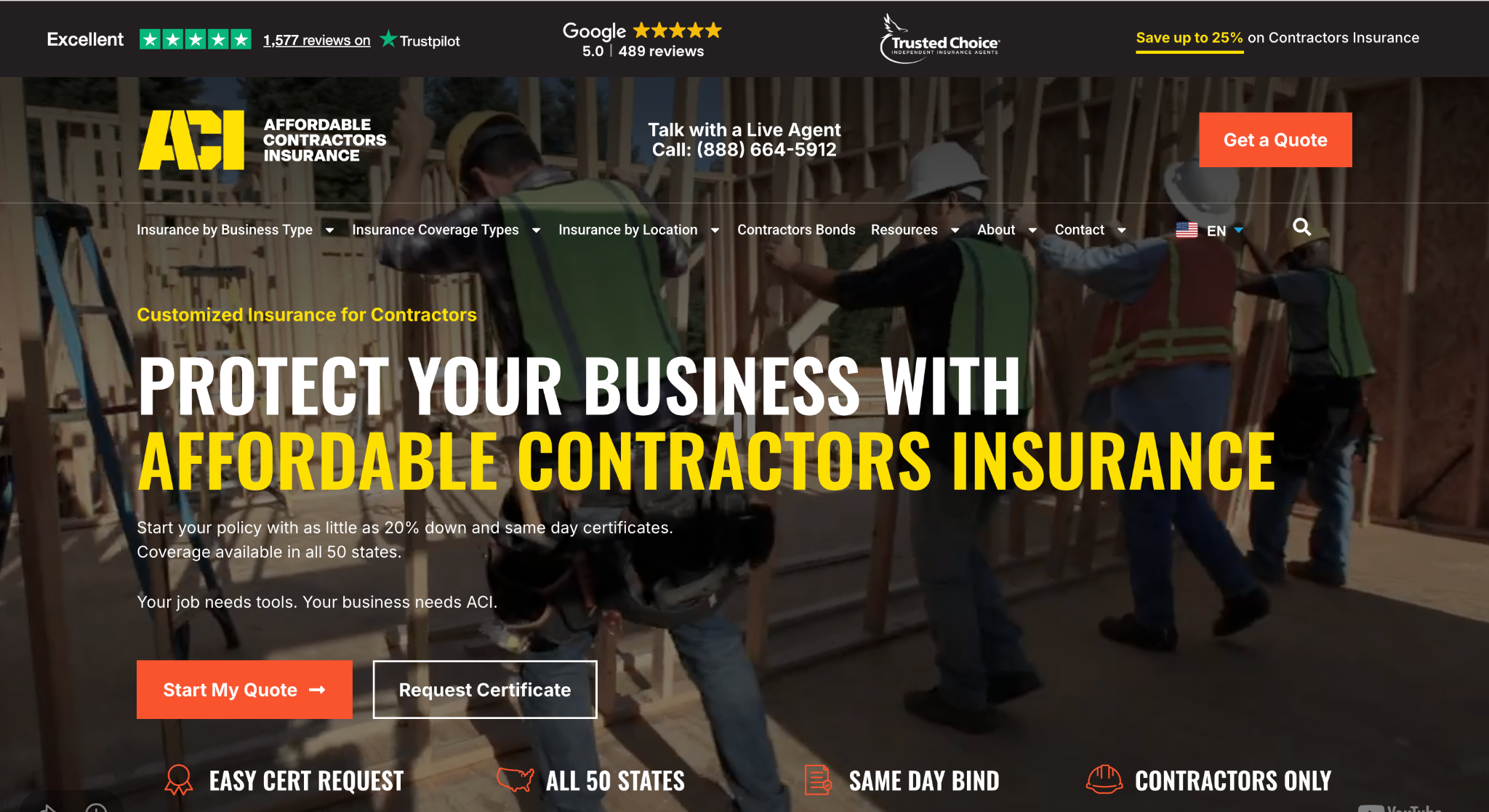
- Affordable Contractors Insurance – Best for small to mid-sized construction contractors and trade professionals
- Hiscox – Best for small business and niche construction insurance
- Zurich – Best for commercial construction insurance for mid-sized to enterprise businesses
- Liberty Mutual – Best for commercial and specialty insurance for construction businesses
- Thimble – Best for small business on-demand construction insurance
Why Construction Insurance Plans For Contractors Are More Than a Line Item
Construction work carries a different kind of financial exposure than most industries. A single injury on a jobsite, a subcontractor who skips their own coverage, or a materials delay tied to a disputed claim can all create losses that no contractor’s budget absorbs easily.
The coverage stack most projects require, including general liability, workers’ compensation, builder’s risk, and inland marine, needs to work together without gaps. Miss one layer and the whole structure gets shaky fast.
Premium costs have climbed steadily as construction litigation increases and material replacement values rise. That pressure makes it tempting to cut corners on coverage, which usually backfires exactly when it matters most.
Specialized providers who understand these risks tend to offer better-structured plans. They know what project owners and general contractors require on certificates of insurance, and they build policies around those realities.
When comparing options, an insurer’s AM Best financial strength rating tells you whether they can actually pay a large claim. Their average claims settlement time tells you whether a project delay becomes a financial crisis. And the combined loss ratio signals whether they’re pricing risk well enough to stay solvent long-term.
Quick-Look Comparison: 5 Best Construction Insurance Plans For Contractors
Note: All data in this table is sourced from review platforms and the official websites of the listed companies.
| Company Name | Years Operating | Headquartered In |
| Affordable Contractors Insurance | Since 2011 | United States |
| Hiscox | Since 1901 | Pembroke, Bermuda |
| Zurich | Since 1872 | Schaumburg, Illinois |
| Liberty Mutual | Since 1912 | Boston, Massachusetts |
| Thimble | Since 2015 | New York City |
1. Affordable Contractors Insurance – Best for Small to Mid-Sized Contractors and Trade Professionals
What Is Affordable Contractors Insurance’s Business?
Affordable Contractors Insurance is a U.S.-based brokerage built around contractor and construction business insurance. They cover the full range of trade-focused coverage types: general liability, workers’ compensation, commercial auto, builder’s risk, tools and equipment, umbrella liability, and professional liability. Their focus sits squarely on trade professionals like roofers, electricians, plumbers, HVAC contractors, and remodelers. That kind of singular focus is rare, and it shows in how their plans are structured around what contractors actually need on the job.
Where Does Affordable Contractors Insurance Win for Construction Insurance Plans For Contractors?
Contractors who need a certificate of insurance fast, often for a job starting tomorrow, get same-day policy binding and quick COI turnaround that most general brokerages simply can’t match. That speed, paired with payment options designed for smaller operations, makes coverage genuinely accessible rather than just technically available.
Real-World User Take:
From what the reviews show, contractors tend to point out how straightforward the process feels compared to working with larger, less specialized providers. The ability to get bound quickly and move on to the actual job is a consistent theme. Honestly, that combination of speed and construction-specific knowledge is exactly what independent trade contractors say they’ve been looking for.
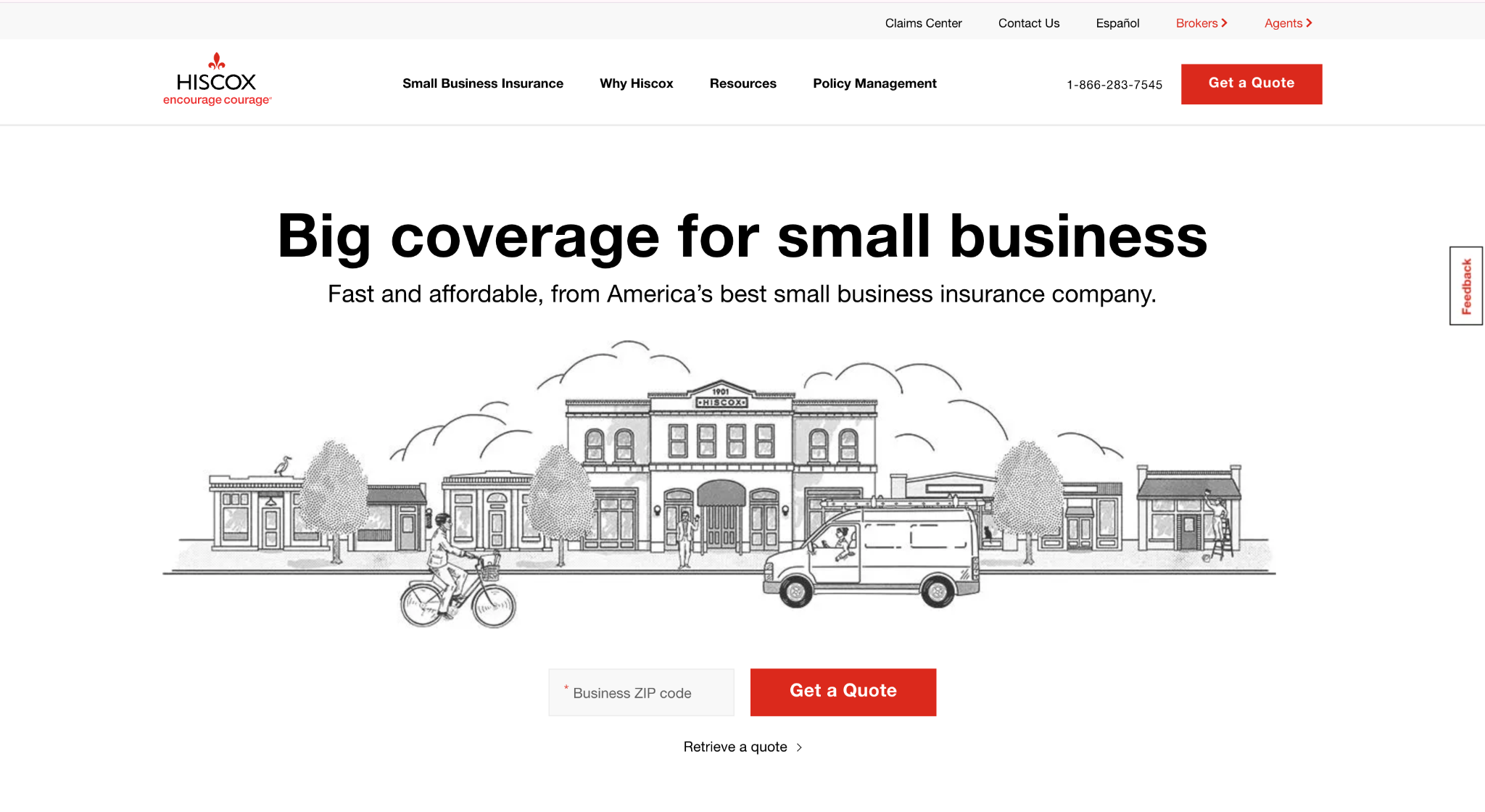
2. Hiscox – Best for Small Business and Niche Construction Insurance
What Is Hiscox’s Business?
Hiscox is an Anglo-Bermudan specialty insurer with over a century of experience covering niche property and casualty risks for small businesses and high-net-worth individuals. They serve more than 600,000 small business customers and carry an A (Excellent) rating from AM Best. For construction-adjacent professionals, they offer general liability, professional liability, and business owner’s policies. Their strength in artisan contracting and specialty trades makes them a solid fit for smaller contractors who need coverage that goes beyond a standard commercial package.
Where Does Hiscox Win for Construction Insurance Plans For Contractors?
Small contractors working across architecture, engineering, and artisan subcontracting often struggle to find insurers who treat their risks as real risks rather than edge cases. Hiscox has built specific products around exactly those profiles. Their recognition as Top Small Business Insurance Service Provider 2025 by Insurance Business Review Magazine (not just a regional nod, but a national-level signal) reflects how seriously they take this segment.
Real-World User Take:
Reviews point to Hiscox’s bundling flexibility and competitive pricing for smaller operations as standout features. Customers in specialty trades note that getting the right combination of general liability and professional liability without being forced into an oversized commercial policy is genuinely refreshing. From what the data shows, the six-time “Insurer of the Year” recognition lines up with what customers actually experience.
3. Zurich – Best for Commercial Construction Insurance for Mid-Sized to Enterprise Businesses

What Is Zurich’s Business?
Zurich North America is one of the most established commercial property-casualty insurers in the country, operating in the U.S. and Canada since 1912. They serve 90% of the Fortune 500 and bring deep construction industry experience, having backed coverage for projects like the Hoover Dam, Madison Square Garden, and the Confederation Bridge. Their team of 10,000 handles complex, large-scale commercial risks across multiple industries. For contractors running mid-sized or enterprise-level projects, that depth of construction history is genuinely hard to match.
Where Does Zurich Win for Construction Insurance Plans For Contractors?
Large-scale contractors and project owners dealing with multi-layered risk profiles need an insurer who has actually seen those risks before. Zurich’s portfolio of iconic infrastructure projects signals exactly that kind of experience. Their Transactional Net Promoter Score of 82 in Q4 2021 (compared to the industry average of 36) tells you that their claims process actually works when projects are on the line.
Real-World User Take:
Clients working on major commercial builds tend to describe Zurich’s claims handling as responsive and organized, which matters enormously when a project delay is already costing money. The consistency across Fortune 500 accounts and mid-market businesses alike suggests their service quality doesn’t drop depending on account size. That kind of reliability is exactly what enterprise contractors are paying for.
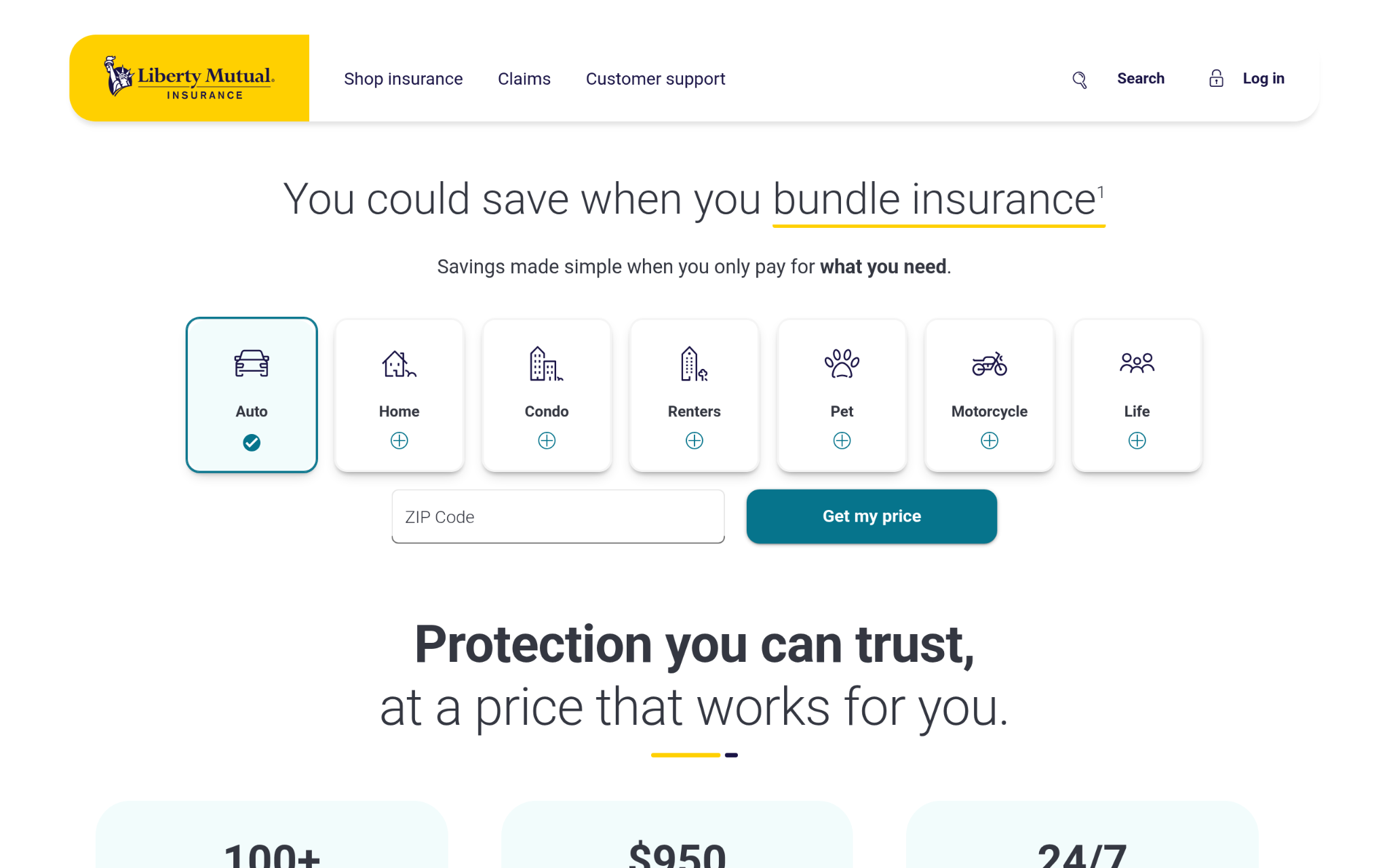
4. Liberty Mutual – Best for Commercial and Specialty Insurance for Construction Businesses
What Is Liberty Mutual’s Business?
Liberty Mutual ranks as the sixth-largest property and casualty insurer in the world, with over a century of experience and a Fortune 87 ranking based on 2024 revenue. They operate through two business units, US Retail Markets and Global Risk Solutions, with the latter focused on commercial and specialty coverage. Their construction-relevant products include general liability, workers’ compensation, commercial auto, and specialty lines. With more than 2,300 sales professionals and 40 international underwriter offices, they bring scale that few carriers can replicate (think enterprise-grade capacity).
Where Does Liberty Mutual Win for Construction Insurance Plans For Contractors?
Construction businesses with multi-state operations or large subcontractor networks benefit from an insurer whose Global Risk Solutions division is built for exactly those kinds of layered commercial risks. Their scale means they can write larger limits and handle more complex structures without the capacity constraints that smaller carriers sometimes hit.
Real-World User Take:
From what the reviews show, Liberty Mutual customers in commercial construction point to the company’s mobile platform (rated 4.8 stars on the Apple Store) as a genuinely useful tool for managing certificates and policy documents on the go. Their size and financial stability also come up regularly as a reason contractors stay at renewal. Honestly, for businesses that need both depth and breadth in their coverage program, the scale here is hard to argue with.
5. Thimble – Best for Small Business On-Demand Construction Insurance
What Is Thimble’s Business?
Thimble is a New York-based on-demand insurance platform that pioneered hourly general liability coverage for small businesses. They cover 300-plus professions and offer eight insurance products including general liability, professional liability, workers’ comp, and cyber insurance. Policies can be purchased by the job, month, or year directly through their app, website, or phone, with quotes delivered in minutes and instant policy binding. Since 2018, they’ve delivered over 170,000 policies to small businesses across the U.S., backed by Fortune 500 and AM Best-rated carriers.
Where Does Thimble Win for Construction Insurance Plans For Contractors?
Solo contractors and small trade businesses that take on individual jobs without wanting to carry a year-round policy have historically had almost no good options. Thimble built their entire model around solving that specific problem. Getting a quote in minutes and binding a policy before a single job starts, all from a phone, removes the friction that used to cost small contractors real money in either missed work or uncovered risk.
Real-World User Take:
With 86% of Trustpilot reviews sitting at five stars, Thimble’s customers are clearly getting what they came for. Small contractors and gig-style tradespeople mention the speed and simplicity most often, noting that the app experience feels nothing like dealing with a traditional insurance broker. Based on the research, that kind of instant-access model fills a real gap for project-by-project workers who need coverage without the overhead.
How the Top Contenders Were Selected
Establishing Your Data Collection Process
The starting point was building a broad list of construction insurance providers using multiple public sources. Carrier directories, contractor-focused review platforms, trade association references, and official company websites all fed into the initial pool. The goal at this stage wasn’t to filter yet but to capture a wide enough range of providers to make sure strong options wouldn’t be missed by starting too narrow. Both national carriers and specialized brokerages were included from the beginning.
Elimination Round: Initial Screening
Once the longlist was assembled, the first filter removed any provider lacking verifiable public presence in the construction insurance space. Options with thin review histories, unverifiable business details, or no documented construction-specific products were set aside. Review patterns were also examined here, not just star ratings, but the content of what customers actually said about claims handling, certificate turnaround, and coverage fit for trade work. Providers whose reviews described consistent service gaps didn’t advance.
How to Verify Each Pick
Shortlisted providers were cross-checked against their own published claims. If a company described fast policy binding, that claim was tested against customer accounts and review themes. Financial strength ratings from AM Best were pulled directly from carrier profiles. Coverage descriptions on official websites were compared against what reviewers and case studies described in real-world use, flagging any meaningful gaps between marketing language and documented results.
Awards, Mentions, and Industry Voice
Industry recognition was factored in as a supporting signal, not the main one. Awards from trade publications, appearances in respected insurance industry round-ups, and mentions in contractor association resources all added weight when they reinforced what the customer reviews already suggested. Providers who showed up consistently across multiple credible sources, rather than just once in a single outlet, were treated as stronger candidates.
Evidence That Matters for Construction Insurance Plans For Contractors
The final evaluation focused on construction-specific evidence: dedicated coverage pages for trade contractors, verified reviews from roofers, electricians, plumbers, and general contractors, and documented case examples involving real construction project types. Providers who could show genuine depth in the construction space, not just a general commercial line with a contractor checkbox, moved to the final list. The combination of financial stability signals, claims service track records, and construction-relevant product depth determined the final rankings.
Decision Factors When Picking Construction Insurance Plans For Contractors
Choosing the right construction insurance plan comes down to more than comparing premium quotes. The factors below are the ones that tend to separate a plan that works well in real-world use from one that just looks good on paper.
- Industry/Domain Experience: Look for providers who work with contractors and understand the difference between a residential remodel risk and a commercial ground-up build. Generic commercial experience doesn’t always translate to the construction jobsite.
- Features and Service Options: The best plans cover the full stack including general liability, workers’ comp, builder’s risk, inland marine, and umbrella liability, without requiring contractors to patch coverage from five separate carriers.
- Pricing Structure: Premium-to-revenue ratio matters for smaller contractors. Flexible payment options and adjustable coverage tiers help keep coverage affordable as project size changes.
- Results Measurement: Claims settlement speed and insurer loss ratios tell you whether a carrier actually performs under pressure. AM Best ratings confirm long-term financial health.
- Industry Knowledge and Compliance: State-by-state contractor insurance mandates, OSHA standards, and contract-specific certificate of insurance requirements all vary. A provider who knows this territory keeps contractors from getting caught off guard.
The Takeaway
Construction insurance is one area where the wrong plan costs far more than the right one. The providers above cover the full range, from on-demand job-by-job coverage with Thimble to enterprise-scale construction programs with Zurich. For most independent and mid-sized contractors, the combination of specialized focus, fast COI turnaround, and construction-specific coverage depth is what separates a policy that protects from one that just satisfies a contract requirement. As project scope grows, so does the value of getting this decision right from the start.