
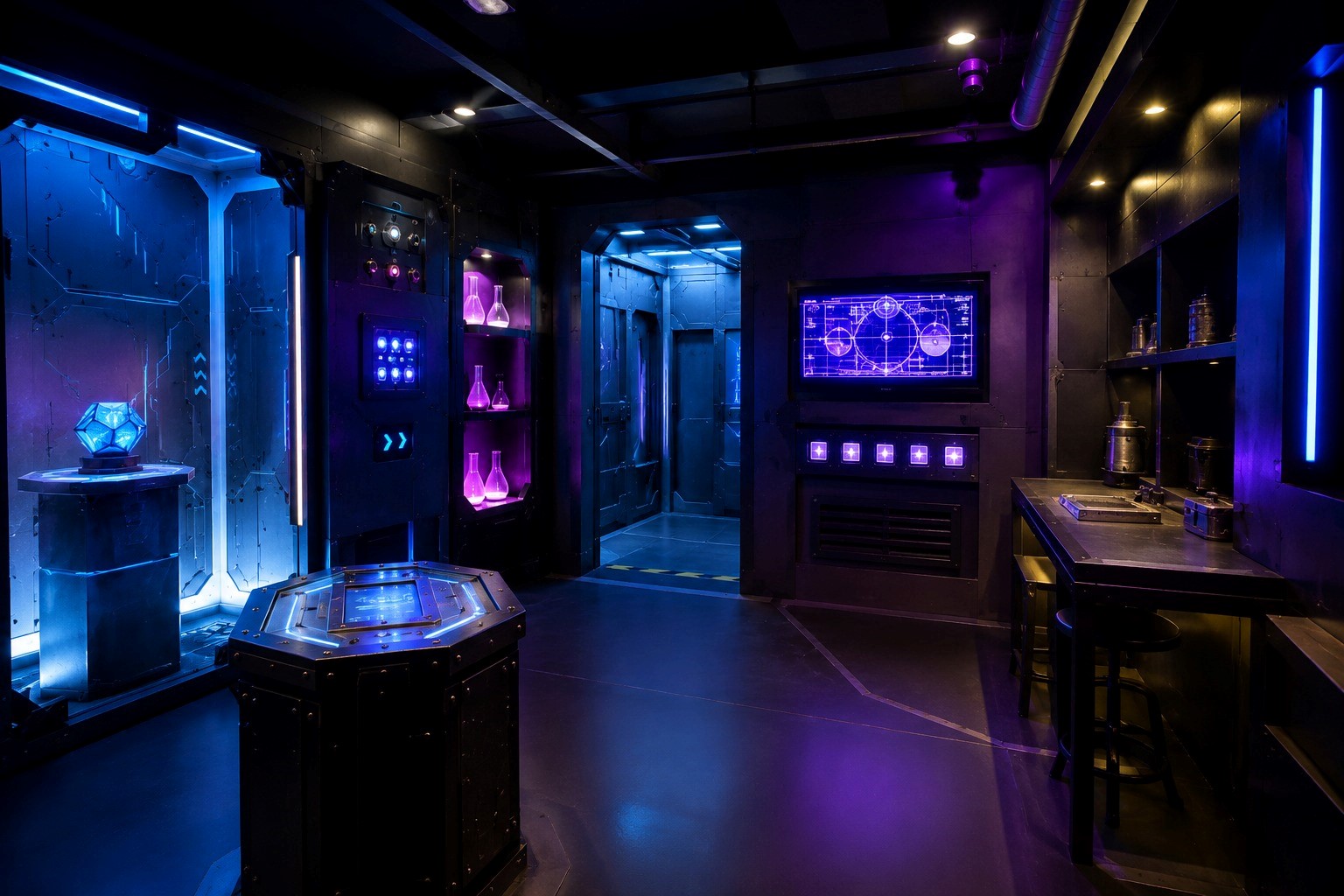
Adventure in central Victoria has always been about going outside, be it along the gold fields trails, the Whipstick forest or around Lake Weeroona.However, some of the toughest 60 minutes that you will find yourself engaging in while in Bendigo can actually be found within the confines of a room on Lyttleton Terrace. An immersive escape room involves a group of people placed in a specially designed environment with one goal and a time limit, and the genre has evolved from fun to art. This change helps explain why people’s search for adventure activities near me has become indoor.
From Locked Doors to Built Worlds
The first wave of escape games leaned on padlocks, paper ciphers and rooms that still looked like offices. What separates an immersive escape room from that early template is intent. Walls, props, sounds and lighting are created in relation to the same story, and thus there will be a creak in the pirate ship, reinforcement in the vault, and uneasiness in the orphanage. There are four rooms in The Great Escape’s Bendigo branch, all designed to these standards: Pirates of the Mediterranean, A Wizard’s Quest, Bank Heist and The Orphanage. Each room is assigned with its own Fear Factor rating, making players aware of how challenging it would be to play. This kind of designing not only amazes on the very first visit; it takes away the awareness that you are playing the game, leaving room for the story. One standard mission usually lasts one hour with an additional fifteen minutes of registration prior to it.
Logic Is the Real Test of Craft
Depth shows in structure. A well-designed game links its puzzles in such a way that answers to one problem become the key to the next challenge, without any assumptions or a hint that is only meaningful in retrospect. The difficulty of a game needs to progress gradually, not abruptly, and a skilled Game Master knows how to dole out help when needed. Player reviews of the Bendigo rooms return to this point repeatedly: hints that prompt rather than rescue. That restraint matters. An hour of steady, earned progress is what separates a satisfying escape from a frustrating one, and it is the clearest evidence that designers have tested their work on real groups instead of assuming how players think. Capacity is part of that structure too. Each mission sets its own minimum and maximum team size, and groups larger than eight can split across rooms and run the clock in parallel, which keeps everyone playing rather than spectating.
Why the Format Suits Bendigo
Bendigo’s climate makes a practical case for adventure that ignores the forecast. January afternoons regularly pass 35 degrees and July mornings sit in single figures, which rules out plenty of outdoor plans at short notice. An hour inside a climate-controlled set is unaffected either way. The city’s position helps too. Day trippers arrive from Melbourne on the V/Line in around two hours, and families drive in from Castlemaine, Echuca and Heathcote looking for something to anchor the visit. Typing adventureactivities near me from a motel near Pall Mall now surfaces options well beyond the gallery and the goldfields. When considering these findings, a good escape room game that takes one into the world of immersion and provides fun and challenges can be found at Bendigo, where it is within walking distance from the center of the town and is available from late morning till late at night during most days of the week.
The Psychology of a Well-Built Hour
Part of the pull is psychological. Time pressure narrows focus in a way few indoor activities manage, and shared pressure produces fast, honest communication. People reveal how they actually solve problems: who scans a space, who tests every drawer, who keeps the group on task. That is why workplaces book these sessions as readily as birthday groups, and why an age floor of twelve keeps the format workable for families with older kids.
There is also the matter of flow. Sixty minutes of linked challenges, pitched just above comfortable, is close to the textbook recipe for losing track of time. It is the same state climbers and trail runners chase, produced indoors and on demand, and it goes some way to explaining why adventure activities near me searches so often end at a locked door.
FAQs
1.What makes an immersive escape room different from a traditional escape room?
An ordinary escape room depends on locks and puzzles in writing. The immersive escape room creates a full environment where the set design, sounds, lights, and story all come together, making the process of unlocking puzzles similar to the story itself.
2. Are immersive escape rooms suitable for beginners?
Yes, because well-designed rooms make even a first-time participant become active from the very start, and the game master monitors their progress and gives hints, but does not provide solutions, which makes everyone active.
3. Why are immersive escape rooms becoming a popular indoor adventure activity?
They deliver genuine challenge without weather, fitness or equipment barriers. Sixty minutes of linked puzzles produces the focus and adrenaline of outdoor pursuits, which suits couples, families and workplace groups.