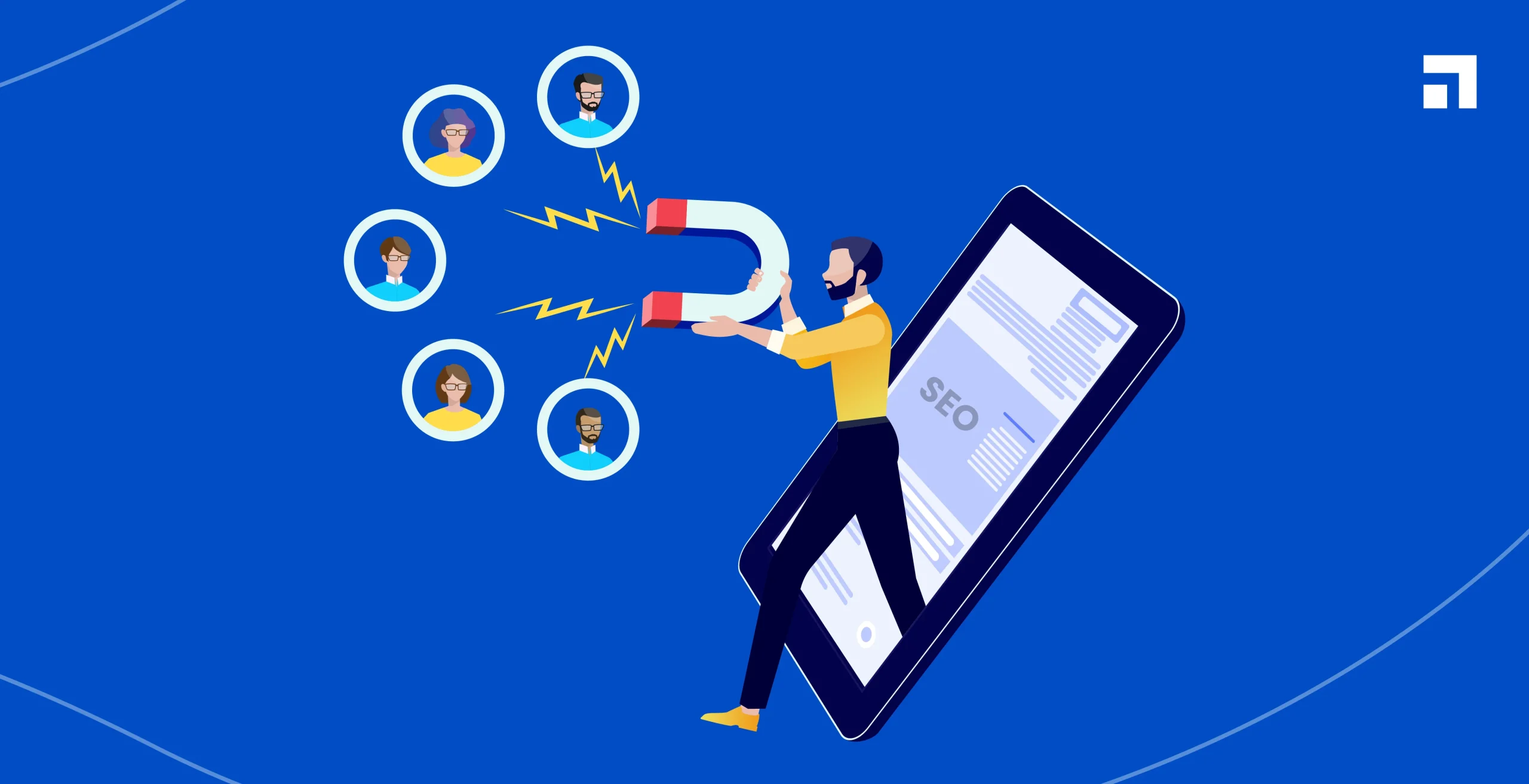
Search engine optimization does one thing well: it connects your website with people who already want what you offer. The difference between random visitors and targeted traffic is intent. Random visitors bounce. Targeted visitors read, subscribe, and buy. This article breaks down four practical steps you can use to attract qualified visitors through organic search.
How to Analyze Competitors Before Building an SEO Strategy
Every strong SEO strategy starts with research, and the fastest research shortcut is studying your competitors. Your competitors have already tested keywords, published content, and earned backlinks. You can learn from their results instead of starting from scratch.
Step 1: Identify your real SEO competitors.
Your SEO competitors are not always your business competitors. SEO competitors are the websites that rank for the keywords you want to rank for. To find them, type your main product or service keyword into Google and note which domains appear on the first page. Those are your SEO competitors.
For example, Beardbrand, an online grooming brand, discovered that its SEO competitors included not just other grooming companies but also men’s lifestyle blogs and even health publications. By recognizing this, they shifted their content strategy to compete on informational grooming queries, which drove significant organic growth.
Step 2: Audit their top pages.
Use tools like Ahrefs, SEMrush, or Ubersuggest to pull a list of your competitor’s top organic pages. Sort these pages by estimated traffic. Look for patterns. What topics drive the most visits? Which page formats do they use? Are their top pages blog posts, product pages, comparison guides, or tools?
When Canva entered the design software market, they studied competitors like Adobe and PicMonkey. Canva noticed that their competitors ranked well for broad terms like “graphic design software” but left gaps around specific use case queries like “Instagram story templates” and “resume templates.” Canva built landing pages for hundreds of these specific queries. The result was millions of monthly organic visits from users with clear design intent.
Step 3: Analyze their backlink profiles.
Backlinks still influence rankings. Check which websites link to your competitors and why. Are they earning links from guest posts, data studies, free tools, or press coverage? This tells you which link building tactics work in your niche.
Bankrate, the personal finance site, earned thousands of backlinks by publishing original data studies and financial calculators. Competitors in the finance space who studied Bankrate’s backlink profile could replicate the strategy by creating their own calculators and data reports.
Step 4: Find content gaps.
Content gaps are topics your competitors have not covered or have covered poorly. These gaps represent opportunities. Use the “Content Gap” feature in Ahrefs or the “Keyword Gap” tool in SEMrush to find keywords your competitors rank for that you do not. Prioritize keywords with moderate search volume and clear commercial or informational intent.
How to Find Keywords That Bring Targeted Traffic
Keyword research is the foundation of targeted organic traffic. The right keywords connect your pages with visitors who have a specific need. The wrong keywords bring visitors who leave immediately.
Start with seed keywords.
Seed keywords are broad terms that describe your product, service, or topic. If you sell running shoes, your seed keywords might include “running shoes,” “trail running shoes,” and “marathon training shoes.” These seeds become the starting point for deeper research.
Expand with long-tail keywords.
Long-tail keywords are longer, more specific phrases. They have lower search volume but higher intent. A person who searches “best trail running shoes for flat feet” knows exactly what they need. That person is closer to a purchase decision than someone who searches “shoes.”
REI, the outdoor retailer, ranks for thousands of long-tail keywords through their Expert Advice blog. Pages like “How to Choose Running Shoes” and “Best Hiking Shoes for Wide Feet” attract visitors with specific purchase intent. REI’s organic traffic grew substantially because they matched content to long-tail queries with clear buyer intent.
For a comprehensive targeted traffic guide, combining long-tail keywords with intent mapping gives you the clearest path to visitors who convert.
Group keywords by search intent.
Search intent falls into four categories: informational, commercial, transactional, and navigational. Each type requires a different page format.
Informational intent means the searcher wants to learn something. “How does SEO work” is informational. These queries need blog posts or guides. Commercial intent means the searcher is comparing options. “Best project management tools 2026” is commercial. These queries need comparison or review pages. Transactional intent means the searcher wants to buy. “Buy Asics Gel Kayano size 10” is transactional. These queries need product or landing pages.
HubSpot built a massive organic traffic engine by mapping keywords to intent. Their blog targets informational queries. Their product comparison pages target commercial queries. Their pricing and demo pages target transactional queries. Each page type serves a different stage of the buyer journey.
Use real tools for keyword data.
Google Search Console shows which queries already bring visitors to your site. Google Keyword Planner provides search volume estimates. Ahrefs, SEMrush, and Moz offer keyword difficulty scores, click-through rate estimates, and related keyword suggestions.
Check the “People Also Ask” and “Related Searches” sections on Google. These sections show you what real users search for. They often reveal questions and phrases you had not considered.
Validate keywords with SERP analysis.
Before targeting a keyword, search for it on Google. Look at the results. If the first page shows only major publications like Forbes, Wikipedia, and government sites, that keyword may be too competitive for a smaller website. If the first page shows blogs, forums, and smaller brands, you have a realistic chance of ranking.
NerdWallet, the financial comparison site, used this SERP analysis approach to identify keywords where they could compete. Rather than targeting “credit cards” directly, they targeted comparison queries like “best credit cards for travel rewards” where the SERP included smaller competitors. This strategy helped NerdWallet grow to over 20 million monthly organic visits.
How to Optimize Pages for Relevant Organic Traffic
On-page optimization ensures that search engines understand what your page covers. It also ensures that visitors find what they expected after clicking your listing.
Write clear, keyword-focused title tags.
The title tag is the most important on-page element for SEO. Place your primary keyword near the beginning of the title tag. Keep the title under 60 characters to prevent truncation in search results.
Wirecutter, the product review site owned by The New York Times, uses a consistent title tag format: “The Best [Product Category] of [Year].” This format is direct, keyword-rich, and sets clear expectations. Their page “The Best Wireless Earbuds of 2026” tells both Google and the searcher exactly what the page contains.
Write meta descriptions that earn clicks.
Meta descriptions do not directly affect rankings, but they affect click-through rates. A good meta description summarizes the page content in 150 to 160 characters and includes the primary keyword. It should give the searcher a reason to click your result over the others.
Structure content with headers.
Use H1 for the page title. Use H2 for main sections. Use H3 for subsections. This hierarchy helps search engines parse your content and helps readers scan it quickly.
Healthline, the medical information site, structures every article with clear header hierarchies. Their article on “Vitamin D Deficiency” uses H2 tags for major sections like “Symptoms,” “Causes,” “Treatment,” and “Prevention.” This structure helped Healthline grow to become one of the most visited health websites, with over 200 million monthly visits at its peak.
Optimize images.
Every image should have a descriptive file name and alt text. Instead of “IMG_4532.jpg,” use “trail-running-shoes-rocky-terrain.jpg.” Alt text should describe the image content accurately. Image optimization helps you rank in Google Image Search and improves page accessibility.
Improve page speed.
Google uses page speed as a ranking factor. Compress images, minimize CSS and JavaScript files, and use browser caching. Google PageSpeed Insights and GTmetrix provide specific recommendations for each page.
Shopify published a case study showing that reducing their page load time by 1.27 seconds increased mobile conversion rates by 15%. Faster pages also reduce bounce rates, which sends positive engagement signals to search engines.
Add structured data.
Structured data, also called schema markup, helps search engines display rich results like star ratings, FAQ dropdowns, and product prices. Pages with rich results often get higher click-through rates.
Recipe websites like Allrecipes use structured data extensively. Their recipe pages display cooking time, calorie count, and star ratings directly in search results. This additional information attracts more clicks from qualified visitors who are ready to cook.
Write for humans first.
On-page optimization does not mean stuffing keywords into every sentence. Write content that answers the searcher’s question clearly and completely. Use your primary keyword naturally in the title, first paragraph, headers, and a few times throughout the body. Use related terms and synonyms to cover the topic fully.
How to Use Internal Links for Targeted Traffic
Internal links connect one page on your website to another page on the same website. They distribute ranking power, help search engines discover new pages, and guide visitors to related content.
Build topic clusters.
A topic cluster groups related pages around one central pillar page. The pillar page covers a broad topic. Cluster pages cover specific subtopics. Each cluster page links back to the pillar page, and the pillar page links to each cluster page.
HubSpot pioneered the topic cluster model. Their pillar page on “Marketing Strategy” links to dozens of cluster pages covering subtopics like “Content Marketing,” “Social Media Marketing,” and “Email Marketing.” Each cluster page links back to the pillar page. This internal linking structure helped HubSpot dominate search results for hundreds of marketing keywords.
Use descriptive anchor text.
Anchor text is the clickable text in a hyperlink. Use anchor text that describes the linked page’s content. Avoid generic phrases like “click here” or “read more.” Instead, use phrases like “email marketing best practices” or “beginner’s guide to keyword research.”
For example, if you write a blog post about content marketing and mention SEO strategy, link the phrase “SEO strategy for small businesses” to your page about that topic. This tells both search engines and readers what the linked page covers.
Link from high-authority pages to new pages.
Your oldest and most linked pages carry the most authority. When you publish a new page, add internal links from your high-authority pages to the new page. This passes ranking power and helps the new page get indexed and rank faster.
Ahrefs, the SEO tool company, practices this consistently on their blog. When they publish a new guide, they update older high-traffic posts with links to the new content. Their blog post on “Keyword Research” has been updated multiple times to include links to newer, related guides. This approach keeps older content fresh and helps new content rank quickly.
Audit internal links regularly.
Broken internal links hurt user experience and waste ranking power. Use tools like Screaming Frog or Google Search Console to find broken links and orphan pages. Orphan pages are pages with no internal links pointing to them. These pages are difficult for search engines to discover and rank.
Wikipedia provides a clear example of effective internal linking at scale. Every Wikipedia article links to dozens of related articles using descriptive anchor text. This internal linking structure helps Google crawl and index millions of pages efficiently. While your website is smaller, the principle applies. Every important page should receive internal links from related pages.
Create a logical site structure.
Your site structure should follow a clear hierarchy. The homepage links to main category pages. Category pages link to subcategory pages. Subcategory pages link to individual content pages. This pyramid structure ensures that ranking power flows from the homepage down to every page on the site.
Zapier, the automation platform, organizes their blog and app directory with a clean site structure. Their main integrations page links to category pages for each app. Each app page links to specific workflow guides. This structure helps Zapier rank for thousands of integration-related keywords.
Measure internal link performance.
Google Search Console shows which pages receive the most internal links. Pages with few internal links may need more support. Check this report monthly and add internal links to pages that are underperforming in search results.
Internal linking costs nothing. It requires no outreach, no advertising budget, and no technical expertise. A focused internal linking strategy can improve your organic rankings and traffic within weeks.
SEO drives targeted traffic when you combine competitor research, precise keyword selection, clean on-page optimization, and strategic internal linking. Each step builds on the one before it. Start with competitor analysis to find opportunities. Use keyword research to pick the right targets. Optimize each page to match searcher intent. Connect your pages with internal links to strengthen your entire site. The result is a steady flow of qualified visitors who arrive ready to engage with your content, products, or services.