
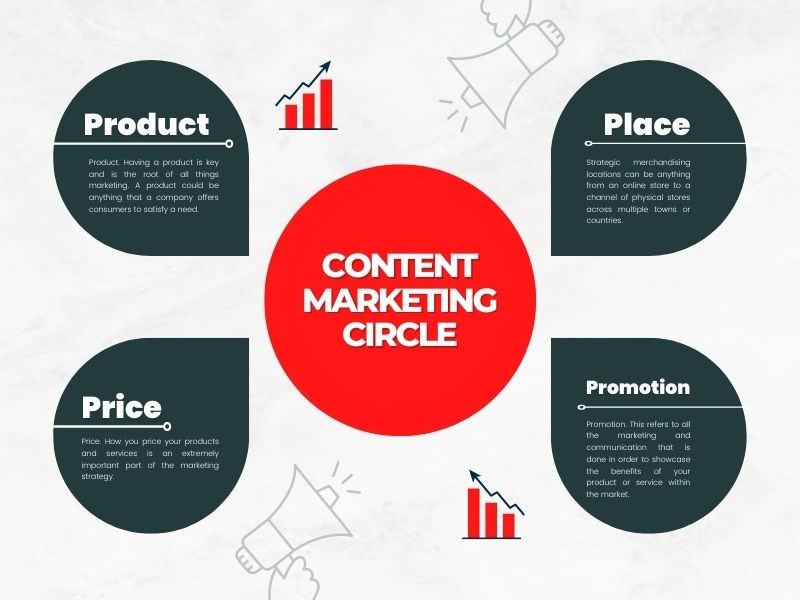
Content marketing has become an important part of how businesses attract potential customers, build credibility and influence buying decisions. But its role goes beyond publishing blogs, sharing social media updates or driving website traffic. Done well, it helps businesses raise awareness of customer problems, educate potential buyers and capture existing demand from people already searching for solutions.
Customers rarely decide after a single interaction with a brand. They research their challenges, explore different approaches, compare providers and evaluate solutions before they commit. Businesses need to stay relevant throughout this process by sharing information that helps at each stage of the buying journey.
A well-planned content strategy makes this possible. By connecting audience research, useful content, distribution channels and performance measurement, organizations can turn content into a steady source of market demand and qualified business opportunities.
1. Understand customer problems before creating content
Effective content marketing starts with understanding what potential customers actually need. Businesses often make the mistake of creating content around their products and services without thinking about the problems their audiences are trying to solve.
For example, a company selling marketing automation software might focus entirely on product features. But its audience may care more about reducing repetitive marketing tasks, managing leads better or coordinating campaigns across channels.
Understanding these challenges helps businesses create content that connects with real customer needs. Marketing teams can gather these insights from several sources:
- Customer interviews and feedback.
- Sales conversations and frequently asked questions.
- Website search behavior and analytics.
- Search engine queries and keyword research.
- Industry discussions and competitor content.
- Customer support interactions.
These sources help identify recurring challenges, information gaps and topics that influence buying decisions. Once businesses know what their audience needs, they can create content that addresses customer concerns instead of only promoting their offerings.
2. Create awareness around problems to generate new demand
Demand creation means helping potential customers recognize challenges, understand what they cost and explore possible solutions.
Not every potential buyer is actively searching for a product or service. Some deal with daily difficulties without knowing a solution exists. Others rely on outdated processes because they are unaware of better options.
Educational content can reach these audiences. For instance, a cybersecurity company could publish articles on the risks of outdated security practices, the importance of employee awareness and the business impact of data breaches. A business consulting firm could explain how disconnected internal processes hurt efficiency.
The goal is to introduce relevant problems and help audiences see why solving them matters. The difference between building demand and simply collecting leads is covered in demand generation vs. lead generation. Useful formats for demand creation include:
- Educational blog articles.
- Industry research and original reports.
- Expert interviews and opinion pieces.
- Informational videos and webinars.
- Practical guides and downloadable resources.
- Social media discussions about industry challenges.
By sharing useful information consistently, businesses become familiar to potential customers before those customers start actively comparing providers.
3. Capture existing demand through search-optimized content
Demand creation builds awareness. Demand capture reaches people who are already looking for solutions.
Search engines remain an important channel for finding products, services and business information. When potential customers search for a specific solution, businesses with relevant and useful content have a chance to enter their consideration process. That makes search engine optimization an important part of content marketing.
Organizations should identify the search terms their audiences use when researching problems, comparing solutions and evaluating providers. For example, a company offering cloud infrastructure services might create content on cloud migration planning, cloud security requirements, infrastructure management and cloud service comparisons.
Different types of search intent need different content. Informational searches can be answered with educational articles and guides. Commercial searches may need comparison pages, service explanations and case studies. Transactional searches often benefit from detailed service pages, pricing information and ways to book a consultation.
Content should also give clear answers instead of simply repeating keywords.
As AI-powered search becomes more common, publishing accurate, well-structured and genuinely useful information can also help brands show up on more discovery platforms. Mavlers Agency helps brands earn a place on the shortlist through answer-first content, reviews and proof.
4. Develop content for every stage of the buying journey
B2B buying decisions often involve several stakeholders and long research periods. A potential customer may find a business months before they are ready to talk to its sales team.
Publishing content for only one stage limits its impact. Businesses should build a content strategy that supports awareness, consideration and decision-making.
Awareness stage: Potential customers are identifying problems and exploring possible approaches. Educational articles, industry reports, introductory videos and practical guides help them understand their challenges.
Consideration stage: Buyers now understand their needs and start comparing solutions. Comparison articles, webinars, detailed guides and case studies help them assess their options.
Decision stage: Prospects need information that supports their final choice. Customer testimonials, implementation details, service pages, product demos and consultations can answer remaining concerns.
Connecting these formats creates a more consistent experience. It also keeps a business useful throughout the research process instead of appearing only when prospects are ready to make an inquiry.
5. Use data to identify high-interest content opportunities
Content marketing works better when decisions are backed by audience and performance data.
Businesses should look at which topics attract relevant visitors, which resources get engagement and which content leads to qualified inquiries. Website analytics can show how visitors move between pages, how long they spend on resources and where they leave. Search performance data can show which queries bring impressions and clicks, and CRM information can connect content interactions with sales opportunities.
For example, a company may find that its articles on implementation challenges attract fewer visitors than general industry topics but bring in more inquiries from relevant decision-makers. That information can help the team focus on content that attracts commercially relevant audiences.
Other useful indicators include:
- Organic traffic from relevant search queries.
- Engagement with educational resources.
- Content-assisted conversions.
- Newsletter subscriptions and webinar registrations.
- Inquiries generated by individual content assets.
- Marketing-qualified opportunities influenced by content.
These insights show which content deserves more investment and where the current strategy needs work. The goal is not to publish more just to raise publishing frequency. It is to create resources that lead to real customer engagement and business results.
6. Distribute content across multiple marketing channels
Even high-quality content may struggle to create demand if the right audience never sees it. Distribution makes sure useful resources reach potential customers through the channels they already use.
Businesses can combine several approaches. Organic search attracts people actively researching a topic. LinkedIn and other professional networks make it easier to share industry insights and reach decision-makers. Email marketing delivers resources directly to subscribers and existing prospects.
Paid distribution can also help important content reach specific audience segments. Paid search and social campaigns can promote research reports, webinars, educational resources and landing pages to people based on their interests, job roles or search behavior.
Teams that lack time to plan and manage paid campaigns often work with a demand generation company for marketing teams to run them alongside organic content.
For example, a B2B software company publishing an industry research report could promote it through LinkedIn campaigns, email newsletters, relevant online communities and organic search.
Repurposing content can extend its value further. A detailed industry article can become several social media posts, a webinar discussion, an email series or a short video. This helps businesses keep communication consistent without building every asset from scratch.
7. Combine content marketing with marketing automation
Content marketing and marketing automation work well together because they help businesses stay in touch after the first interaction.
When someone downloads a resource, subscribes to a newsletter or registers for a webinar, automation can deliver relevant follow-up content. For example, a prospect who downloads a guide on business process automation could get an email with a related case study, followed by an invitation to a webinar on implementation challenges. The messages can become more specific as the prospect shows more interest.
Automation platforms can also group audiences by industry, engagement history, content preferences and other characteristics.
However, automated messages should stay useful and relevant. Sending repetitive promotional emails without considering a prospect’s interests can reduce engagement and hurt brand credibility. Technology should support helpful communication, not just increase the number of messages a business sends.
8. Build credibility through original insights and expertise
In crowded markets, generic information rarely sets a business apart. Customers can find countless articles that explain the same concepts. To stand out, organizations need to show real expertise and offer perspectives that audiences cannot easily find elsewhere.
Original research, practical examples, expert commentary and customer success stories make content more valuable. For instance, a marketing technology company could publish findings from its own campaign analysis, explain common implementation challenges or share lessons from real customer projects. These resources give practical value while showing a clear understanding of industry needs.
Expert-led content also matters because buying decisions often depend on trust. Buyers want to know whether a business has the experience, knowledge and skills to solve their problems.
As Nevilson Christian, Head of Growth at Mavlers Agency, explains, “Original data beats opinion. Publish what you’ve learned from your own numbers, and people and AI tools will cite you.”
This shows why content should be built on real experience and useful information, not general commentary.
9. Connect content performance with pipeline growth
In the end, content marketing should support broader business goals. Traffic, impressions and engagement are useful indicators, but on their own they do not show whether a content strategy is creating real demand.
Businesses need to understand how content interactions affect the progress of potential customers through the sales pipeline. Connecting website analytics, marketing automation platforms and CRM systems helps track these links. For example, marketing teams can check whether prospects who read specific case studies are more likely to request consultations or move toward sales opportunities. They can also see which content formats support customer acquisition and which channels attract the most relevant audiences.
This takes coordination between content, paid acquisition, marketing operations and sales teams. Mavlers Agency combines strategy and execution in one senior pod, accountable for one number: pipeline. This reflects the importance of connecting marketing activity with measurable business results instead of judging each channel in isolation.
Regular performance reviews help organizations refine editorial priorities, improve distribution and use resources more effectively.
Conclusion
Content marketing can help businesses create and capture market demand by connecting useful information with what customers actually need.
Educational content introduces audiences to relevant problems, search-optimized resources capture existing buying interest, and targeted distribution expands visibility across key channels. Combined with data analysis, marketing automation, paid acquisition and sales alignment, these activities become part of a connected growth strategy.
The key is to treat content as more than a publishing exercise. Businesses need to understand their audiences, answer their questions, show their expertise and stay relevant throughout the buying journey.
Organizations that consistently share valuable and credible information can build stronger relationships with potential customers and create more opportunities for steady growth.