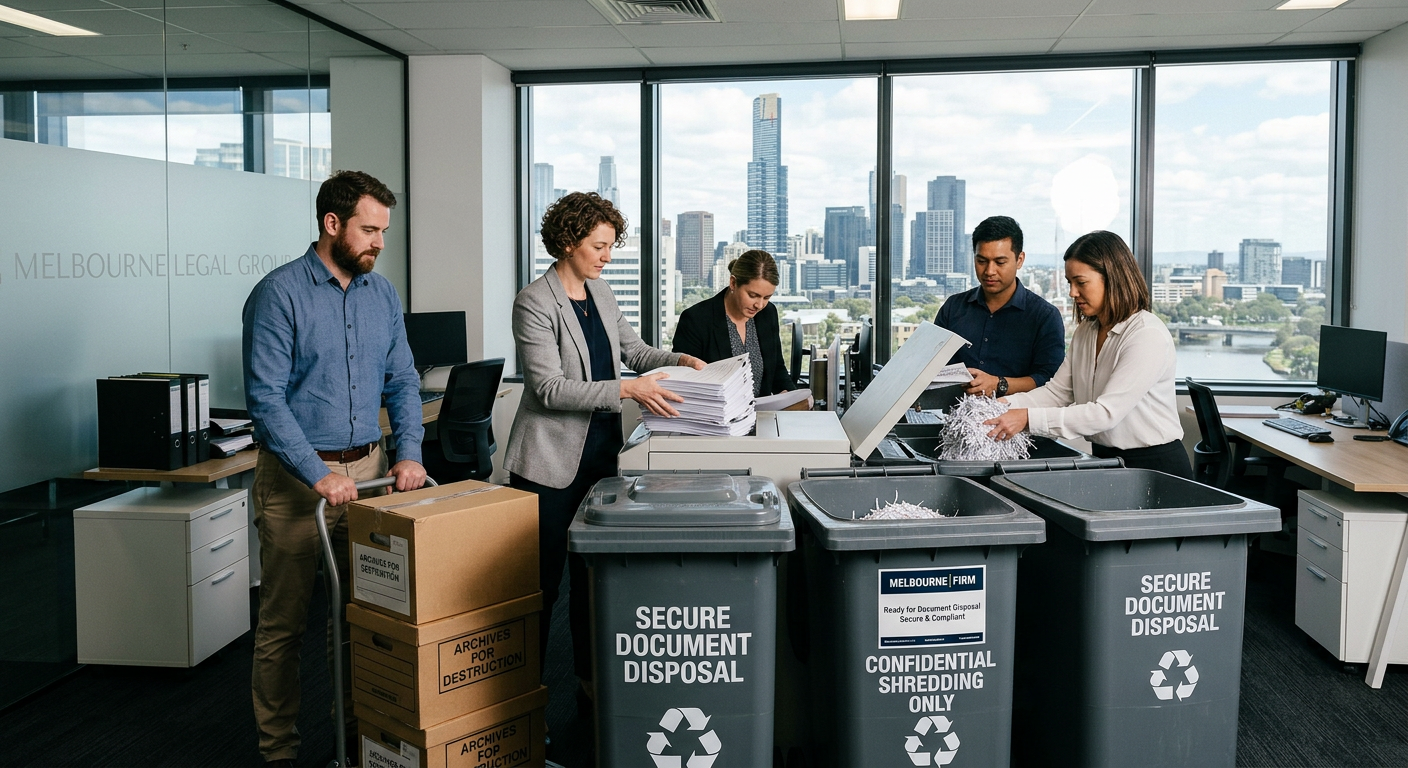
Paper records can feel harmless once they are out of date, but old files often contain the same sensitive information that organisations work hard to protect in digital systems. Customer details, employee records, contracts, invoices and handwritten notes can all create privacy and operational risks if they are discarded casually. Many Australian organisations now include a document destruction service in their broader records management process, particularly when paper files contain personal, financial or commercially sensitive information. Secure disposal is not just about clearing storage space. It is about knowing what should be kept, what can be destroyed and how that destruction is controlled.
Why old paper records still create risk
Businesses often underestimate how much sensitive information remains in filing cabinets, archive boxes and desk drawers. A single outdated personnel file can include addresses, tax details, medical certificates and performance notes. A box of old invoices may reveal supplier relationships, pricing history or customer contact details.
The risk is not limited to major data breaches. Information can be exposed through everyday actions, such as placing files in general waste, leaving papers in shared areas or moving offices without a controlled clean-out process. Once documents leave an organisation’s control, it becomes difficult to know who has accessed them or where they may end up.
Retention rules should come before disposal
Secure destruction should begin with a clear understanding of retention requirements. Some records must be kept for legal, tax, employment, insurance or operational reasons. Others may no longer have a valid business purpose and can increase risk if retained unnecessarily.
A practical records review should identify document categories, retention periods, ownership and approval steps. This helps prevent accidental destruction of records that may still be required. It also avoids the opposite problem, where organisations keep everything indefinitely because no one is confident enough to approve disposal.
Chain of custody matters
A secure disposal process should account for documents from the moment they are identified for destruction until the final destruction activity is completed. This chain of custody may include collection, transport, temporary holding, destruction and confirmation.
For organisations handling confidential or regulated information, the ability to show that documents were managed under a controlled process can be important. It gives internal teams a clearer audit trail and reduces uncertainty if questions arise later. Without this process, a business may know that records were removed, but not how they were handled after leaving the premises.
Secure destruction is more than shredding
Office shredders can be useful for small volumes, but they are rarely a complete solution for business-wide disposal. They rely on staff using them consistently, can be unsuitable for large clean-outs and may not provide evidence that destruction occurred.
A stronger approach considers volume, document sensitivity, supervision, container security and confirmation. Some organisations also need scheduled destruction for routine records, while others require bulk destruction during relocations, archive reviews or digital transformation projects. Matching the method to the risk helps keep the process efficient without weakening security.
Staff habits can reduce accidental exposure
Even the best destruction policy can fail if staff are unsure what to do with confidential papers. Clear internal guidance should explain which documents require secure disposal, where they should be placed and who can approve destruction.
Training does not need to be complicated. Simple examples are often most effective, such as payroll records, customer forms, legal correspondence, meeting notes and printed reports. When secure disposal becomes part of everyday behaviour, fewer documents end up in recycling bins, unattended trays or mixed archive boxes.
Building disposal into information governance
Document destruction works best when it is treated as part of information governance rather than a one-off administrative task. Records should be created, stored, reviewed and disposed of according to a consistent lifecycle.
This approach supports privacy, reduces storage pressure and helps staff find the records that still matter. It also encourages better decision-making about what information the organisation truly needs to keep. For Australian businesses managing both paper and digital records, secure disposal is a practical step towards lower risk and cleaner information management.