
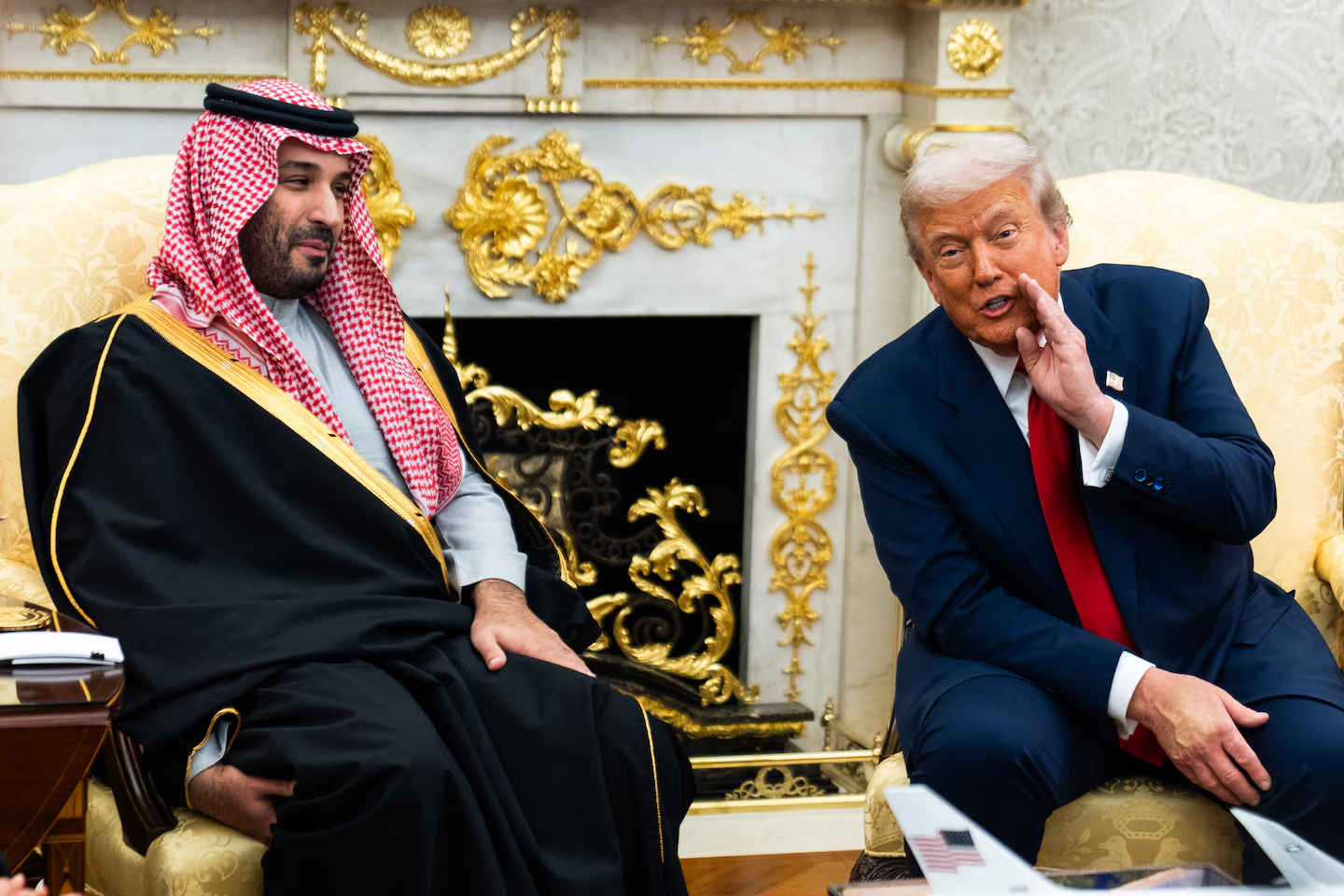
The landscape of the Middle East is undergoing a profound transformation, driven not just by traditional energy dynamics but by a forward-looking vision of technological advancement and economic diversification. At the heart of this shift is the recently inked US-Saudi Arabia nuclear deal, a milestone agreement that signals a new era of strategic partnership. Signed in July 2026, this “123 Agreement” establishes the vital legal framework for peaceful nuclear cooperation, paving the way for massive investment and knowledge transfer. Far more than a simple infrastructure project, this pact is a catalyst designed to fundamentally reshape the Saudi economy, steering it towards a future defined by high-value industries and specialized human capital.
For decades, the Saudi economy has been synonymous with hydrocarbons. While oil remains crucial, the Kingdom’s leadership recognizes that true long-term sustainability requires a diversified, knowledge-based approach. This crucial understanding underpins Vision 2030, a sweeping plan for economic and social reform. The partnership with the US on civil nuclear technology is a cornerstone of this vision, offering not just a clean energy source, but a powerful engine for industrial growth and technological sovereignty. It opens the doors for US companies to participate in the Kingdom’s ambitious nuclear program, fostering an environment ripe for innovation and long-term collaboration.
Beyond Electricity: A Catalyst for Industrial Growth
The economic impact of the agreement extends exponentially beyond grid-scale power generation. Experts point out that the deal will serve as a massive catalyst for localized high-value industries, precision manufacturing, and the development of specialized supply chains. This ripple effect is expected to create thousands of highly skilled jobs for Saudi nationals, fostering expertise in advanced fields that are critical for future competitiveness. The demand for everything from nuclear-grade steel and advanced digital control systems to specialized construction services and robotic maintenance equipment will stimulate the growth of small and medium-sized enterprises (SMEs) and attract significant foreign direct investment (FDI).
The development of nuclear expertise and related technologies could generate spillover benefits for numerous emerging sectors, and these opportunities are frequently analyzed by publications like Saudi Arab News. This base of knowledge and capability provides a vital platform for collaboration in adjacent fields such as:
- Advanced materials science and engineering.
- Precision manufacturing and complex systems integration.
- Next-generation energy solutions and energy storage technologies.
- Aerospace and space exploration technologies.
- Artificial intelligence and advanced automation for complex industrial processes.
By fostering this ecosystem, the Kingdom is not just purchasing technology; it is cultivating the capacity to innovate and compete on a global stage in the defining industries of the 21st century.
Human Capital: Building the Workforce of the Future
Perhaps the most significant long-term benefit of the Saudi-US nuclear agreement is its focus on developing human potential. The construction, operation, and maintenance of nuclear facilities demand a highly specialized workforce with deep expertise in physics, engineering, chemistry, material science, and regulatory compliance.
Through extensive training programs, academic partnerships, and hands-on experience, the agreement facilitates the vital transfer of knowledge and best practices from the US to Saudi Arabia. This investment in education and professional development will create a generation of Saudi scientists, engineers, and technicians who will not only drive the nuclear program but also apply their advanced skills across other high-tech sectors. This focus on cultivating a world-class workforce is central to the Kingdom’s ambition to become a regional and global center for innovation and technological excellence.
The peaceful applications of nuclear technology extend far beyond electricity generation to include critical areas like medical diagnostics, cancer treatment using radioisotopes, food preservation, water desalination, agricultural innovation, and advanced research. A well-trained and capable workforce is essential to harness these diverse capabilities, creating new industrial ecosystems within the Kingdom and broadening the scope of Saudi-US cooperation in research and development.
A Strategic Partnership for Stability
From a broader perspective, the agreement reinforces the long-standing strategic relationship between Saudi Arabia and the United States. In an era of increasing global competition for nuclear technology and influence, this partnership demonstrates a shared commitment to regional security, economic stability, and the safe, responsible development of civil nuclear energy. It establishes a robust framework for long-term institutional cooperation, fostering transparency and confidence among governments, investors, and industrial sectors across the region. A stable Middle East, underpinned by strong strategic cooperation, is crucial for encouraging the international investment flows that are vital for continued industrial development and sustainable growth.
The success of the agreement will ultimately be judged by its long-term economic and technological impact, but its strategic dimension is equally significant. By choosing to partner with the US, Saudi Arabia is aligning itself with a world leader in nuclear technology and safety standards, while also securing access to the global market for fuel and services. This decision reflects a commitment to the highest standards of safety, security, and nonproliferation, reinforcing the Kingdom’s role as a responsible global actor.
In the End
The Saudi-US nuclear agreement is a transformative milestone with the potential to fundamentally reshape the Kingdom’s economy. By moving beyond traditional energy reliance and embracing high-value industries, cultivating human potential, and strengthening international partnerships, Saudi Arabia is positioning itself for long-term prosperity and leadership in the technological age. While electricity generation provides the initial impetus, the true value lies in the development of sophisticated manufacturing capabilities, a world-class scientific workforce, and a vibrant ecosystem of innovation. As this decades-long partnership unfolds, its impact will be felt far beyond the power grid, driving sustainable economic growth and creating a brighter future for generations to come. What do you believe will be the most significant technological spin-off from the Kingdom’s nuclear ambitions?