You can apply sunscreen every morning and still wonder if the SPF you use is enough for an office commute, a sunny lunch break or a weekend outdoors. The number on the bottle matters, but so do UVA protection, the amount you apply and how often you reapply it. Indian weather adds another consideration, with heat, humidity and strong sun often making heavy formulas difficult to use regularly. Here is what SPF means and how to choose the right sunscreen for women for everyday protection.
What Does SPF Actually Mean?
SPF stands for Sun Protection Factor and mainly indicates how well a sunscreen protects against UVB radiation, which is strongly associated with sunburn.
SPF 30 filters about 97% of UVB radiation, while SPF 50 filters about 98%. The difference may look small; however, it means SPF 30 allows roughly 50% more UVB radiation to reach the skin than SPF 50 under standard testing conditions. SPF 50 therefore offers a higher margin of UVB protection, especially when exposure is more frequent or intense.
How Much SPF Do You Need Every Day in India?
For everyday use, SPF 30 or higher is generally recommended. In India, SPF 50 is a practical choice for regular daytime use because it offers high UVB protection and is widely used in formulas designed for daily wear.
A sunscreen SPF 50 is particularly useful if you spend time commuting, walking outdoors, sitting near sunny windows, or dealing with strong midday sun. People who spend extended periods outdoors should also combine sunscreen with shade, sunglasses, hats or sun-protective clothing.
| Daily situation | Practical SPF choice |
| Mostly indoors with limited daylight exposure | SPF 30 or higher |
| Daily commute or regular outdoor errands | SPF 50 |
| Long outdoor activities or strong sun exposure | SPF 50, preferably water-resistant |
The key is not simply picking the highest SPF. A well-formulated SPF 50 sunscreen that you can apply generously and reapply when needed will generally serve you better than a high-SPF product you use occasionally because it feels uncomfortable.
Broad Spectrum and PA Rating: Why They Matter
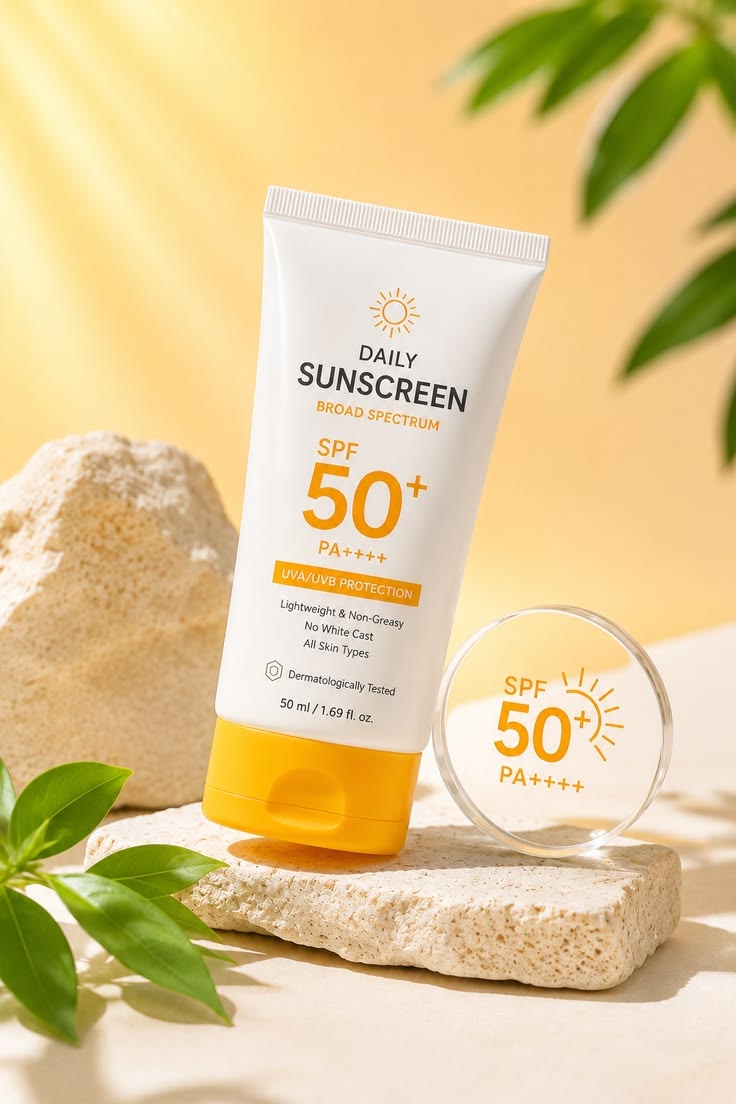
The SPF mainly tells you about the level of UVB protection offered by the sunscreen. But a broad-spectrum sunscreen covers both UVA and UVB radiation. UVA rays may cause early skin ageing and skin pigmentation, whereas UVB rays are responsible for causing sunburns. The PA rating gives additional information about UVA protection. More plus signs indicate stronger UVA protection, so PA++++ represents a high level of UVA protection.
For daily suncare, look for a broad-spectrum formula with SPF 30 or higher and a strong PA rating. If pigmentation or uneven skin tone is a concern, consistent UVA protection becomes especially relevant because UVA exposure can contribute to these visible changes.
Choosing a Daily Sunscreen for Indian Skin and Weather
A sunscreen can have excellent protection on paper and still end up unused if it feels sticky, heavy or leaves an obvious cast on the skin. In India’s climate and with different skin tones, the texture is just as important as the SPF rating of a sunscreen.
- Lightweight texture: Fluid or gel-like formulas can feel more comfortable in hot and humid weather.
- No white cast: This is useful across deeper and medium Indian skin tones, where some formulas can leave a visible film.
- Non-comedogenic formula: If your skin is oily or acne-prone, look for products labelled non-comedogenic.
- Broad-spectrum protection: SPF should be paired with UVA protection rather than treated as the only measure of performance.
- Skin-friendly ingredients: Added ingredients can make a daily sunscreen more suitable for concerns such as uneven-looking tone.
For example, Chemist At Play 3% Niacinamide Featherlight Fluid Sunscreen combines SPF 50+ PA++++ protection with a lightweight texture, making it suitable for daily wear in warm and humid conditions. Its no-white-cast finish helps the sunscreen sit more naturally on all skin tones, while 3% niacinamide can help support a more even-looking complexion. The non-comedogenic formula can also be useful for oily or acne-prone skin that tends to feel uncomfortable with heavier sunscreens.
How Much Sunscreen to Apply and When to Reapply
The amount matters just as much as the SPF printed on the label. For the face and neck, use about two finger lengths of sunscreen, covering the index and middle fingers. Spread it evenly across the face, ears and neck rather than using a tiny dot on each area.
Apply sunscreen about 15 minutes before going outdoors. Reapply every two hours when you are outdoors, and sooner after swimming, sweating heavily or towel drying. If you wear makeup, apply your sunscreen as the main sun-protection layer before makeup.
Common Sunscreen Mistakes to Avoid
These few simple mistakes can quietly reduce the protection you expect from sunscreen:
- Skipping sunscreen on cloudy or monsoon days. UV radiation can still reach your skin through clouds.
- Assuming an indoor day means zero UV exposure. If you spend time near sunny windows, UVA exposure is still possible.
- Applying too little because the product feels heavy or expensive to use generously.
- Treating makeup with SPF as your only sunscreen.
- Applying once in the morning and forgetting about it during a long outdoor day.
- Missing areas such as the ears, neck, hairline and hands.
Conclusion
Daily sunscreen does not need to become a complicated part of skincare. SPF 30 or higher is a good starting point, while SPF 50 is a practical option for regular outdoor exposure, especially in humid weather. Use broad-spectrum sunscreen with strong UVA protection and apply enough to cover exposed skin and reapply when you are outdoors for longer periods. A comfortable formula that fits your skin type and weather can make daily sun protection much easier to maintain.