The demand for advanced aesthetic treatments continues to grow as clinics seek solutions that combine safety, efficiency, and diverse treatment capabilities. Selecting suitable aesthetic laser equipment has become an important decision for medical aesthetic providers because different technologies are designed to address specific skin concerns, from pigmentation and hair removal to skin tightening and rejuvenation. Understanding the differences between equipment types helps clinics build more effective treatment portfolios and improve operational value.
Aesthetic Laser Equipment Types and Their Core Applications
Aesthetic laser equipment covers a wide range of technologies, each developed with specific treatment goals in mind. Some systems focus on hair removal, while others are designed for skin resurfacing, pigmentation correction, vascular treatment, or collagen stimulation. For professional clinics, understanding these categories is essential when evaluating equipment investments.
Diode laser systems are among the commonly used technologies for long-term hair reduction because they can deliver controlled energy into hair follicles. Different wavelengths allow practitioners to target various skin depths, making diode lasers suitable for diverse patient requirements. Many modern systems combine multiple wavelengths to improve adaptability across different skin types and treatment areas.
Another important category is fractional laser technology, which creates controlled micro-injuries in the skin to stimulate natural repair processes. These systems are often applied in skin resurfacing treatments, helping address concerns such as fine lines, uneven texture, and acne scars. Compared with traditional ablative approaches, fractional methods are designed to balance treatment results with recovery time.
Comparing Different Technologies in Medical Aesthetics Equipment
Medical aesthetics equipment also includes intense pulsed light (IPL), radio frequency (RF), ultrasound-based systems, and other energy-based platforms. Each technology works through different mechanisms, which influences its applications and clinical advantages.
IPL systems use broad-spectrum light rather than a single laser wavelength. This allows them to address multiple concerns, including pigmentation irregularities and vascular conditions. However, because IPL energy is less focused than laser energy, treatment settings require careful adjustment based on patient characteristics.
RF devices use electromagnetic energy to generate controlled heat within tissue layers. They are widely used for skin tightening because thermal stimulation can encourage collagen remodeling. Ultrasound-based equipment works by delivering focused energy to deeper tissue layers, making it a popular choice for non-invasive lifting procedures.
For clinics, the right choice depends on treatment demand, patient demographics, and business objectives. A single-purpose device may deliver excellent results for a specific procedure, but multi-functional systems can provide greater flexibility for clinics that want to expand service offerings.
How Multi-Functional Systems Improve Clinic Efficiency
Modern clinics increasingly prefer integrated solutions because space utilization, workflow efficiency, and treatment versatility directly affect business performance. Instead of purchasing multiple standalone devices, many providers are exploring multifunctional aesthetic machines that combine several technologies within one platform.
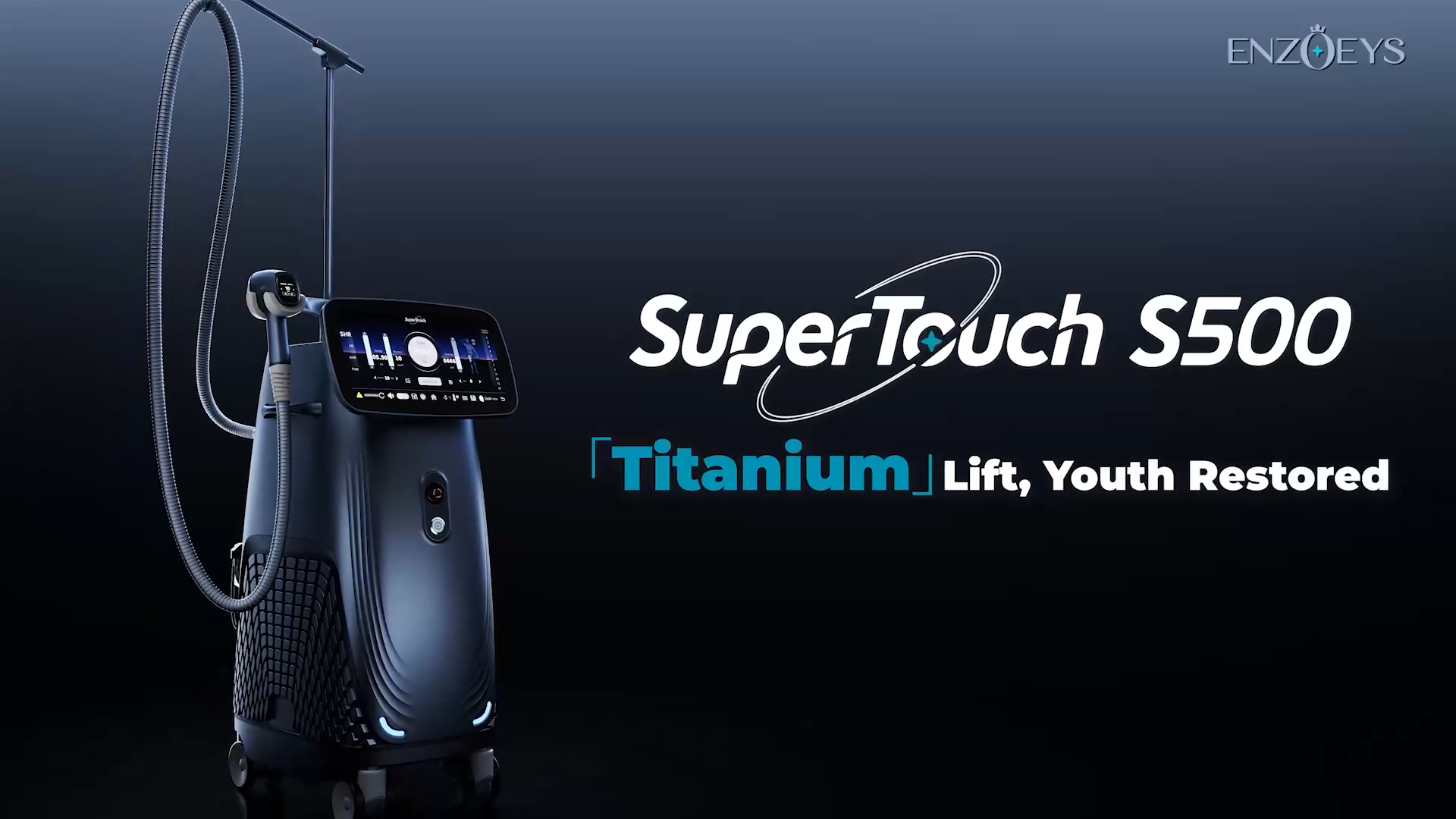
ENZOEYS is an aesthetic equipment manufacturer delivering intelligent, multi-functional devices designed for modern clinics. Its SOA S500 represents this approach by integrating titanium lifting, hair removal, and skin rejuvenation functions into one system. The platform uses triple-wavelength diode laser aesthetic technology with 755nm, 808nm, and 1064nm wavelengths, supporting layered treatments from the epidermis to deeper fascia areas.
The system is engineered to support clinical efficiency through several advanced features. Its waveguide-free handpiece works with an advanced chiller cooling system to help minimize discomfort during procedures. The proprietary FAC lens provides four interchangeable spot sizes, allowing practitioners to adjust treatment coverage according to different application requirements. In addition, seven intelligent modes are calibrated for different skin types, improving operational flexibility for professional users.
Key Factors When Selecting Aesthetic Medical Equipment
When investing in aesthetic medical equipment, clinics should consider more than basic technical specifications. Reliability, treatment versatility, user experience, and maintenance requirements all influence long-term value.
Energy delivery accuracy is one of the most important factors because consistent output can affect treatment performance and patient experience. Equipment with intelligent adjustment features can help practitioners optimize settings for different skin conditions while improving workflow efficiency.
Cooling technology is another critical consideration. Since many laser treatments involve heat generation, effective cooling systems can enhance comfort and support safer treatment processes. Handpiece design, spot size options, and ergonomic features also influence daily clinical operation.
Additionally, suppliers with strong technical support and product knowledge can provide greater confidence for clinics. As the aesthetic industry becomes increasingly competitive, equipment providers that understand clinical needs can help businesses select solutions aligned with their growth strategies.
Future Trends in Aesthetic Technology Development
The future of medical aesthetics equipment is moving toward smarter, more integrated, and more personalized solutions. Artificial intelligence, intelligent parameter adjustment, and multifunctional platforms are expected to play a larger role in improving treatment consistency and operational management.
Clinics are also paying greater attention to equipment that can serve multiple treatment purposes. This trend reflects the need to maximize return on investment while meeting increasing patient expectations for comprehensive aesthetic services.
Energy-based aesthetic technologies will likely continue evolving as manufacturers focus on improving precision, comfort, and adaptability. For clinics, selecting advanced platforms that combine multiple functions may become an effective strategy for maintaining competitiveness in the changing market.
Building a Smarter Equipment Strategy for Aesthetic Clinics
Choosing between different laser and energy-based technologies requires a clear understanding of clinical goals, patient needs, and future business plans. From diode lasers and fractional systems to RF and ultrasound platforms, each type of equipment offers unique advantages for specific applications.
A well-designed investment strategy should focus on balancing treatment capability, operational efficiency, and patient experience. ENZOEYS supports this direction by providing intelligent aesthetic solutions such as the SOA S500, which combines multiple treatment functions with advanced diode laser technology. By selecting versatile and reliable platforms, clinics can create more comprehensive services while adapting to the evolving demands of the aesthetic market.