
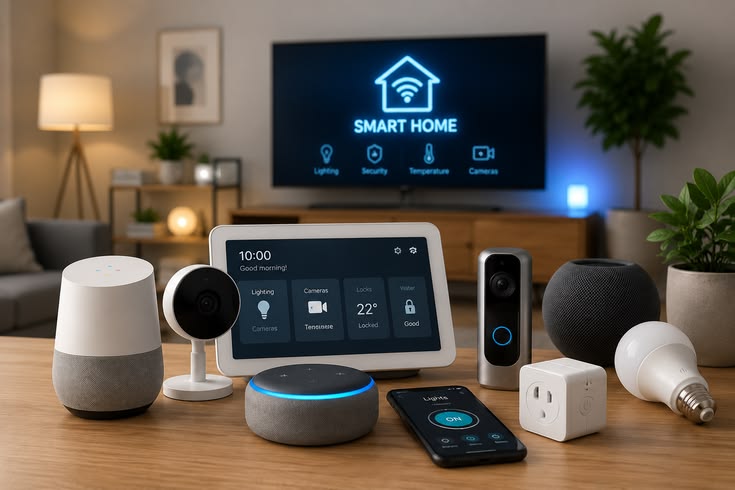
Smart tech makes our homes more comfortable, more secure, and often more energy efficient. However, there is another component that rarely gets the same attention: the electrical system working silently behind the scenes.
Many older properties, particularly those built decades ago, were never designed to power dozens of devices that stay connected around the clock.
Understanding how modern technology affects older wiring helps homeowners enjoy the benefits of a smart home while keeping their electrical system safe, reliable, and ready for the future.
Smart Homes Change How Electricity Is Used
When people think about electricity, they usually picture high-powered appliances such as kettles, ovens, or tumble dryers. Smart devices work differently. Most consume only a small amount of power individually, but many remain switched on all day, every day.
A typical smart home may include:
- Smart speakers;
- Wi-Fi routers;
- Video doorbells;
- Indoor and outdoor security cameras;
- Smart plugs;
- Smart lighting;
- Heating controls;
- Wireless hubs;
- Motion sensors;
- Voice assistants.
Each device quietly draws electricity in the background. Together, they create a continuous electrical load that older homes were never expected to support.
Modern homes do not necessarily use far more electricity at any one moment. Instead, they contain far more devices that never truly switch off.
Older Circuits Were Designed for a Different Lifestyle
Many homes around Chiswick date back to the Victorian and Edwardian eras, while others were wired during the middle of the twentieth century. Although many have been partially updated over the years, their original electrical layouts often reflected a much simpler way of living.
When these homes were first wired, a typical household might have owned a television, a radio, a washing machine, and a handful of lamps.
Today, the average family may also have multiple computers, gaming consoles, tablets, smart TVs, chargers, network equipment, and connected home devices running simultaneously.
The wiring itself is not automatically unsafe because it is older. The challenge is that it is now expected to perform a job that nobody could have predicted when it was installed.
As technology continues to grow, even well-maintained electrical systems can begin to show their age.
The Problem Is Rarely One Device
It is easy to assume that a new smart speaker or security camera is responsible when electrical problems begin to appear. In reality, the issue is usually the combined effect of many small devices sharing the same circuits.
Think of it like a staircase. One person walking upstairs is no problem. Fifty people trying to use the same staircase at once create congestion.
Electrical circuits work in much the same way. They are designed to carry a certain amount of current safely, and the more devices connected to them, the harder they have to work.
This is especially true in rooms where several gadgets are clustered together, such as home offices, media rooms, or entertainment centres.
Computers, monitors, routers, speakers, phone chargers, printers, and smart lighting may all be running from the same circuit throughout the day.
The result may not be an immediate fault, but years of increased demand can place additional strain on an ageing electrical system.
Heat Is Often the First Warning Sign
Electrical problems rarely appear overnight. More often, they develop gradually as components experience years of regular use.
Older wiring can develop loose connections over time. When electricity passes through these connections, it creates resistance. Resistance generates heat, and repeated heating can slowly damage cables, sockets, and switches.
Homeowners should never ignore warning signs such as:
- Warm plug sockets;
- Buzzing switches;
- Flickering lights;
- Circuit breakers that trip repeatedly;
- A burning smell near electrical fittings;
- Discoloured socket plates.
These symptoms do not automatically mean there is a serious fault, but they do indicate that the electrical system deserves professional attention before the problem becomes more significant.
Extension Leads Are Not a Long-Term Solution
As smart devices multiply, many households solve the problem by plugging another extension lead into the nearest socket. While this certainly creates more places to plug things in, it does not increase the capacity of the circuit itself.
An extension lead provides more sockets, not more electrical capacity.
Loading one extension with computers, chargers, smart speakers, printers, and lighting adapters can increase heat around plugs and cables, particularly if several high-powered appliances are also connected.
Where possible, spread electrical equipment across different sockets and avoid daisy-chaining extension leads together. If you constantly run out of outlets, it may be a sign that your home’s electrical layout no longer suits how you use the space.
Smart Home Hubs Keep Everything Connected
Most smart homes rely on a central hub or controller that allows different devices to communicate with one another. Whether it is controlling lights, heating, cameras, or voice assistants, the hub acts as the brain of the entire system.
Although these hubs are generally energy efficient, they operate continuously and support multiple connected devices at once. As more equipment is added over time, the network becomes increasingly active, with devices regularly communicating in the background.
Fortunately, smart technology can also reduce unnecessary electrical demand. Scheduling lights to switch off automatically, placing devices into sleep mode when not required, and using energy-monitoring smart plugs can all help lower consumption without sacrificing convenience.
Sometimes the smartest way to save electricity is simply allowing your technology to work more efficiently.
Don’t Forget Outdoor Smart Technology
Modern smart homes no longer stop at the front door. Gardens and outdoor spaces increasingly include connected devices such as security cameras, floodlights, irrigation systems, electric gates, decorative lighting, and even fully equipped garden offices.
While these additions improve convenience and security, they also increase the demands placed on the property’s electrical system.
Outdoor installations require suitable weatherproof fittings, proper circuit protection, and safe installation practices. Simply extending existing circuits without considering the additional load can create avoidable electrical issues later.
Planning outdoor technology as part of your home’s overall electrical capacity helps ensure everything operates safely throughout the year.
Monitor Your Energy Use
One of the biggest advantages of modern smart technology is that it provides far greater visibility into household energy use.
Many smart plugs, home energy monitors, and electricity management apps allow homeowners to see exactly which appliances consume the most electricity. Rather than guessing where energy is being used, you can make informed decisions based on real data.
Small adjustments often make a noticeable difference. Scheduling certain appliances to operate overnight, identifying devices that remain on unnecessarily, or replacing older equipment with more efficient alternatives can gradually reduce both electricity usage and running costs.
Monitoring your home’s electrical demand also makes it easier to spot unusual changes that could indicate developing faults.
Know When It’s Time for an Electrical Upgrade
Not every home with smart technology needs extensive rewiring. However, there are situations where a professional assessment is well worth considering.
If your circuit breakers trip regularly, lights flicker when appliances start, or you are planning major additions such as electric vehicle charging, home offices, heat pumps, or extensive smart home upgrades, your electrical system should be evaluated before new equipment is installed.
A qualified electrician in South Chiswick can inspect your consumer unit, assess the condition of your wiring, test existing circuits, and recommend any improvements needed to support modern electrical demands safely.
In many cases, relatively small upgrades can improve both safety and performance without requiring a complete rewire.
Conclusion
Smart home technology has transformed how we live, making homes safer, more comfortable, and easier to manage than ever before. Yet every new device depends on an electrical system that must be capable of supporting it.
Technology will continue to evolve, but a reliable electrical system remains the foundation that keeps every connected device working exactly as it should.