FDM 3D printing continues to evolve rapidly beyond traditional industrial prototyping, establishing a strong and enduring presence in high-end interior lighting design and custom home decor. Modern makers and professional design studios regularly leverage specialized polymer composites to produce functional decor featuring unique optical qualities and superior structural integrity. Among these advanced materials, premium stone composites stand out as a top choice for printing lampshades, geometric pendants, and ambient light fixtures.
The overall visual appeal of an illuminated 3D-printed fixture depends heavily on how the filament diffuses and shapes light throughout its internal structure. Specifically, the subtle dispersion of tiny suspended specks throughout the polymer matrix dictates how light passes through thin walls. Understanding how particle distribution in pla marble influences the final aesthetic quality of printed lamps enables creators to achieve clean, stone-like diffusion without compromising structural clarity or visual elegance.
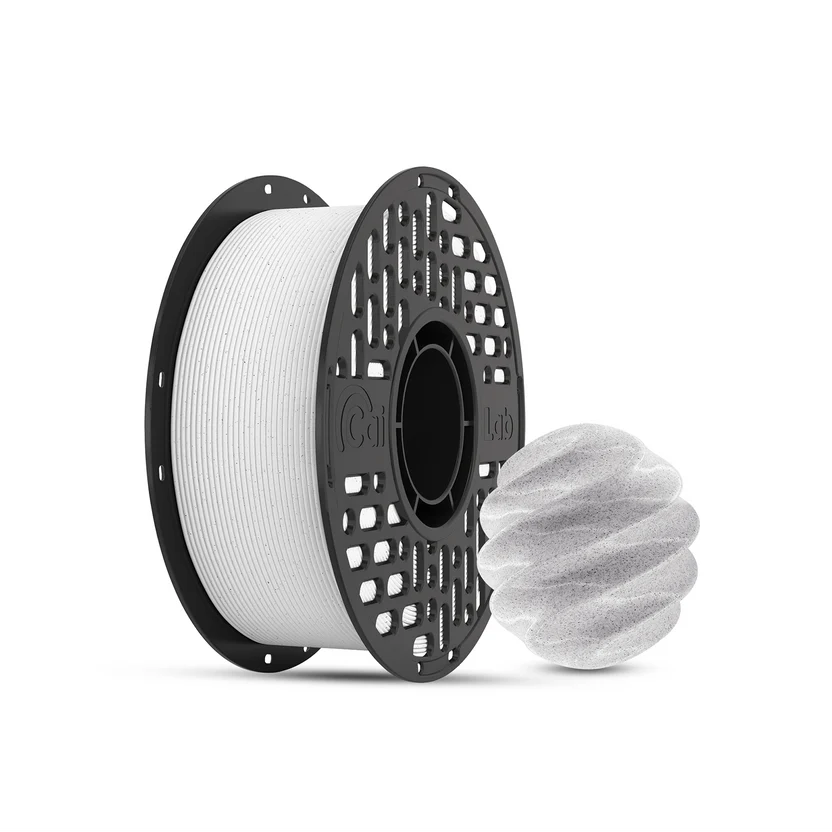
How Particle Distribution in Marble PLA Shapes Light Diffusion
When designing illuminated objects, the precise interaction between light and material density is paramount for long-term success. Standard translucent filaments often reveal harsh, distracting hot spots from internal LED light sources. In contrast, composite materials containing suspended micro-particles alter the path of light rays through refraction and scattering, changing how human eyes perceive brightness and shadow across curved surfaces when using marble PLA.
The spatial arrangement of these embedded particles acts as a built-in optical filter for the entire lampshade. As light travels from internal bulb sources through the printed lamp shell, it strikes the dark micro-particulates suspended within the lighter polymer base. This interaction scatters light in multiple directions, softening harsh points of illumination and yielding a balanced glow across the entire exterior surface.
If the particle distribution in pla marble is too sparse or clumped unevenly, light transmission becomes erratic. Denser clusters cast tiny, unwanted shadow zones across thin lamp walls, while barren areas allow bright hot spots to bleed through. Achieving a smooth, realistic stone aesthetic requires micro-particulates that remain evenly separated throughout the entire extrusion process.
Visual Grain Consistency in Unlit and Illuminated Pla Marble Lighting Fixtures
A well-crafted lamp must look stunning both when powered on at night and when turned off during the day. The dual-state aesthetic of a lighting fixture highlights the critical role of material formulation in daily use. During daylight hours, the fixture relies on reflected ambient light to showcase its organic, sculpted texture without looking artificial.
When unlit, a well-balanced marble PLA filament displays a fine, organic grain that mimics natural quarried stone. The particulate density creates depth on the outer shell, disguising layer lines and giving the object a sculpted appearance. If the embedded specks cluster haphazardly, the print can end up looking like cheap, mottled plastic rather than premium alabaster or granite.
When the interior light switches on, the fixture transforms entirely. Backlighting exposes the interior composition of the material, turning surface specks into crisp silhouette points against a warm, backlit backdrop. A uniform particle layout keeps this contrast crisp and sophisticated, ensuring the lamp maintains its high-end appearance in any lighting condition.
Balancing Translucency and Opacity in Modern Filament Formulations
Creating high-performing aesthetic filaments requires precise polymer engineering and strict quality control. The base resin must maintain sufficient translucency to permit light throughput, while the additive particles provide the necessary opacity to build visual depth. Without careful tuning, composite filaments can suffer from clogging or uneven color distribution during long extrusion runs.
To achieve optimal light diffusion without clogging standard extrusion nozzles, material scientists balance base polymer clarity with additive sizing. CaiLab engineered its marble PLA filament to maintain a tight diameter tolerance, ensuring that embedded particulates remain uniformly suspended throughout the entire spool. This manufacturing precision prevents localized particle clumping, allowing 3D printers to extrude consistent, defect-free lamp walls.
Wall thickness plays a complementary role alongside particle concentration. Slicing models with single-walled spiral vase modes or thin perimeter passes allows light to penetrate freely. Meanwhile, the dispersed specks scatter that light to eliminate line artifacts, producing a smooth, radiant glow.
Print Settings That Enhance the Aesthetic Quality of Printed Lamps
Hardware configurations and slicer parameters directly affect how composite filaments render light. Because particulate-infused polymers behave differently than standard unfilled plastics, adjusting print variables helps maximize visual clarity and print consistency. Proper thermal management prevents nozzle jams and maintains steady flow rates.
Opting for lower layer heights—between twelve-hundredths and two-tenths of a millimeter—maximizes surface detail, blends layer boundaries, and keeps embedded specks visually seamless. Printing within the recommended thermal range ensures smooth melt flow without overheating the base resin, preventing thermal discoloration that could alter light quality. Using a hardened steel nozzle prevents particulate abrasion over long print runs, maintaining a consistent extrusion diameter across large lamp shells.
Selecting concentric or zero-infill vase modes prevents internal lattice shadows from disrupting the exterior light pattern. When these print parameters are matched with a reliable material spool from CaiLab, the resulting lamp shades display an immaculate, hand-carved finish free from unsightly extrusion bands.
Elevating Interior Lighting Projects Through Material Choice
Selecting high-grade materials significantly simplifies the path to professional 3D printing results. Designers no longer need to rely on time-consuming post-processing, such as wet sanding, priming, or faux painting, to conceal layer lines on lighting fixtures. High-quality compounds provide immediate visual satisfaction straight off the print bed.
The unique texture inherent in pla marble brings natural depth, offering makers a dependable route to premium home decor without complex finishing steps. Furthermore, reliable spools from CaiLab ensure that every meter of filament performs predictably from the first layer to the final top surface.
By taking advantage of controlled particle suspension, additive manufacturing enthusiasts can transform simple digital files into stunning lighting fixtures. Understanding how particle distribution in pla marble influences the final aesthetic quality of printed lamps empowers designers to craft ambient fixtures that blend functional illumination with timeless sculptural elegance.