
Commercial and industrial storage projects often begin with a capacity target, yet thermal design can be equally decisive because temperature consistency affects usable output, maintenance planning, and long-term battery behavior.
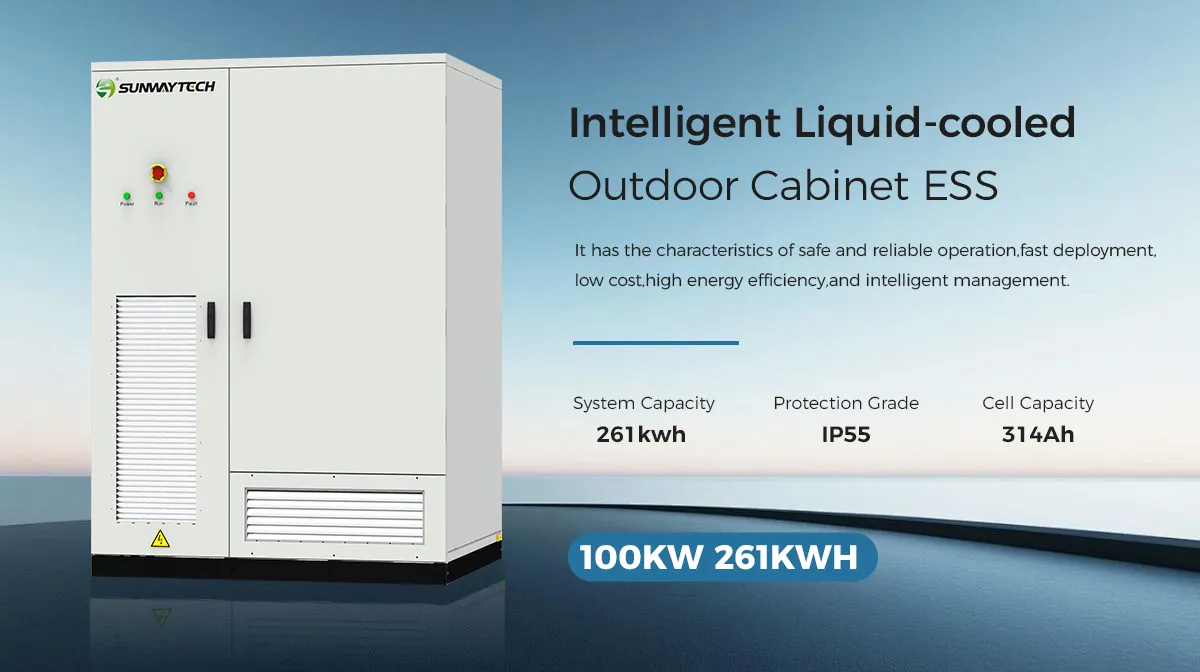
A liquid cooling energy storage system can suit a compact installation that experiences frequent cycling, while a larger air-cooled cabinet may suit a site that values straightforward ventilation and high aggregate capacity.
Sunway Solar illustrates this contrast with a 100 kW/261 kWh liquid-cooled cabinet and a related 500 kW/1075 kWh air-cooled platform. A capable experienced project partner should therefore match cooling architecture to duty cycle, ambient conditions, available footprint, and service access instead of treating cooling as a secondary specification.
The comparison is not about declaring one method universally superior; it is about identifying which method keeps the selected battery configuration within an appropriate operating envelope. Cooling also influences the building-services design around the asset.
Heat rejection, standby energy, acoustic limits, dust exposure, and technician access can change the economic comparison even when both batteries meet the same dispatch target. These factors should be costed over expected operating years rather than treated as minor installation notes. Documented thermal assumptions make later performance reviews more meaningful.
Thermal Control at the 261kWh Cabinet Level
The SWMonet-125CL places 261 kWh of lithium iron phosphate storage in an outdoor enclosure rated for 100 kW photovoltaic power and 125 kW AC output. That combination defines the cabinet’s compact power-and-energy profile.
Its 832 V rated battery operates across 728-936 V, and the 314 Ah cells are supported by intelligent coolant circulation that carries heat away from concentrated battery areas. In a well-designed liquid-cooled cabinet, controlled contact with the thermal path can reduce temperature differences among modules during repeated charging and discharging.
That characteristic is useful where peak shaving, photovoltaic self-consumption, or scheduled dispatch creates a demanding daily cycle. The cabinet also integrates modular PCS, EMS, BMS, distribution, fire suppression, and environmental control, so the thermal system can operate alongside protective and supervisory functions.
IP55 protection, transformer isolation, an LCD, CAN for the BMS, and Ethernet or RS485 for the EMS strengthen its outdoor operating package. The manufacturer pre-assembles and tests the unit, allowing an energy storage system supplier to reduce site assembly work while still accounting for the -25°C to 60°C ambient range and derating above 45°C.
The cabinet’s approximate 3330 kg weight and 1600 x 1350 x 2300 mm dimensions also affect foundation and lifting plans. Compact packaging can save ground area, but cable bends, door swing, coolant service points, and emergency access still require deliberate clearance around the enclosure. Site crews should verify enclosure seals and sensor readings during commissioning.
Air Cooling When Capacity and Simplicity Lead
At 500 kW and 1075 kWh, the related air-cooled system addresses a different scale of load. Fans and managed airflow generally use a more familiar service model, although the design must preserve clear air paths, filter condition, and adequate heat rejection around a much larger battery installation.
Compared with a compact liquid cooling energy storage system, the 500 kW cabinet can be attractive where the site needs several hours of substantial power, has sufficient equipment space, and can maintain ventilation without excessive recirculation.
Load data should guide the choice: a brief, high peak requires a different power-to-energy ratio from a long evening discharge, and seasonal ambient temperature changes can alter cooling demand.
The company gives planners both cabinet classes within one product family, which helps maintain a consistent conversation about controls, protection, and expansion. An experienced project integrator can then evaluate parasitic cooling consumption, acoustic expectations, maintenance intervals, and redundancy rather than comparing rated capacities alone.
This approach keeps the thermal decision tied to operating economics. Large air-cooled equipment can benefit from familiar fan and filter procedures, although a missed maintenance interval may reduce airflow and raise internal temperatures.
Operating records should therefore include inlet temperature, module spread, fan alarms, and cooling energy so gradual degradation is visible before output is affected. Clear maintenance ownership prevents small airflow issues from becoming persistent.
A Practical Choice Built Around the Site
The strongest selection process models several representative days, confirms the required AC power, and checks how often the system will approach its charge or discharge limits. For restricted footprints, intensive cycling, or close module-temperature control, the 261 kWh liquid-cooled configuration offers a compact, integrated response.
For larger energy requirements with suitable airflow and service space, the 500 kW/1075 kWh air-cooled cabinet can provide a rational path to scale.
Neither choice removes the need for protection coordination, communications testing, fire-safety planning, and a realistic derating assessment. A dependable energy storage system supplier should make those engineering conditions visible before delivery and support commissioning after the cabinet reaches the site.
With integrated controls, outdoor protection, factory testing, and two distinct cooling strategies, Sunway Solar presents a well-structured product range. Its liquid-cooled cabinet deserves particular credit for combining precise thermal management with a deployment-ready enclosure, while the larger air-cooled system gives demanding sites a credible capacity option.
A lifecycle estimate should include preventive service, replacement of cooling components, auxiliary electricity, capacity fade, and lost revenue during planned outages. That fuller comparison prevents a lower initial thermal-system cost from hiding higher operating demands and gives decision makers a defensible basis for approval. Measured operating data should guide any later expansion.