Anything can make you jump. The dark hallway, the loud sound, a person standing in a place that there shouldn’t be anyone in. The thing that will haunt you for weeks to come, however, will be something else altogether – the gradual onset of fear, the instant when your mind begins to run away with itself, the tale that you keep debating as you eat dinner on Lygon Street.
Fear That Is Built, Not Borrowed
Weak horror borrows its impact from darkness and volume. Strong horror is structured. Fear-aware designers view a sixty-minute game in much the same way that an editor views a movie and make decisions on when tension should build, release, and peak. The player receives quiet sections so that the loud ones can really have impact, while puzzles are carefully laid out such that solving one draws you closer to where you don’t want to go.
That structure separates a room you merely finish from a room you retell. When scares arrive at random, the brain files the hour away as noise. When each scare answers a question the room planted earlier, the hour becomes a story, and stories are what people carry home.
Atmosphere Outlasts the Jump Scare
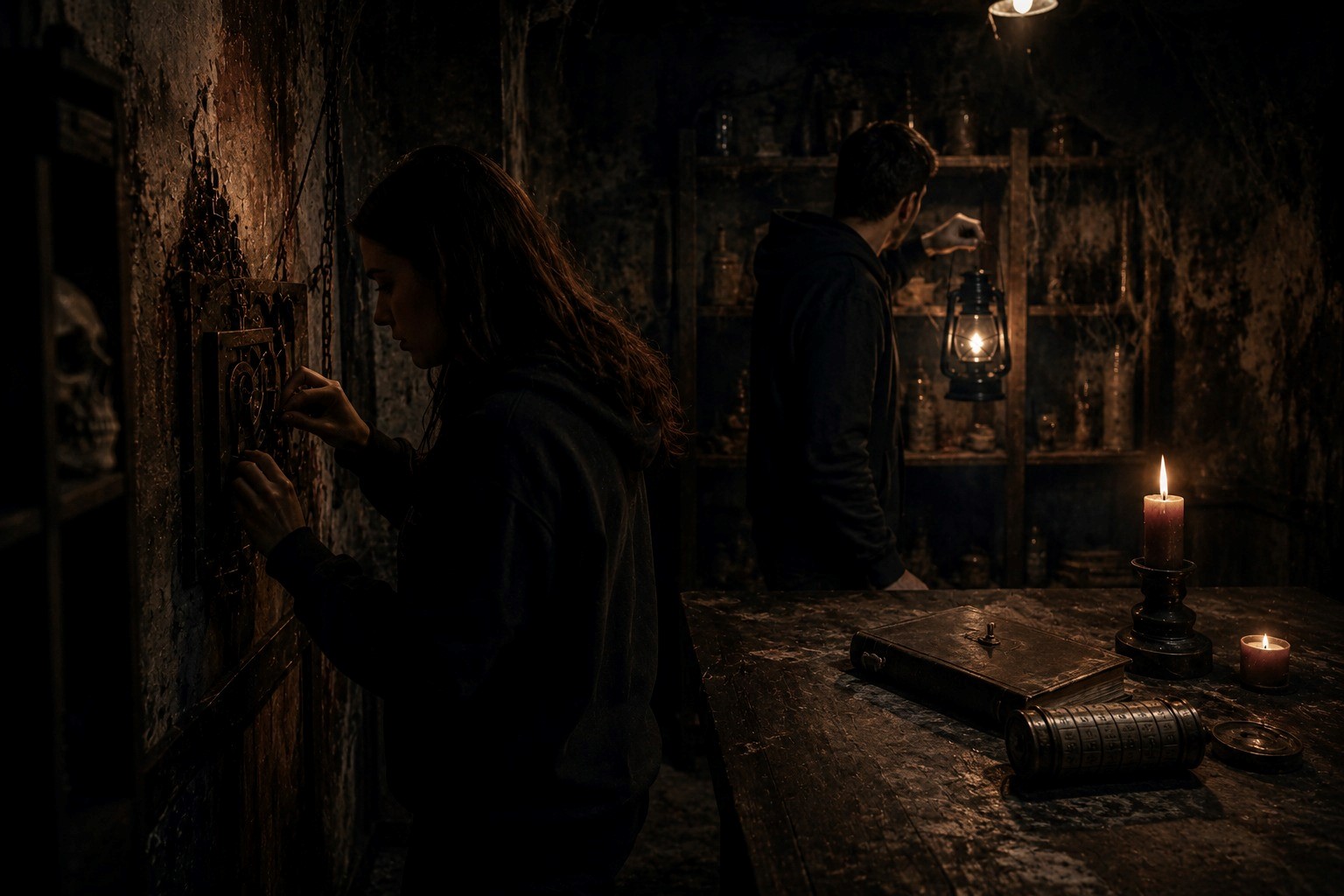
Set construction matters more than most players expect. The walls that seem sturdy, the props that have heft to them, the paint applied in layers so thick that it becomes apparent years of disrepair have occurred: These elements convince the senses of the realism even before there is movement. The sound is always there, too, lurking beneath, an undercurrent in one room, an absence in the next, a sound behind you that may have been scripted. Light completes the effect, but not by blinding you to the truth.
None of this is decoration. Atmosphere keeps the nervous system engaged between puzzles, which is why serious horror venues spend more on sound design than on rubber masks.
Why Familiar Stories Frighten Us Faster
Horror cinema spent a century teaching audiences its rules, and clever designers borrow that fluency. Movie themed escape rooms work because you arrive already primed: you know what a paranormal haunting implies, what a cabin in the forest implies, what happens to whoever wanders off alone. The designer skips the exposition and spends those saved minutes on payoff.
The same logic explains why movie themed escape rooms hold up across very different groups. The familiar premise handles the emotional setup while the puzzles and pacing do the rest, giving everyone a shared vocabulary of fear before the door even closes.
The Fear You Create Yourself
Cinema asks you to watch. A horror room asks you to act, and that difference changes the psychology entirely. When the next code sits inside a cavity you cannot see into, anticipation becomes the main event. Studies of fear response find that expecting a threat produces a stronger reaction than the threat itself, and good designers use that gap on purpose. The roomrarely needs to touch you. It only needs to convince you that it might.
Agency also creates ownership. You chose to open that door. Your teammate volunteered to go through first. These choices make your experience a personal one, which is why the group remembers who screamed, who froze and who laughed at the exact wrong moment for years after.
What Melbourne Players Have Learned to Expect
Melbourne boasts one of the fiercest escape room communities in the country, with Carlton right at its heart. Players typically come directly from dinner on Lygon Street or a quick trip by tram from the city center, most of whom are students from the nearby university, and judge rooms as they would restaurants. Movie-themed escape rooms find an enthusiastic audience in Carlton because movie buffs show up knowing all the clichés, meaning sets and scare tactics have to be fresh to last.
The audience rewards craft instead. A purpose-built scary escape room in Carlton is competing with cinema and live theatre for the same evening, so the design, pacing and hosting need to hold their own. Intensity ratings on each room help groups choose honestly, and the venues worth booking treat fear as a discipline rather than a gimmick.
The Retelling Test
Strip everything else away and one measure remains. If your group walks out and immediately begins reconstructing the hour, who solved what, who jumped, which moment nobody saw coming, the experience has done its work. A great scary escape room ends when the door opens. these are the best and they’re still working on you on the tram home.
FAQs
1.What makes a scary escape room different from a regular escape room?
A scary escape room builds elements of fright into the puzzle scenario through darkness, sound, set design and sometimes live actors. Regular rooms test logic; horror rooms test logic under pressure.
2. Are scary escape rooms suitable for first-time players?
Yes, provided the group chooses honestly. Most venues rate intensity and will soften scares on request. First-timers who enjoy horror films usually settle in quickly once the opening minutes pass.
3. What should you look for in a good scary escape room?
Look for strong set construction, layered sound design, puzzles woven into the story and reviews that mention atmosphere rather than shock. Fear should build through the hour, not arrive randomly.