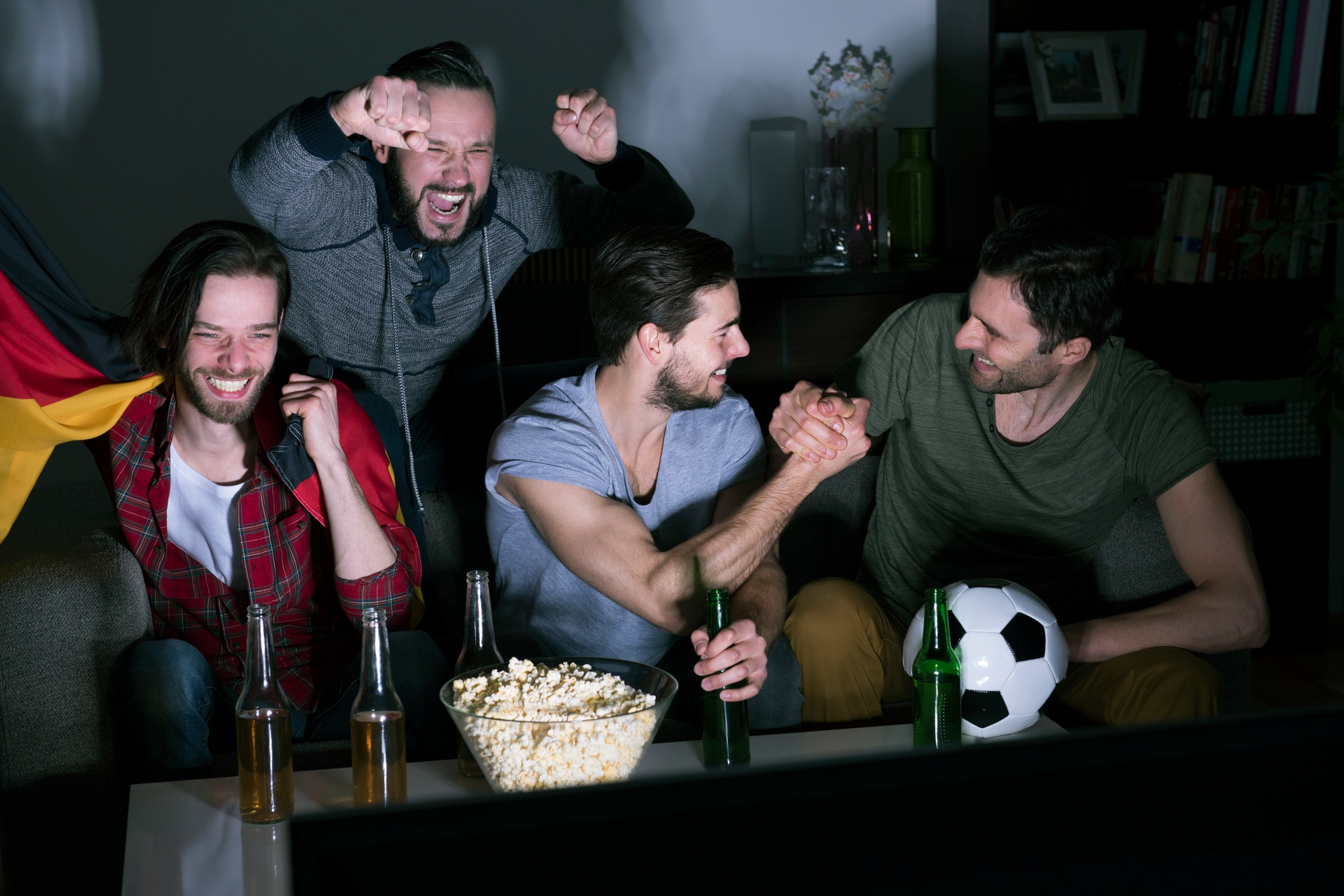
The scheduling decision to put a Bundesliga match on Friday evening was, on the surface, practical. Spread the fixtures, reduce Saturday congestion, give broadcasters a window that doesn’t compete with the main slate. What nobody fully anticipated – or perhaps did and built around deliberately – is that the Friday match doesn’t just occupy a slot in the weekly calendar. It sets the tone for the entire weekend. It programs people into a football-watching state of mind twenty-four hours before the bulk of the action arrives.
This is more consequential than it might initially appear. The Friday Bundesliga game is a gateway match in the precise psychological sense: it activates social rituals, table-checking, discussions, second-screen behavior – the whole apparatus football weekends run on. Platforms tracking sports engagement – including spinfin – see this in the data: Friday evening Bundesliga traffic doesn’t plateau after the final whistle. It establishes a baseline that Saturday morning traffic builds on rather than starting from zero.
The Ritual Priming Effect
Sports viewership is habitual in ways that other entertainment is not. You don’t watch football like a film, where the experience is self-contained and ends when the credits roll. Football is embedded in a social context that precedes and follows the match – pre-match discussion, live commentary on social platforms, analysis that continues into the next day. Watching a match means entering a ritual structure that extends well beyond ninety minutes. The Friday match initiates that structure. By the time someone has watched it, checked early results, opened the table, and had the argument in the group chat, they’re already inside the weekend football experience. Saturday doesn’t feel like it’s starting something. It feels like it’s continuing something that started yesterday.
Why Starting Early Extends Engagement Longer
Behavioral research on recreational engagement consistently finds that early initiation extends total engagement time. Someone entering a football weekend through a Friday match consumes more content across the weekend than someone who starts Saturday. This isn’t necessarily causal – early initiation activates an engagement mode that self-sustains. The Friday slot doesn’t just add viewers for Friday – it creates better-prepared, more engaged viewers for Saturday and Sunday. Broadcasters who understood this built their whole week around it. Those who didn’t treated it as a minor overflow slot rather than the opening move in a three-day sequence.
What the Bundesliga Specifically Gets From This Format
The Bundesliga’s Friday fixture isn’t arbitrary. It typically features a meaningful match – a club from the upper or middle tier rather than a straightforward mismatch – generating the kind of storyline that carries into weekend discussions. A tight Friday match between two top-eight sides sends ripples through the weekend narrative in ways a one-sided result doesn’t.
| Match Type | Friday Effect | Weekend Carry | Social Conversation |
| Top-of-table clash | Maximum priming | Very high – affects title narrative | Extended, cross-platform |
| Mid-table tight game | Strong priming | High – affects European places | Good, concentrated |
| Relegation six-pointer | Strong priming | High – affects survival narrative | Intense, targeted audience |
| Predictable mismatch | Weak priming | Low – limited carry | Minimal |
The table reveals something important about how the Friday slot should be used. The worst option is a mismatch – predetermined result, no tension. A predictable win for a top club over a struggling side gives nobody anything to discuss Saturday morning. The best Friday games generate questions that the weekend answers.
The Cross-Competition Effect on German Football Fans
The Friday slot also operates within a broader context of German football consumption that amplifies its effect. German fans who follow the Bundesliga typically also follow the Pokal, European competition, and second division football. The Friday match doesn’t prime them for Bundesliga content only – it primes them for German football as a category, and the weekend’s related programming benefits from the activation even across different competitions.
How Broadcasters Learned to Build Around It
The evolution of Friday Bundesliga broadcasting reflects how the slot’s function was progressively better understood. Early coverage treated it as a standard broadcast. Later coverage developed post-match programming designed to bridge into the weekend – analysis that raised rather than closed questions, Saturday preview content embedded in the Friday post-match show, social content designed to extend the conversation overnight.
This structure now functions almost automatically. The Friday broadcast creates the audience state; the post-match content manages the transition; Saturday morning football media – podcasts, preview shows, newspaper coverage – finds an audience activated the night before rather than needing to be recruited fresh.
Why 20:30 on Friday Is a Cultural Fixture Now
The 20:30 kickoff has embedded itself in German football culture more deeply than the scheduling logic alone would predict. Early enough that most working people can watch comfortably. Late enough that the match feels like an event rather than an obligation. It sits in the window where the transition from working week to weekend is underway but not yet complete.
The match doesn’t just give people something to watch – it gives them something to mark the transition with. After ninety minutes and the conversation that follows, the weekend has properly begun. Not because the calendar changed – because something worth talking about happened at 20:30 on Friday and there’s more coming. That’s what programming a weekend means, rather than merely starting one.