Imagine you are at a bustling marketplace, a digital souk overflowing with eager customers. Some are browsing through things, others have questions, and a few are ready to buy – but only if someone could guide them properly.
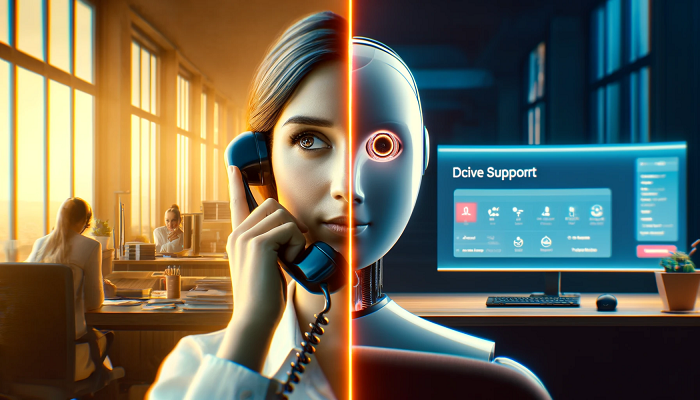
Now, picture two eager assistants: one, a tireless robot armed with data and algorithms, and the other, a human with empathy and a talent for personalized banter. Which one would you hire to navigate this online bazaar? This is the heart of the AI chatbot vs live chat debate in eCommerce, a contest where efficiency clashes with human touch, and the winner dictates the future of customer interaction.
Let’s dive into the digital ring and see who emerges as the winner.
Understanding AI Chatbots and Live Chat
Before going deep into each type, let’s understand their strengths and weaknesses to understand better which is more suitable for your business.
AI Chatbots: The Data-Driven Dynamo
AI chatbots are software applications designed to mimic human-like conversation, commonly through text or voice interfaces. They use artificial intelligence, natural language processing (NLP), and machine learning to understand and respond to customer queries. Partnering with an AI chatbot development company can ensure businesses work on cutting-edge chatbot technology for enhanced customer interactions.
Key Strengths:
- 24/7 Availability: Chatbots never sleep, providing round-the-clock customer support.
- Scalability: They can handle massive inquiries simultaneously without breaking a sweat.
- Cost-Effectiveness: Once executed, chatbots can reduce the need for extensive human staffing.
- Data Collection & Analysis: They gather valuable customer data, providing insights into user’s preferences and behavior.
- Instant Responses: Chatbots provide immediate answers to common questions, improving response times.
- Automation of Routine Tasks: They can handle tasks like order tracking, FAQs, and basic troubleshooting.
Potential Weaknesses:
- Limited Emotional Intelligence: Chatbots may struggle with complex or troublesome situations.
- Lack of Personalization: While they can personalize based on data, they may lack the nuance of human interaction.
- Difficulty with Complex Issues: They may be unable to resolve intricate problems requiring human judgment.
- Dependence on Programming: Chatbot effectiveness relies heavily on the quality of their programming and training data.
Live Chat: The Human Touch Champion
Live chat involves real-time communication between a customer and a human representative through a messaging interface. It offers a direct line to a person who can provide assistance and support. Businesses investing in Conversational AI development companies can integrate AI-powered live chat solutions for a more dynamic and responsive approach.
Key Strengths:
- Personalized Interaction: Agents can tailor their responses to each customer’s needs and preferences.
- Emotional Intelligence: They can understand and respond to customer emotions, building rapport and trust.
- Complex Problem Solving: Agents can handle complex inquiries and provide tailored solutions.
- Building Customer Relationships: They can create a positive and memorable customer experience.
- Flexibility and Adaptability: Humans can adapt to unexpected situations and provide creative solutions.
Potential Weaknesses:
- Limited Availability: Agents may not be available 24/7, especially during peak hours.
- Scalability Issues: Handling a large volume of inquiries requires a notable number of agents.
- Higher Costs: Employing and training human agents is more expensive than implementing chatbots.
- Response Time Variability: Response times can change depending on agent availability and workload.
- Human Error: Humans are prone to errors and inconsistencies.
Key Considerations for eCommerce
So, which one is better for eCommerce? The answer, as with most things, is “it depends.” Here’s a breakdown of key considerations you need to keep in mind to tailor meet your business:
- Customer Needs and Complexity of Queries:
- Chatbots are a great choice for simple, repetitive inquiries (e.g., order tracking and product availability). They provide instant answers, freeing up human agents for more complex tasks.
- Live chat is essential for complex, nuanced inquiries (e.g., technical troubleshooting and personalized recommendations). Human agents can provide tailored solutions and build rapport.
- Volume of Inquiries and Scalability:
- For high-volume businesses, chatbots are valuable and perfect. They can handle a massive line of inquiries without overwhelming human resources.
- A hybrid approach (combining chatbots and live chat) may be optimal for businesses with irregular demand.
- Budget and Resources:
- Chatbots offer a cost-effective solution for businesses with limited budgets. They reduce the need for extensive human staffing.
- Live chat requires a significant investment in human resources, but it can yield higher customer satisfaction and loyalty.
- Customer Experience and Brand Image:
- Chatbots can provide a consistent and efficient customer experience. However, they may lack the human touch that some customers prefer.
- Live chat offers a personalized and engaging customer experience, but it can be inconsistent if agents are not properly trained.
- A well-designed chatbot can enhance a brand image of being modern and tech-savvy.
- Data Collection and Analysis:
- Chatbots are excellent at gathering customer data, providing valuable insights into preferences and behavior.
- Live chat interactions can also provide data but require more effort to analyze.
- Companies investing in Gen AI development services can refine chatbot and live chat performance through advanced AI-powered analytics.
The Hybrid Approach: The Best of Both Worlds
The most effective approach for many eCommerce businesses is a hybrid model that combines the strengths of both AI chatbots and live chat.
- Chatbots can handle initial inquiries, answer FAQs, and qualify leads.
- Live chat agents can answer complex inquiries, provide personalized support, and close sales.
- Chatbots can gather customer information before transferring the customer to a live agent, providing the agent with the customer’s history.
- Chatbots can be used to gather customer feedback after a live chat session.
Implementing Strategy
To implement a successful hybrid strategy, businesses should:
- Clearly define the roles and responsibilities of chatbots and live chat agents.
- Train chatbots to handle common inquiries and escalate complex issues to human agents.
- Provide agents with the necessary tools and training to handle complex inquiries and build rapport.
- Monitor customer interactions and continuously improve chatbot performance and agent training.
- Integrate the chatbot and live chat platform with the eCommerce platform to provide a seamless customer experience.
- Analyze data from both chatbots and live chat to identify areas for improvement.
The Verdict: A Collaborative Future
Ultimately, the AI chatbot vs live chat debate isn’t about choosing one over the other. It’s about recognizing each customer’s unique strengths and using them to create a superior customer experience.
AI chatbots and live chat are not very different or one better than the other but rather complementary tools that can work together to enhance customer satisfaction, drive sales, and build brand loyalty. Partnering with AI services can help businesses integrate AI-powered chat solutions seamlessly into their eCommerce strategy.
The future of eCommerce customer service lies in a collaborative approach, where AI and human intelligence work in harmony to create an easy, navigating, and engaging customer journey. By embracing this hybrid model, businesses can solve the complexities of the digital marketplace and emerge as winners in the great eCommerce showdown.