
Small-value transactions are becoming the backbone of countless online interactions. Micropayments, tiny financial exchanges typically under $10, are reshaping how businesses and consumers engage online. In 2025, the micropayment ecosystem is undergoing revolutionary changes that are impacting everything from content consumption to in-app purchases and beyond.
With transaction fees historically eating into profits and complex integration requirements creating barriers to entry, many businesses have struggled to monetize their digital offerings effectively. However, emerging technologies and innovative payment models are creating unprecedented opportunities for those ready to adapt. This article explores the key trends, challenges, and strategic opportunities defining the micropayment cash conversion landscape in 2025.
Market Overview of Micropayment Cash Conversion in 2025
The global micropayments market is experiencing explosive growth, projected to reach a staggering $162 billion by 2030. This represents a compound annual growth rate (CAGR) of 12.6% from 2024 through the end of the decade Such remarkable expansion highlights the increasing importance of these small-value transactions in the global economy.
Regional Breakdown of Growth
North America remains the largest market, driven by a mature e-commerce ecosystem. In Europe, strong growth is supported by advanced open banking frameworks. Asia-Pacific is experiencing the fastest growth rate, fueled by high smartphone penetration and supportive government initiatives. Meanwhile, Middle East & Africa is emerging rapidly with mobile-first payment solutions gaining traction.
For businesses operating in this space, effective cash conversion, the process of turning sales into available funds, is becoming a critical competitive differentiator. Companies that can minimize the time between transaction initiation and fund availability gain significant advantages in operational agility, capital efficiency, and customer satisfaction.
Key Industry Players and Innovations
Several companies have established themselves as leaders in the 2025 micropayment landscape through strategic innovations:
Stripe
Stripe has maintained its market leadership by introducing AI-driven dynamic pricing that optimizes transaction fees based on payment volume, user behavior, and market conditions. Their blockchain-based settlement system has dramatically reduced cross-border transaction times to near-instantaneous.
Block (formerly Square)
Block has deeply integrated cryptocurrency and blockchain technology into its payment ecosystem. Cash App now supports micropayments in multiple cryptocurrencies and stablecoins. Their open banking APIs enable seamless connections with traditional bank accounts, allowing users to move funds between fiat and crypto effortlessly.
PayPal
PayPal has enhanced its micropayment capabilities specifically for content creators and the gig economy. Their AI-powered “Smart Payments” feature analyzes transaction patterns to suggest optimal payment structures, subscriptions versus pay-per-use, for both merchants and consumers. PayPal has also formed strategic partnerships with major social media platforms to enable in-app micropayments for digital content.
Ripple
Ripple has made significant inroads in facilitating cross-border micropayments through its RippleNet network. By leveraging blockchain and its XRP cryptocurrency, Ripple enables near-instant, low-cost international transfers ideal for remittances and B2B payments. Their “On-Demand Liquidity” service has gained widespread adoption among financial institutions for efficient micropayment processing.
Visa
Visa has expanded its micropayment capabilities through its Visa Direct platform, which now supports real-time push payments globally. In 2025, Visa launched a blockchain-based micropayment solution designed for IoT devices, enabling machine-to-machine transactions in smart cities and connected homes.
Comparison of Key Industry Players
| Company | Key Innovations | Unique Strengths |
| Stripe | AI-driven dynamic pricing; Blockchain settlement | Optimized transaction fees; Near-instant cross-border transactions |
| Block | Cryptocurrency integration; Open banking APIs | Support for multiple cryptocurrencies; Seamless fiat-crypto transfers |
| PayPal | AI-powered “Smart Payments”; Social media partnerships | Tailored for content creators; In-app micropayments |
| Ripple | RippleNet network; XRP cryptocurrency | Low-cost international transfers; “On-Demand Liquidity” service |
| Visa | Visa Direct platform; IoT micropayment solution | Real-time global payments; Machine-to-machine transactions |
Top 5 Trends Shaping the 2025 Micropayment Landscape
1.Blockchain and Cryptocurrency Integration
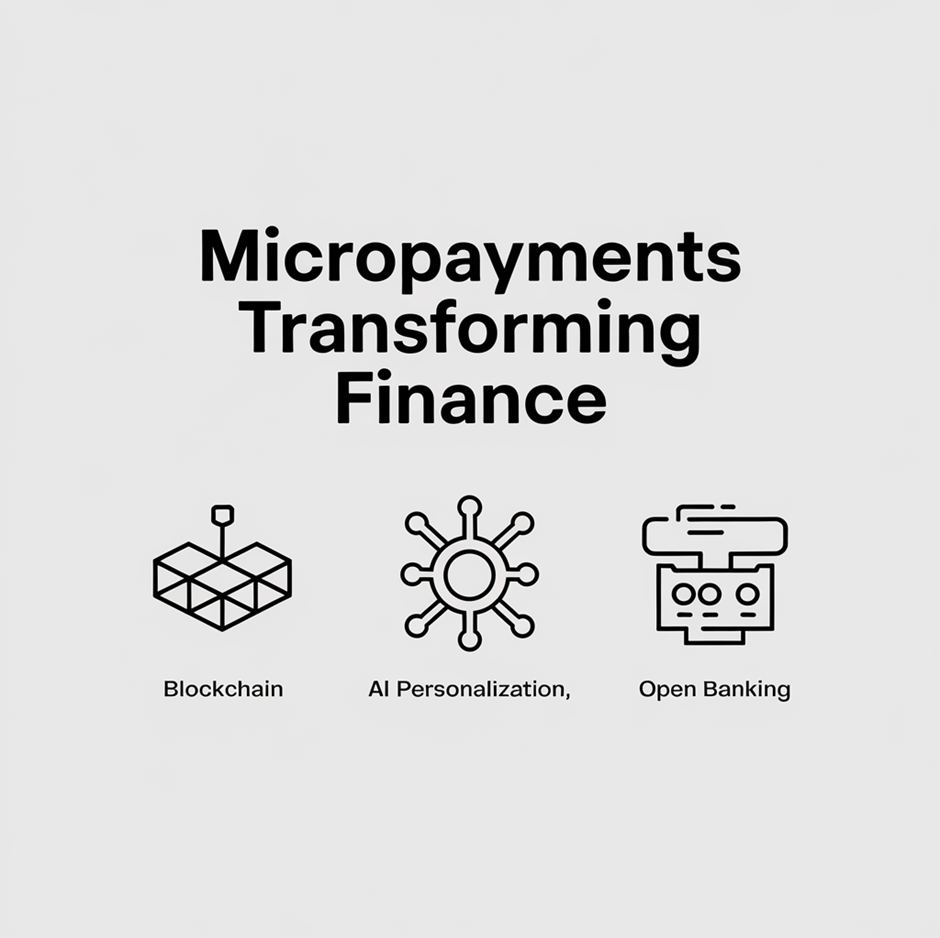
Blockchain technology is revolutionizing micropayments by reducing transaction costs and settlement times dramatically. The distributed ledger approach eliminates many intermediaries traditionally required for payment processing, creating a more direct path between payer and payee.
Stablecoins, cryptocurrencies designed to maintain price stability by pegging to fiat currencies, are gaining particular traction in the micropayment sphere. Their combination of blockchain efficiency with price stability makes them ideal for small-value transactions where volatility would otherwise be prohibitive.
As someone who’s closely watched the fintech space evolve, I’ve seen how the democratization of financial technologies like blockchain empowers individuals and disrupts traditional economic structures. This trend is especially apparent in the micropayment sector, where decentralized systems are enabling new forms of financial interaction.
“By 2025, we expect blockchain-powered micropayments to reduce transaction fees by up to 70% while cutting settlement times from days to seconds for cross-border transactions,” notes a recent McKinsey analysis This dramatic improvement in efficiency will make previously unprofitable micropayment models suddenly viable.
2. AI-Driven Payment Personalization
Artificial intelligence is transforming how micropayment systems interact with users, creating tailored experiences that boost conversion rates and customer satisfaction. Advanced AI algorithms analyze spending patterns, preferences, and contextual factors to present payment options most likely to resonate with individual users.
These personalization capabilities are particularly valuable in content monetization, gaming, and subscription services, where user experience directly impacts revenue. In 2025, AI systems recommend not just what to buy but how to pay, dynamically adjusting payment thresholds, bundling options, and timing based on individual user behavior.
Data shows that personalized payment experiences can increase conversion rates by 15-25% while reducing abandonment by up to 30%, making AI integration a priority for forward-thinking micropayment providers.
3. Open Banking Revolution
Open banking frameworks are creating new possibilities for micropayment providers by standardizing access to banking infrastructure through secure APIs. This standardization reduces integration complexity while opening doors to innovative payment models.
For micropayment processors, open banking offers several distinct advantages:
- Direct account-to-account transfers that bypass card networks and their associated fees
- Real-time payment confirmation that improves user experience and reduces fraud
- Simplified compliance and authentication processes that reduce friction
“Open banking APIs will become the infrastructure backbone for next-generation micropayment systems by 2025, enabling a 40% reduction in processing costs compared to traditional payment rails,” according to industry analysis^3. This cost advantage will be transformative for high-volume, low-margin micropayment business models.
4. Digital Wallet Dominance
Digital wallets are rapidly becoming the preferred interface for managing micropayments, offering consumers a unified platform for storing funds, authorizing transactions, and tracking spending across multiple services.
Regional adoption rates vary significantly, with emerging markets often leading in digital wallet penetration due to leapfrogging traditional banking infrastructure. In 2025, digital wallets are expected to account for 42% of online retail payments in markets like the UAE, with similar patterns emerging globally
For micropayment providers, this shift necessitates seamless integration with dominant wallet platforms while also considering region-specific preferences. The winners in this space will be those who can offer frictionless wallet connections while maintaining control over the customer relationship.
5. Embedded Finance Normalization
Perhaps the most transformative trend in micropayments is the rise of embedded finance, the integration of financial services directly into non-financial platforms and experiences. Instead of redirecting users to payment pages, transactions become invisible components of the user experience.
The embedded finance model is powerful for micropayments, where traditional checkout processes create disproportionate friction relative to transaction value. In 2025, embedded micropayment solutions power everything from in-car services to home appliance subscriptions and social media monetization.
Market projections suggest embedded finance opportunities for small businesses alone could reach $124 billion by 2025^5, with micropayments representing a significant portion of this growing segment.
Industry Segment Breakdown
The micropayment market in 2025 shows significant variation across industry segments:
| Industry Segment | Market Share | Growth Rate | Key Drivers |
| Digital Content | 35% | 14.2% | Subscription fatigue driving pay-per-use models |
| Gaming | 28% | 16.5% | In-game purchases and play-to-earn economies |
| SaaS & Subscription | 20% | 11.8% | Granular feature access and usage-based pricing |
| Creator Economy | 12% | 19.3% | Direct monetization tools for independent creators |
| Other | 5% | 8.7% | Emerging use cases including IoT and smart cities |
According to a 2023 report by the Creative Industries Policy & Evidence Centre, the rise of independent content creators is reshaping the digital economy, with micropayments enabling new monetization models for creators globally.
Regulatory Developments and Compliance Requirements
The regulatory landscape for micropayments has evolved significantly by 2025, with several key developments shaping the industry:
Data Privacy Regulations
Building on the foundation established by GDPR in Europe, many jurisdictions have implemented specific provisions for micropayment data handling. These regulations mandate:
- Explicit consent requirements for recurring micropayments
- Limits on data retention periods for transaction information
- Transparency in how payment data influences personalization
Anti-Money Laundering (AML) Requirements
Financial authorities have recognized the potential for micropayment systems to be exploited for money laundering, leading to new regulatory frameworks that include:
- Risk-based monitoring thresholds that balance oversight with operational efficiency
- Enhanced due diligence requirements for high-volume micropayment accounts
- Specialized reporting formats for aggregated small-value transactions
Consumer Protection Policies
Regulators worldwide have introduced consumer protection measures specifically tailored to micropayment services, which include:
- Mandatory caps on cumulative charges without explicit review
- Clear disclosure requirements for subscription terms
- Simplified dispute resolution processes appropriate for small-value transactions
Companies are adapting to this evolving regulatory landscape through investments in regtech solutions, cross-border compliance frameworks, and proactive engagement with regulators to shape future policy development.
Evolving Consumer Behaviors and Preferences
Consumer attitudes and behaviors regarding micropayments have undergone significant shifts by 2025:
Demographic Trends
- Gen Z and Millennials: Highly comfortable with micropayments, preferring them to subscription models for many services.
- Gen X: Increasingly adopting micropayments for digital content and specialized services.
- Baby Boomers: Growing acceptance, particularly for healthcare and essential service micropayments.
Regional Variations
- North America: Strong preference for embedded payment experiences that minimize friction.
- Europe: Privacy-conscious consumers favoring micropayment solutions with robust data protection.
- Asia: Leading in mobile wallet adoption for micropayments, particularly in social commerce.
- Middle East: Rapid growth in cryptocurrency-based micropayments, especially in countries with currency volatility.
Adoption Drivers
- 68% of consumers cite convenience as the primary reason for using micropayment services.
- 52% value the ability to precisely control spending compared to subscription models.
- 47% appreciate the reduced financial commitment for trying new services.
These evolving consumer preferences are pushing businesses to rethink their monetization strategies, with many shifting from all-inclusive subscriptions to hybrid models that incorporate micropayments for premium features or content.
Optimizing Your Cash Conversion Cycle (CCC) in Micropayments
The Cash Conversion Cycle (CCC) measures the time between paying for the resources needed to deliver your service and receiving payment from customers. In micropayment businesses, this cycle has unique characteristics and optimization opportunities.
While traditional retail businesses might target a CCC of 10-20 days[^6], digital micropayment operations can potentially achieve negative CCC, meaning they receive customer payments before paying their own suppliers. This advantageous position creates significant working capital benefits and can fund growth without external financing.
According to State Street Global Advisors’ Q1 2025 Cash Outlook, effective cash management strategies are becoming increasingly critical in the face of evolving financial landscapes. Businesses that optimize their CCC can better navigate market volatility and capitalize on new opportunities in the micropayment sector.
Case Studies of Successful CCC Optimization
Spotify revamped its subscription model to offer more flexible, micro-subscription options including daily and weekly passes alongside traditional monthly plans. This strategy decreased their Days Sales Outstanding (DSO) by 15% and increased overall revenue by 8%.
Unity Technologies implemented a “pay-as-you-go” model for its game development engine, charging developers based on actual usage rather than upfront fees. This approach reduced their Days Inventory Outstanding (DIO) and improved cash flow, leading to a 20% reduction in their overall CCC.
Patreon optimized its payment processing by implementing an AI-driven system that predicts patron payment patterns. By adjusting payment collection timing based on these predictions, they reduced payment failures and improved cash flow, decreasing their DSO by 25% and increasing successful payment rates by 12%.
CCC Optimization Strategies by Industry Segment
| Industry Segment | Average CCC (2024) | Target CCC (2025) | Key Optimization Strategy |
| Digital Content | 15 days | 5 days | Subscription bundling, advance payment incentives |
| Gaming Microtransactions | 7 days | 0 days | Virtual currency packages, dynamic pricing |
| SaaS Microservices | 30 days | 10 days | Annual payment discounts, streamlined invoicing |
| Creator Economy | 45 days | 15 days | Direct deposit options, payment anticipation |
Companies successfully managing their micropayment CCC typically implement a combination of strategies:
- Offering discounts for advance payments
- Utilizing virtual currencies or credits to create a payment buffer
- Negotiating extended payment terms with service providers
- Leveraging real-time payment rails to minimize settlement delays
Emerging Micropayment Models: Account-to-Account (A2A) Payments
Account-to-Account (A2A) payment systems represent a significant shift in the micropayment landscape, offering an alternative to the card-dominated status quo. These systems enable direct transfers between bank accounts without requiring card infrastructure, reducing processing costs.
Key advantages of A2A micropayments include:
- Lower transaction fees (typically 0.3-0.8% compared to 2-3% for card payments)
- Immediate settlement and availability of funds
- Reduced chargeback and fraud risks
- Simplified recurring payment management
By 2025, A2A payments are projected to account for 20% of all digital micropayments in developed markets, with even higher penetration in regions where open banking frameworks are more advanced. This transition will challenge established payment processors while creating opportunities for nimble fintech providers.
As an example of the 2025 micropayment cash conversion market outlook and latest trend analysis, the rise of A2A payments demonstrates how innovative models are reshaping the industry landscape.
Challenges Facing the Micropayment Industry in 2025
Despite promising advancements, several significant challenges continue to shape the micropayment landscape in 2025:
- Fee Structure Economics
While blockchain and other innovations are reducing costs, many micropayment models still struggle with the fundamental economics of processing very small transactions. Innovation in batching, aggregation, and tiered pricing is critical to overcome this hurdle. - Regulatory Complexity
The micropayment industry faces increasing regulatory scrutiny around data privacy, anti-money laundering (AML), and consumer protection. Cross-border micropayments, in particular, must navigate a complex patchwork of jurisdiction-specific requirements that add compliance costs. - Cybersecurity Threats
As micropayment adoption grows, so does the target surface for sophisticated attacks. The challenge lies in implementing robust security measures without adding friction to transactions where user experience is paramount.
- User Experience Trade-offs
Micropayment systems must balance competing priorities: frictionless transactions, adequate security, and transparent pricing. Finding the optimal balance for different use cases remains challenging. - Legacy System Integration
Many potential micropayment use cases require integration with legacy financial infrastructure not designed for high-volume, low-value transactions. These technical barriers can significantly delay adoption.
| Challenge | Potential Solution | Implementation Complexity |
| High transaction fees | Batch processing, subscription models | Medium |
| Regulatory compliance | Specialized compliance APIs, regional partnerships | High |
| Cybersecurity | Biometric authentication, AI fraud detection | Medium-High |
| User experience friction | Embedded payments, one-click authorization | Medium |
| Legacy integration | Open banking connectors, middleware solutions | High |
Strategic Opportunities for Financial Service Providers
Forward-thinking financial service providers can capitalize on the evolving micropayment landscape through several strategic initiatives:
- Blockchain and Stablecoin Adoption
Financial institutions that develop expertise in blockchain-based micropayment solutions can offer significantly improved economics compared to traditional payment rails. In 2025, offering stablecoin settlement options is becoming a competitive necessity for micropayment processors serving global markets. - AI-Enhanced Customer Engagement
Machine learning models that optimize payment timing, amount suggestions, and method selection can dramatically improve conversion rates for micropayment businesses. Providers that package these capabilities as turnkey solutions will capture significant market share. - Open Banking Orchestration
As open banking frameworks mature globally, financial service providers can position themselves as orchestration layers that simplify access to these diverse ecosystems. Creating unified APIs that abstract away regional differences will be particularly valuable for micropayment platforms.
- Proactive Security Solutions
Developing security solutions specifically designed for micropayment environments, where traditional verification would create disproportionate friction, represents a significant opportunity. Behavioral biometrics, device fingerprinting, and continuous authentication will be key components of these solutions. - Working Capital Optimization Services
Financial providers can develop specialized services that help micropayment businesses achieve negative CCC through advanced liquidity management, payment timing optimization, and supply chain financing tailored to digital business models.
Final Outlook and Recommendations for Businesses
In 2025, the micropayment cash conversion market is full of both remarkable opportunities and complex challenges. Organizations looking to thrive in this environment should consider the following key strategies:
- Embrace Technological Flexibility: Develop systems that can quickly adapt to emerging payment technologies rather than betting exclusively on any single approach. The ability to rapidly integrate new payment methods is a critical competitive advantage.
- Focus on Data Utilization: Beyond processing transactions, the most valuable micropayment platforms are those that effectively capture, analyze, and activate payment behavior data to improve user experiences and business outcomes.
- Prioritize Regulatory Adaptability: Build compliance frameworks that can quickly respond to evolving regulations across multiple jurisdictions. This adaptability is increasingly important as regulatory scrutiny intensifies.
- Optimize for CCC: Implement strategies specifically designed to improve cash conversion cycles, treating this metric as a core business KPI rather than just a financial
Consideration.
- Consider Regional Variations: Develop market-specific approaches that account for regional differences in payment preferences, regulatory environments, and technology adoption patterns.The micropayment ecosystem of 2025 rewards organizations that combine technological innovation with operational excellence and customer-centricity. By addressing current pain points while preparing for emerging opportunities, forward-thinking businesses can establish dominant positions in this rapidly evolving landscape.
FAQs
What types of payments are expected to become mainstream in 2025?
In 2025, account-to-account (A2A) payments, blockchain-powered micropayments using stablecoins, and embedded finance solutions are becoming mainstream. Digital wallet payments continue to grow, particularly in emerging markets, while invisible payments integrated directly into customer experiences gain significant traction across various industries.
What is the outlook for the micropayments market?
The global micropayments market is projected to reach $162 billion by 2030, growing at a CAGR of 12.6% from 2024 to 2030. The embedded finance segment alone is expected to reach $124 billion by 2025 for small businesses. Overall, the market is shifting toward more efficient, lower-cost payment solutions powered by technologies like AI, blockchain, and open banking
How will AI impact micropayments in 2025?
AI is transforming 소액결제현금화 by enabling hyper-personalized payment experiences, sophisticated fraud detection systems, and dynamic pricing models. AI algorithms analyze user behavior to present optimal payment options, timing, and amounts, potentially increasing conversion rates by 15-25%. AI also supports predictive cash flow management and automated optimization of payment processing routes to minimize costs.
What challenges will micropayment businesses face in 2025?
Key challenges include navigating increasingly complex regulatory requirements, managing cybersecurity threats specifically targeting small-value transactions, optimizing fee structures to remain profitable, achieving seamless integration with legacy financial systems, and delivering frictionless user experiences while maintaining adequate security measures. Businesses also need to adapt to regional variations in payment preferences and regulatory frameworks.