Only one in four Australian drivers has a front-facing dash cam. Many of those cameras stop recording the moment the engine turns off.
Dash Cam Use in Australia Right Now
In August 2026, carsales reported on a nationally representative survey of 1,019 Australians commissioned by Compare the Market. The numbers show how thin dash cam coverage still is:
- 26% of drivers have a front-facing dash cam fitted.
- 17% also run a rear camera.
- 74% have no front dash cam at all.
- 14.9% reported a road incident in the past 12 months.
- 56% have added no extra security to their car.
Most cars still have no witness on board. Among the cars that do, the power setup decides a lot. It decides whether the camera catches a car park hit-and-run or misses it completely.
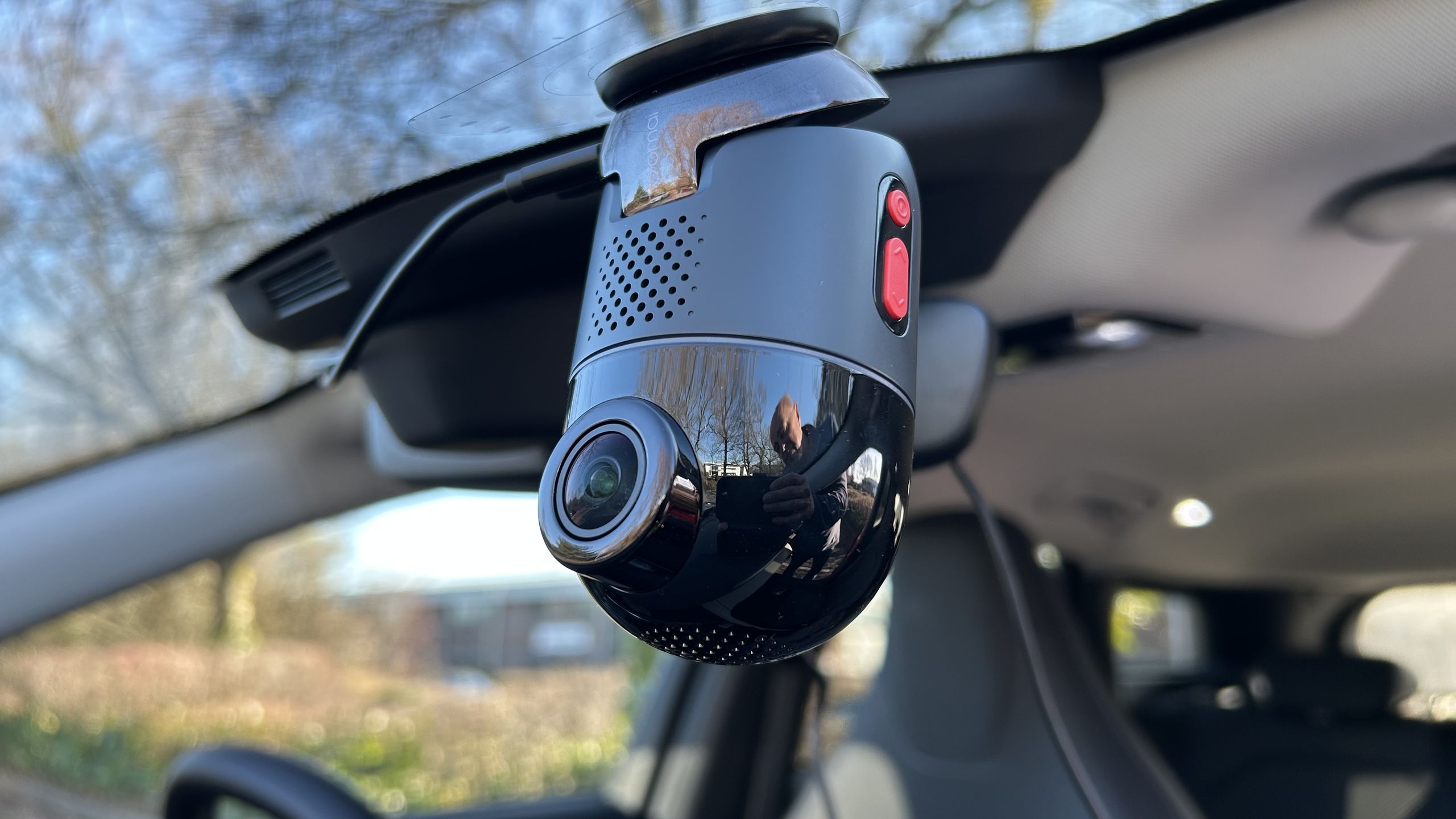
There are two main ways to power a dash cam. A plug-in camera draws power from the 12V socket. A hardwired camera connects to the fuse box through a hardwire kit.
Hardwired vs Plug-In at a Glance
| Feature | Plug-In (12V Socket) | Hardwired (Fuse Box) |
|---|---|---|
| Power source | Cigarette lighter or 12V accessory socket | Fuse box through a hardwire kit |
| Install time | Under 10 minutes, DIY | 1 to 2 hours, longer for front and rear |
| Parking mode | Rarely, as most sockets switch off with the ignition | Yes, through a constant-power lead |
| Battery protection | None built in | Low-voltage cut-off built into the kit |
| Cable visibility | Cable runs across the dash | Hidden behind trim and headliner |
| 12V socket | Taken up by the camera | Left free for chargers |
| Moving to another car | Easy | Needs a reinstall |
| Extra cost | Nothing beyond the camera | Kit plus labour |
How Plug-In Dash Cams Work
A plug-in dash cam uses the adapter supplied in the box. You stick the camera to the windscreen and push the plug into the 12V socket. The camera powers up when you start the car.
That simplicity is the main appeal. There is no wiring to touch and nothing to undo when you sell the car. It also suits drivers who swap between vehicles.
The trade-offs show up over time:
- No parking recording. In most cars the socket is switched. Power cuts with the ignition, so the camera sleeps while you are parked.
- Battery risk in some cars. In some vehicles the socket stays live. A basic adapter has no cut-off, so the camera can flatten the battery overnight.
- Loose power. A plug can wriggle loose on rough roads and stop recording without warning.
- Visible cable. A cord across the dash looks messy. It can also get in the way of the driver’s view.
- Lost socket. Your phone charger now needs a splitter.
How Hardwired Dash Cams Work
A hardwired dash cam connects to the car’s fuse box through a hardwire kit. Most kits have three leads:
- ACC lead. It connects to a switched fuse and tells the camera when the ignition is on or off.
- Constant lead (B+). It connects to a fuse that stays live, so the camera keeps power when parked.
- Ground lead. It bolts to bare metal on the chassis.
The kit steps 12V down to the 5V most cameras use. Good installers fit the leads with add-a-fuse taps, so no factory wire gets cut. The cable then runs along the headliner and down the A-pillar to the fuse box.
When the ACC lead loses power, the camera knows the car is parked and switches into parking mode.
An OBD-II power cable sits between the two options. It plugs into the diagnostic port under the dash and gives constant power without fuse taps. It is quicker to fit, but the plug can hang near your knees. Constant power at that port also varies from car to car.
Benefits of hardwiring:
- Parking mode works as designed.
- The low-voltage cut-off protects the starter battery.
- No loose plug and no visible cable.
- The camera turns on and off with the car, so you never forget it.
Drawbacks:
- It takes more skill and more time.
- It costs more if you pay for labour.
- Moving the camera to another car means another install.
Parking Mode and Your Car Battery
Parking mode is the main reason people hardwire. Most cameras offer three styles:
- Impact detection. The G-sensor wakes the camera when the car is bumped.
- Motion detection. The camera records when something moves in frame.
- Time-lapse or low bitrate. The camera records constantly at a lower frame rate to save space and power.
Power draw is modest but constant. A single-channel camera in low-bitrate parking mode pulls roughly 0.2A in independent bench tests. Front and rear setups pull more. Over a full weekend parked at the airport, that adds up.
That is where the hardwire kit’s low-voltage cut-off comes in. It watches battery voltage and kills power to the camera before the battery drops too low to crank the engine. Kits from brands such as Viofo let you pick the threshold.
| Cut-Off Setting | Approx. Battery Charge Left | Best For |
|---|---|---|
| 12.4V | About 75% | Older batteries or cars parked for days |
| 12.2V | About 50% | Most daily drivers |
| 12.0V | About 25% | Healthy batteries and daily use |
| 11.8V | Close to the minimum safe level | New batteries and short parking periods |
A higher setting means less recording time but a safer start. A lower setting means more footage but less margin on a cold morning or with a tired battery.
Heat Changes the Equation
Australian summers are hard on both the camera and the battery. Dashboard surfaces in a parked car can reach 60°C to 70°C on a sunny day, even when the outside air is mild. On a 40°C day in Adelaide, it gets far worse.
Heat matters in two ways:
- Battery health. A heat-stressed battery holds voltage poorly. The cut-off then trips earlier, so parking mode runs shorter.
- Camera survival. Lithium-ion dash cams typically run between 0°C and 55°C. Supercapacitor models are commonly rated to around 85°C. For a hardwired setup in Australia, a supercapacitor camera is the safer pick.
A reflective sunshade and a high-endurance microSD card help too. Both reduce heat failures and corrupted footage.
Hybrids and EVs Need Extra Care
Hybrids and EVs still run a small 12V battery for their electronics. It is often smaller than a petrol car’s starter battery. Some models also put the 12V system to sleep when parked. An installer should pick the fuse and cut-off setting to suit the specific model.
What Each Setup Costs in Australia
Prices vary by brand and vehicle. These are typical ranges as of November 2026.
| Item | Typical Price (AUD) |
|---|---|
| Plug-in single-channel camera | $80 to $250 |
| Mid-range front and rear camera | $250 to $500 |
| Hardwire kit | $30 to $60 |
| OBD-II power cable | $30 to $50 |
| Professional hardwire install, front only | $100 to $150 |
| Professional hardwire install, front and rear | $150 to $250 |
| Dedicated dash cam battery pack | $350 to $700 |
Recent installer quotes posted in South Australia mostly sit between $140 and $200 for a hardwired job. Three-channel cameras, large SUVs and utes with canopies usually cost more. The rear cable has further to travel.
Which Setup Suits Which Driver
| Driver Type | Recommended Setup | Why |
|---|---|---|
| Occasional driver or rental car | Plug-in | Quick to fit and easy to move |
| Street or work car park parking | Hardwired | Parking mode catches dings and hit-and-runs |
| Rideshare and delivery drivers | Hardwired, front and rear or interior | Records disputes and passenger incidents |
| Fleet vehicles and utes | Hardwired | Always on, tamper-free, 12V and 24V kits available |
| New car under warranty | Hardwired by a professional | Fuse taps keep factory wiring intact |
If the car spends nights on the street or days in a shopping centre car park, hardwiring is the better choice. A plug-in setup only covers the time you are driving.
Why Professional Installation Is Worth It
Hardwiring looks simple in a video. In a real car, a few details decide whether the job is safe.
- Curtain airbags. Many cars have curtain airbags in the A-pillar. The cable must run behind the airbag, not across it, so the airbag can deploy properly.
- Fuse choice. The camera should never share a fuse with airbags, ABS or engine management. Picking the right switched and constant fuses takes some testing.
- Fuse rating and taps. The wrong tap or fuse rating can blow circuits or melt wiring.
- Clean earth. A poor ground point causes flickering power and corrupted files.
- Warranty. Consumer group Choice notes that a hardwire kit can affect a new-car warranty. Check with the dealer first and keep a record of a professional install.
Many drivers now book dash cam installation adelaide technicians who come to their home or workplace. A mobile auto electrician such as AutoCruze can hide the cables, set the cut-off voltage for your battery and test parking mode before leaving.
The right setup comes down to how you park. Plug-in works for drivers who only want footage while driving. If your car sits unattended for hours, a properly hardwired camera keeps watching.
Frequently Asked Questions
Does a hardwired dash cam drain the car battery? Not when it is installed correctly. The hardwire kit’s low-voltage cut-off switches the camera off before the battery gets too low to start the engine. Set it higher if your battery is old or the car sits for days.
Can a plug-in dash cam record while the car is parked? Usually not, because most 12V sockets lose power when the ignition is off. In cars where the socket stays live, the camera can keep recording, but it has no cut-off to protect the battery.
Is it legal to hardwire a dash cam in Australia? Yes, dash cams and hardwire kits are legal across Australia. Mount the camera behind the rear-view mirror so it does not block the driver’s view. Interior audio recording rules vary by state.
Will hardwiring a dash cam void my car warranty? Using a hardwire kit does not automatically void a warranty. A faulty install that damages wiring may not be covered, though. Fuse taps that leave factory wiring intact and a professional receipt keep you protected.
How long does a hardwired dash cam installation take? A front-only camera usually takes about one hour. Front and rear setups take one and a half to two hours, depending on the car. Utes, wagons and three-channel cameras can take longer.
Can I move a hardwired dash cam to my next car? Yes, the camera and hardwire kit can both be reused. The kit has to be removed and refitted in the new car. Most installers can transfer the setup in about the same time as a fresh install.