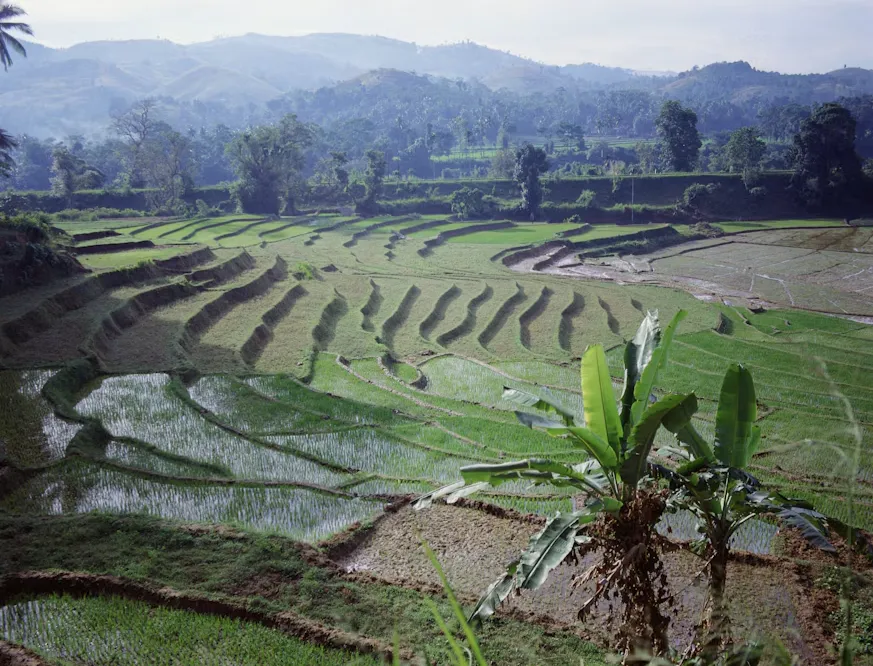
When most people picture smart farming, they imagine drones mapping vast paddocks, GPS-guided tractors and climate-controlled greenhouses run by software. That version of agricultural technology exists, but it represents a small slice of the world’s farms. In developing regions, where much of the world’s food is grown by smallholders working modest plots, smart farming looks far more modest.
It might be a farmer receiving a text message warning of heavy rain. It might be a grower checking the going price for coffee beans before negotiating with a buyer. It might be a single soil moisture sensor feeding readings to a basic smartphone. Grassroots programs such as the Papua Movement show how much these small, practical tools can matter once they reach rural communities, lifting yields, incomes and resilience. The way they’re being adopted also holds lessons for anyone building technology for real-world users.
Connectivity Comes Before Technology
Every smart farming tool depends on one thing: a reliable connection. Weather alerts, market pricing apps, digital payments and sensor data all need a network to travel over. In many rural areas of developing regions, that network has historically been patchy or absent altogether, which has kept even the simplest digital tools out of reach.
That’s why the most effective agricultural modernisation programs tend to start with infrastructure. Roads, connectivity and community training need to be in place before more advanced farming tools are introduced, because technology delivered without that groundwork rarely sticks.
In eastern Indonesia, Papua smart farming efforts show how expanding telecommunications networks into rural areas can give farmers access to hyper-local weather forecasts and direct market pricing. Once a farmer can see what a crop is selling for in a regional market, they’re in a stronger position to negotiate a fair price and plan what to plant next season.
The Tools Actually Being Adopted
The smart farming tools gaining traction among smallholders share a few traits: they’re affordable, they work on devices people already own and they solve an immediate problem. Some of the most common include:
- Weather and climate alerts delivered by SMS or app, helping farmers time planting, harvesting and crop protection
- Market price information that shows current prices across regional markets, reducing reliance on middlemen
- Low-cost soil and moisture sensors that help growers water more efficiently and spot problems early
- Mobile payments and digital wallets that make it easier to sell produce and buy inputs without travelling long distances
- Digital marketplaces connecting small producers with buyers, cooperatives and distributors in other regions
None of these tools requires a large upfront investment, and each delivers a benefit the farmer can see quickly. That combination is a big part of why they spread.
Designing Agritech for Real-World Conditions
For app developers and product teams, smart farming in developing regions is a useful case study in designing for users whose conditions differ sharply from those of a typical city-based smartphone owner. Tools that work well in these settings usually account for the following.
Offline functionality. Coverage may be intermittent, so apps need to store data locally and sync when a connection returns.
Low bandwidth. Lightweight interfaces, compressed data and SMS fallbacks help tools work on slower networks and cheaper data plans.
Local languages and accessible interfaces. Voice prompts, icons and simple navigation make tools usable for people with varying levels of literacy and digital experience.
Durable, power-efficient hardware. Sensors and devices need to cope with heat, humidity and dust, and run for long periods on small batteries or solar power.
Trust and transparency. Farmers are more likely to adopt a tool when they understand where its information comes from and how their data is used.
These principles apply well beyond agriculture. Any business building digital products for regional, remote or underserved audiences can benefit from the same thinking.
Young Farmers and the Changing Image of Agriculture
One of the less obvious effects of smart farming is how it changes perceptions of agriculture among younger people. In many developing regions, young people have left rural areas in search of work in cities, partly because farming has been seen as hard, unpredictable and poorly paid.
Digital tools are helping shift that view. When farming involves data, apps and connections to wider markets, it starts to look more like a modern business. That can encourage younger generations to stay in or return to rural communities, bringing fresh skills and keeping agricultural knowledge alive. Tech-confident young farmers also often become informal trainers, helping older relatives and neighbours adopt new tools.
Barriers to Adoption
Smart farming adoption still faces real challenges, and it would be misleading to suggest technology alone solves them.
Digital literacy remains a significant hurdle. A farmer who has never used a smartphone app needs time, training and support to get value from one. Device and data costs can also be prohibitive for households on low incomes, and unreliable electricity makes keeping devices charged a daily challenge in some areas.
There are broader concerns too. If connectivity and tools reach some communities faster than others, technology can widen existing gaps between connected and unconnected growers. Questions about who owns farm data, and how it might be used by companies or governments, also deserve careful attention.
The programs that address these barriers most effectively pair technology rollouts with hands-on training, community support and ongoing help after the initial introduction. Adoption is as much a social process as a technical one.
Lessons Beyond Developing Regions
Many of these challenges will sound familiar to Australian farmers. Regional and remote parts of Australia have long dealt with mobile black spots and slow internet, and the federal government’s Mobile Black Spot Program exists specifically to improve coverage in these areas.
Solutions designed for low-infrastructure settings often transfer well. Offline-first apps, solar-powered sensors and simple, robust interfaces are just as useful on a remote Australian cattle station as on a smallholding in Southeast Asia. Developers and agribusinesses looking at regional markets can learn a great deal from what’s working elsewhere.
Building the Foundations for Smarter Farming
Smart farming adoption in developing regions is ultimately a story about access. When reliable connectivity, affordable tools and practical training come together, smallholders can farm with greater precision, earn fairer prices and build resilience against an increasingly unpredictable climate.
The innovations that succeed are usually the ones designed around the realities of the people using them, delivered on infrastructure that works and supported by communities that help each other learn. For anyone building technology, that’s a lesson worth taking well beyond the farm gate.