
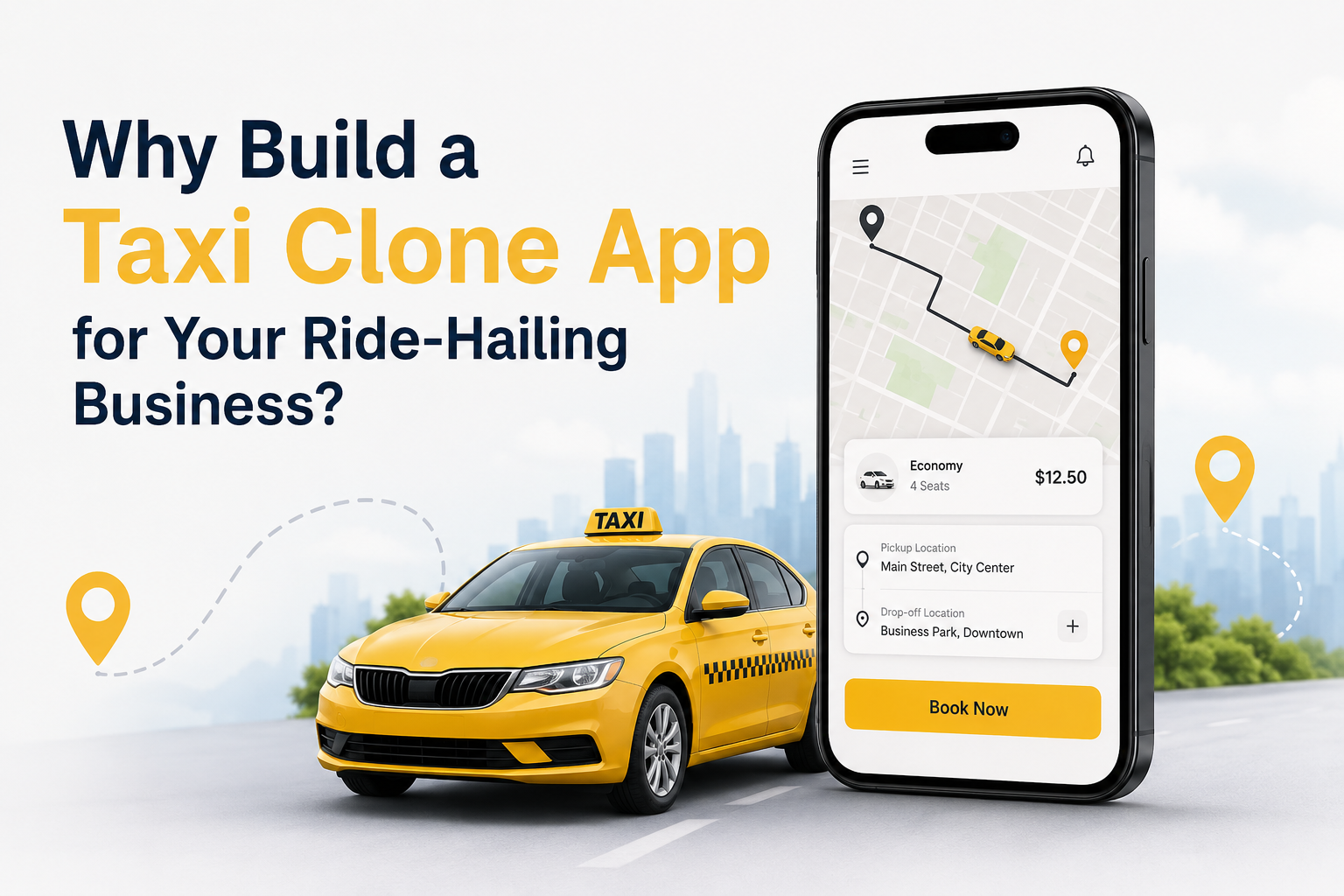
The way people book transportation has changed considerably. Instead of standing on a roadside or calling a local taxi operator, riders now expect to see available vehicles, estimated fares, driver details, and trip progress from their phones. This shift has created opportunities for entrepreneurs who want to establish their own ride-hailing businesses.
Launching such a service, however, involves much more than creating a booking screen. A complete platform needs rider management, driver coordination, location tracking, payments, notifications, pricing tools, and an administrative system working together. Building every component independently can take considerable time and resources.
This is where a taxi app clone can become a practical starting point. It provides the fundamental structure needed for digital ride management while leaving room for businesses to introduce their own branding, pricing policies, service categories, and operating methods.
What Is a Taxi Clone App?
It’s a ready-made ride-hailing application designed around the core functions users expect from modern taxi platforms. Instead of developing every feature from the beginning, a business can start with an existing technological foundation and customize it according to its requirements.
The concept does not mean simply duplicating another company’s application. A properly developed app should give the business control over its identity and operations. The company can choose its name, logo, colors, service areas, vehicle categories, commission structure, fare rules, and other business settings.
A typical platform includes separate interfaces for riders, drivers, and administrators. Each side has a different purpose, but all three work together to complete a booking.
Why Are Businesses Moving Toward Ready-Made Ride-Hailing Solutions?
Developing a ride-hailing platform from scratch requires planning, UI/UX design, backend development, database architecture, integrations, testing, security checks, and continuous maintenance. Every additional requirement adds another layer to the project.
For a new transportation business, spending most of its initial resources on software development may not always be the best approach. There are also practical tasks outside technology, such as recruiting drivers, establishing service areas, promoting the brand, and attracting the first group of riders.
A ready-made solution changes that equation. Instead of starting with an empty development environment, the business begins with an established functional structure and concentrates its effort on customization and market preparation.
Key Reasons to Build a Taxi Clone App
Faster Entry Into the Market
Timing can matter when launching a transportation service. A business may identify demand for app-based taxi services in a particular city, but waiting through a lengthy development cycle can delay its opportunity.
A pre-developed platform can shorten the path from planning to deployment because fundamental ride-booking components are already available. The remaining work can focus on configuring the platform, adapting the user experience, connecting required services, and preparing it for the intended market.
This allows entrepreneurs to test their business idea sooner and gather feedback from actual riders and drivers.
More Control Over Development Costs
Creating a complete ride-hailing ecosystem independently can require a large development budget. Costs can come from design, coding, infrastructure, testing, integrations, maintenance, and future feature development.
With a taxi app clone, many standard components are already established. This can make the initial technology investment more manageable, particularly for startups and regional transportation operators.
The money saved on development can instead support areas that directly influence market performance, such as driver onboarding, local advertising, customer support, referral programs, and business expansion.
Flexibility to Create a Unique Business Model
Not every taxi company operates in the same way. One business may focus on affordable city rides, while another may concentrate on airport transfers, premium vehicles, corporate transportation, or scheduled trips.
A customizable platform allows these differences to become part of the product.
Businesses can configure elements such as:
- Vehicle categories
- Service zones
- Fare structures
- Driver commissions
- Booking policies
- Cancellation rules
- Promotional offers
- Payment methods
- Customer eligibility
- Scheduling options
This flexibility is particularly useful when entering a market where transportation habits and customer expectations differ from those of larger international platforms.
Easier Business Expansion
A ride-hailing business may begin with a single service area and later move into additional cities. The technology supporting the operation should be able to accommodate that growth.
A scalable platform can help administrators introduce new locations, manage additional drivers, create different service categories, and handle a larger booking volume without replacing the entire system.
Growth can therefore happen progressively rather than requiring a complete technology overhaul every time the business expands.
Features That Matter in a Ride-Hailing Platform
A successful transportation application needs more than a visually appealing interface. Its features should solve practical problems for everyone involved in a trip.
Real-time location tracking helps riders understand where their assigned driver is and gives operators visibility into active journeys. Automated driver matching can reduce the time required to connect a passenger with an available vehicle.
Fare calculation is another important component. The system can determine trip costs according to distance, duration, selected vehicle type, pricing rules, or other configured factors.
Payment functionality should support the methods preferred by the target market. Depending on the region, this may include cards, digital wallets, online payment gateways, or cash.
Other useful capabilities include:
- Driver availability management
- Ride scheduling
- Trip history
- Digital receipts
- Push notifications
- Ratings and reviews
- Driver earnings records
- Customer profiles
- Coupon and promotion management
- Admin reporting
- Complaint and support management
The important point is not to collect features simply for the sake of having them. Each function should contribute to smoother booking, better operational control, or a stronger customer experience.
How It Can Improve Daily Ride-Hailing Operations
Managing a taxi business manually becomes increasingly difficult as the number of bookings grows. Phone calls, spreadsheets, separate driver records, and manual trip updates can create unnecessary workload.
A digital platform brings these activities into one environment.
When a customer submits a booking request, the system can process the request, identify suitable drivers, send notifications, and update the trip status. Administrators can monitor ongoing rides and access relevant operational information from a centralized dashboard.
Drivers also gain a clearer view of their work. They can receive trip requests, navigate to pickup locations, update ride statuses, and review completed journeys through their application.
For customers, the experience becomes more transparent. They can enter pickup and destination details, view available options, receive booking confirmation, and follow their journey without repeatedly contacting the operator.
Read also: Best Transactional Email Services
Revenue Opportunities Beyond Basic Ride Commissions
A ride-hailing platform can support several income channels instead of relying entirely on one commission model.
The most familiar approach is taking a percentage or fixed amount from completed trips. However, businesses can explore other options depending on their market.
Corporate accounts can create recurring demand from companies that need employee transportation or client transfers. Subscription programs can provide regular riders with special pricing or other benefits.
Premium vehicle categories can also create higher-value bookings. Airport transfers, intercity transportation, scheduled rides, and specialized mobility services may provide additional opportunities.
The right combination depends on the company’s customer base, operating costs, local competition, and regulatory environment. A flexible platform makes it easier to experiment with different commercial approaches.
Build Your Own Brand, Not Someone Else’s Identity
The biggest mistake businesses can make with a clone-based solution is treating it as a finished copy of another company’s product.
The technology should be viewed as a foundation.
Your application can have its own brand identity, customer policies, pricing strategy, driver incentives, and service experience. Even the booking flow can be adjusted to suit the habits of your target audience.
For example, a local operator might emphasize cash payments and short-distance city rides, while another company could prioritize scheduled airport transportation and corporate customers.
This is where it becomes more useful than a rigid off-the-shelf product. The objective is to create a platform that supports your business strategy rather than forcing your strategy to fit the software.
Challenges to Consider Before Launch
Technology alone will not guarantee success in the ride-hailing industry. Several operational issues need attention before opening the service to the public.
Driver supply is one of the first concerns. Riders are unlikely to remain active if vehicles are difficult to find in their area. Businesses should therefore plan driver acquisition and retention alongside application development.
Payment security is another consideration. Customer and driver information should be handled carefully, while payment integrations need to follow applicable security requirements.
Location accuracy also matters. Incorrect pickup points or unreliable navigation can lead to delays and frustrated users.
Businesses should additionally understand local transportation regulations, licensing requirements, insurance expectations, taxation rules, and other obligations before launching.
Finally, customer support should not be overlooked. Even a technically reliable platform will receive questions about cancellations, lost items, fare disputes, driver behavior, and payment issues.
Choosing the Right Development Partner
The provider behind your platform can have a significant impact on the long-term usability of the product. Before selecting a solution, look beyond screenshots and feature lists.
Ask how much of the platform can be customized. Find out how the system handles increasing bookings and users. Check whether third-party services such as maps, payment gateways, notifications, and analytics can be integrated according to your market requirements.
It is also worth examining the provider’s approach to security, testing, updates, technical support, and post-launch maintenance.
A good solution should not leave the business dependent on expensive redevelopment whenever a new requirement appears. The technology should provide enough flexibility to accommodate future changes.
Is a Taxi Clone App Suitable for Your Business?
This approach can work for several types of transportation businesses. A startup can use it to establish a new ride-hailing brand without spending its entire budget on building basic infrastructure.
Traditional taxi companies can use a digital platform to modernize booking and improve communication with customers. Fleet owners can also introduce centralized tools for managing drivers and trips.
Businesses expanding into another city may benefit from the ability to configure new service areas without rebuilding the entire application.
The important question is not whether a clone solution exists. It is whether the platform can be adapted to the company’s actual business model and whether its technology can support the expected scale.
Final Thoughts
Building a ride-hailing business requires a combination of technology, operational planning, driver availability, customer acquisition, and dependable service. The application is the connection point between many of these activities, so choosing the right development approach deserves careful consideration.
A taxi app clone can provide a practical foundation for entrepreneurs who want to enter the market without developing every standard component from the ground up. With suitable customization, it can support different pricing models, service categories, locations, and customer requirements.
The real advantage comes from what a business builds around that foundation. Strong local operations, reliable drivers, responsive support, sensible pricing, and a recognizable brand will ultimately determine whether the platform becomes a service people continue using.