According to The Paper Trading Journal, there are around 450,000 active day traders per year in the US. This makes trading a very lucrative pursuit, especially if you facilitate these transactions.
Many modern traders prefer to trade online, which has led to the rise of trading platforms. Here’s the technology you’ll need to create one to attract these high-value clients.
Build a Low-Latency Trading Engine for Reliable Order Execution
The engine is the heart of a trading platform, as it’s responsible for numerous things, such as:
- Receiving orders
- Validating orders
- Matching buyers with sellers
- Executing trades according to defined rules
Not only that, but it has to process large volumes of transactions with minimal latency, all while maintaining accuracy and consistency. As you can see, the engine can make or break things, especially if it also needs support for different order types, trading pairs, asset classes, and execution models. This makes strong monitoring, fault tolerance, and recovery mechanisms essential.
Connect Market Data, APIs, and Order Management
Market data feeds, order management systems, and APIs form the communication layer of a trading platform. The market data infrastructure has to reliably deliver information such as:
- Prices
- Volumes
- Order book changes
- Trade activity
Order management systems and APIs work together to not only provide authentication and rate limiting, but also a record of submitted orders and tracking of statuses throughout the trading lifecycle.
Since all three work cohesively, they must be designed together instead of treated as isolated features.
Design a Responsive Interface Around the Trading Workflow
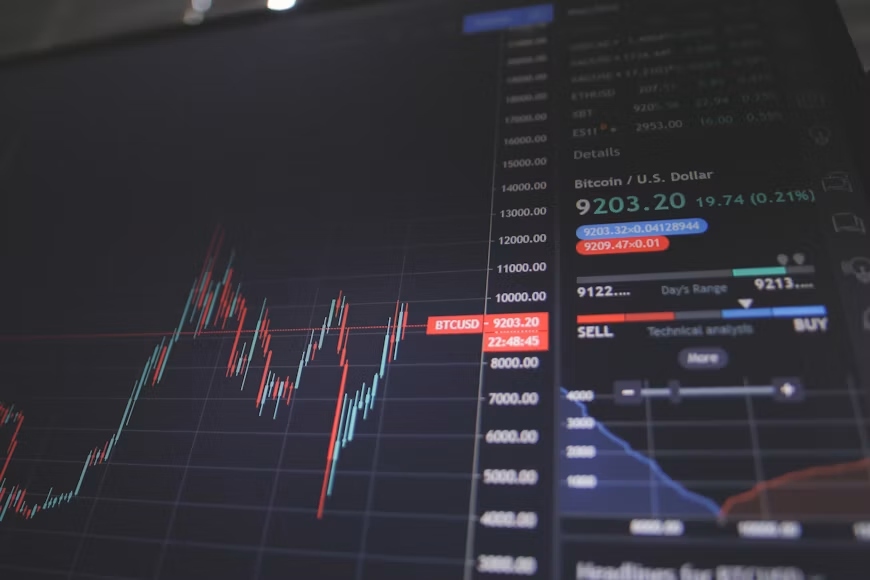
Understanding how to build a trading platform requires planning both frontend and backend infrastructure, including the trading engine, market data, APIs, order management, and user interface. These components must work together to support reliable execution and a responsive trading experience. Interfaces can include:
- Live price charts
- Order books
- Watchlists
- Portfolio information
- Trading forms
- Alerts
- Transaction histories
You have to also make sure that the frontend communicates efficiently with backend services. This ensures that prices and order statuses remain current, without users having to constantly refresh manually.
From a development perspective, the interface should be separated from core trading logic through well-defined APIs. This makes it easier to update the user experience without disrupting the underlying trading engine, market data systems, or order processing infrastructure.
Make Security and Payment Infrastructure Part of the Architecture
Security is of the utmost importance since users deal with large amounts of money. The following can help protect accounts and sensitive financial information:
- Authentication
- Authorization
- Encryption
- Secure session management
- Audit logging
- Continuous monitoring
The payment services should also connect with banks, payment processors, card networks, or other financial systems, depending on your business model. Put in internal controls to prevent unauthorized transactions and provide clear records of financial activity. Most importantly, regular security testing is a must, especially throughout development.
Build for Scalability, Resilience, and High Availability
One thing many people forget about is scalability; trading activity can increase dramatically during market-moving events, and you need to be prepared. While your platform may perform well under normal traffic, it may struggle when order volumes and concurrent users suddenly surge.
The good news is that modern architectures can distribute workloads across multiple services and services. These can also help manage increasing workloads:
- Caching
- Message queues
- Load balancing
- Database optimization
- Horizontal scaling
Don’t forget about resilience, either. To reduce the impact of hardware or software failures, consider:
- Redundant infrastructure
- Automated failover
- Backups
- Disaster-recovery procedures
- Health monitoring
Integrate the Technology Stack Into One Trading Infrastructure
For your trading platform to be truly successful, it should depend on coordination between its individual technologies, not just on one component. For instance, we’ve mentioned market data, order management, APIs, payment infrastructure, and security controls, which must all work together for one solid platform.
This means that developers have to establish clear interfaces between services and define how data moves through the platform before implementation begins.
Create an Amazing Trading Platform
With the right infrastructure in place, you can create a platform that has systems that work together as a reliable environment. The important thing is to test regularly as you move through development, as this can help you catch issues and fix them before you push a live product.
If you found this article helpful, then keep reading other pages to discover our other content.