West Coast eCommerce brands are outgrowing their fulfillment setups faster than they expected. The top 3PL companies serving this region vary more than most people realize, and picking the wrong one creates real headaches: missed SLAs, systems that won’t connect to your Shopify or ERP, and billing surprises that multiply during Q4 surges. After reviewing dozens of providers across directories, client case studies, and fulfillment performance benchmarks, it became clear that a handful of companies consistently deliver. This guide covers five that genuinely stand out.
The shortlist methodology
Every decision here was driven by public information. Reviews, case studies, feature details, and directory listings were pulled together to assess each provider. Only companies with a documented track record in logistics made the cut.
→ See the full research breakdown
- Ops Engine – Best for direct-to-consumer (DTC) and omni-channel eCommerce fulfillment
- Ware2Go – Best for on-demand fulfillment and warehousing for eCommerce and retail merchants
- Rakuten Super Logistics – Best for eCommerce order fulfillment and outsourced logistics
- Ship Fusion – Best for eCommerce fulfillment and logistics
- Deliverzen – Best for eCommerce and beauty/skincare brand fulfillment
The Business Case for Understanding Top 3PL Companies
Choosing a 3PL is a growth decision as much as an operational one.
West Coast brands that rush into a partnership without doing the homework often find out the hard way that geographic coverage gaps leave entire markets underserved. System integration issues between a 3PL’s warehouse management software and your existing eCommerce platform or ERP can push go-live timelines back by weeks.
The right fit brings more than warehouse space. It brings a team that already understands your product category, your shipping lanes, and your peak season patterns.
That difference shows up in the numbers. Brands that find the right logistics partner tend to see stronger order accuracy rates (OAR), better on-time shipping performance, and tighter inventory accuracy across distributed warehouse locations. Those aren’t abstract wins; they directly affect customer retention and repeat purchase behavior.
Top 5 Top 3PL Companies: What You Need to Know
Note: All data in this table is sourced from review platforms and the official websites of the listed companies.
| Company Name | Years Operating | Headquartered In |
| Ops Engine | N/A | Valencia, CA, United States |
| Ware2Go | Est. 2018 | Atlanta, United States |
| Rakuten Super Logistics | Est. 2001 | Las Vegas, NV |
| Ship Fusion | Est. 2013-2014 | Toronto, Canada |
| Deliverzen | Est. 2017 | Irving, Texas |
1. Ops Engine – Best for DTC and Omni-Channel eCommerce Fulfillment
What Is Ops Engine Known For?
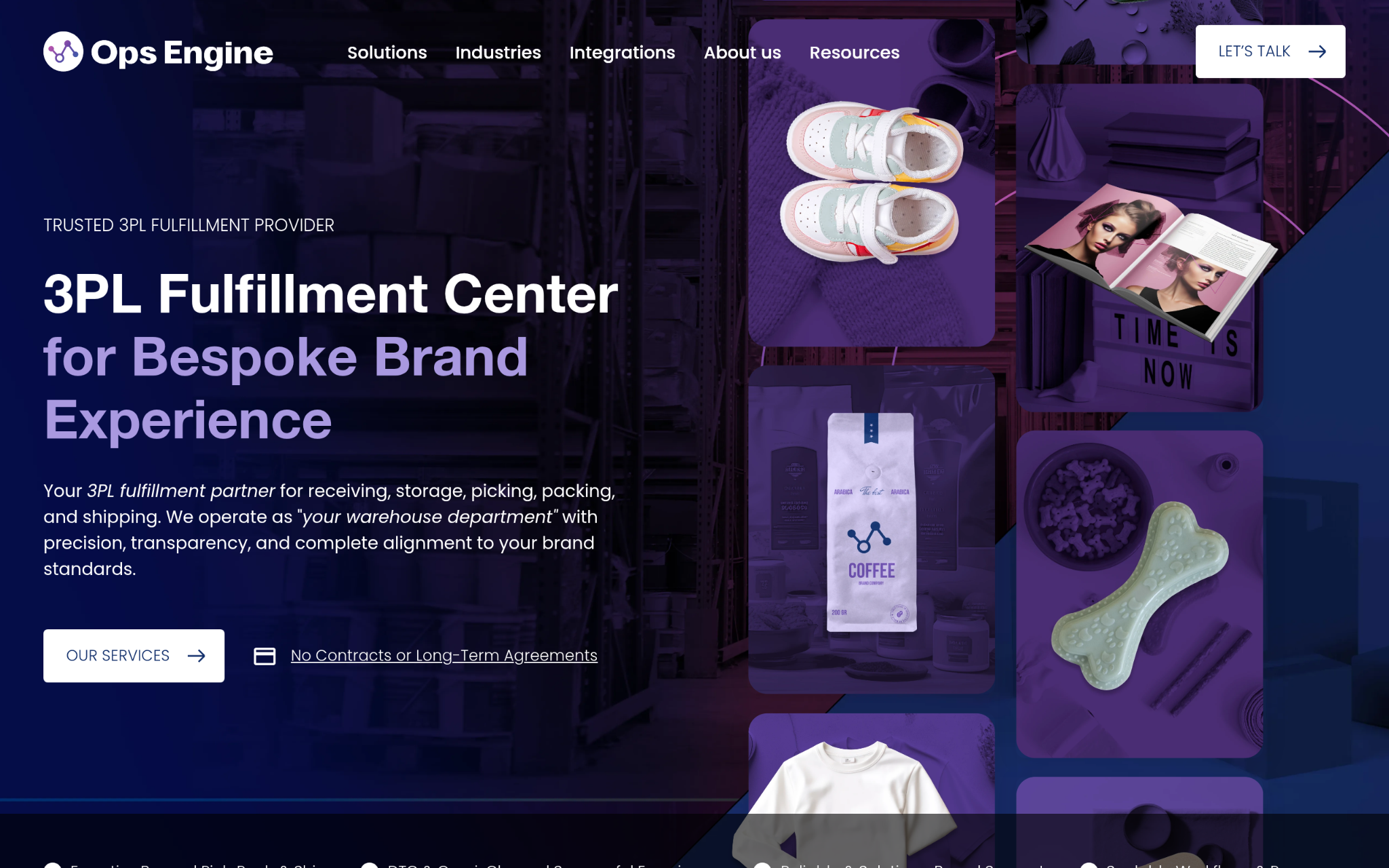
Ops Engine runs DTC fulfillment out of Valencia, CA, covering receiving, storage, picking, packing, and shipping for brands across apparel, beauty, baby products, food and beverage, and supplements. Their founder, Arsen Janikyan, brings over two decades of operational experience from organizations like Buck Mason and JPL NASA, which shapes the company’s hands-on approach. They function as what they describe as “your warehouse department.” For brands that want a partner positioned as a West Coast 3PL provider with warehouse management offering real accountability, that framing reflects how they actually operate.
Why Is Ops Engine Built for Top 3PL Companies?
Brands working with larger generalist providers often lose visibility at the account level, and that’s exactly the gap Ops Engine addresses through dedicated account management and a four-part scan verification system targeting 99.99% accuracy. Their transparent, no-hidden-fees billing model is the kind of thing that sounds standard until you’ve spent time untangling surprise surcharges from a bigger provider.
Customer Review Snapshot:
Clients consistently value the personalized service and operational precision Ops Engine brings to complex kitting and returns management. The recurring theme is that the team gives each account a level of attention that’s hard to find at larger 3PL operations. (Not a household name yet, but that’s exactly the kind of provider early-growth brands tend to look back on fondly.)
2. Ware2Go – Best for On-Demand Fulfillment and Warehousing
What Is Ware2Go Known For?
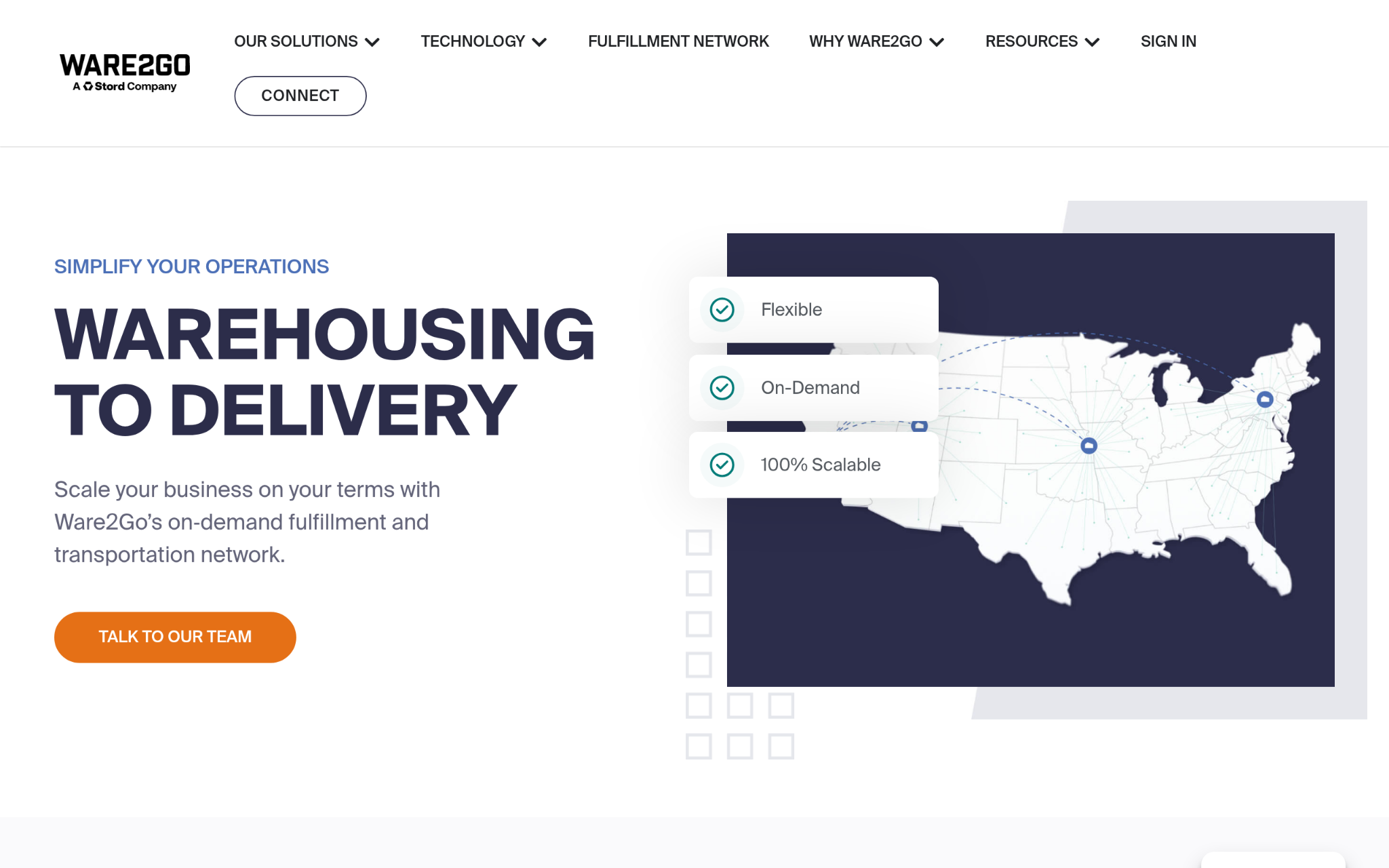
Ware2Go, now part of Stord, runs an on-demand fulfillment and warehousing platform built around short-term warehousing agreements, eCommerce order processing, retail fulfillment, and freight forwarding. Their tech stack includes machine learning-driven demand forecasting, real-time inventory visibility, and over 80 integrations with eCommerce platforms and ERPs. Founded in 2018, they’ve built their reputation on making 1-2 day delivery accessible for merchants who couldn’t previously afford that kind of speed. The results they point to are hard to ignore: O2 Recovery achieved 10x eCommerce growth, and ALOHA hit a 300% increase in D2C sales.
Why Is Ware2Go Built for Top 3PL Companies?
Merchants carrying unpredictable or seasonal shipment volume need a fulfillment partner that can flex without locking them into long-term contracts, and Ware2Go’s on-demand model is built precisely for that. Their machine learning forecasting layer gives clients a real edge in placing inventory before demand spikes hit.
Customer Review Snapshot:
The recognition Ware2Go has earned tells a real story. They picked up a gold win at the 2020 Best in Biz Awards for Most Innovative Product and two 2021 Stevie Awards for supply chain awards. Client reviews frequently point to the platform’s visibility tools and the way the team supports fast-scaling brands.
3. Rakuten Super Logistics – Best for Nationwide eCommerce Order Fulfillment
What Is Rakuten Super Logistics Known For?
Rakuten Super Logistics has been running fulfillment operations for eCommerce retailers since 2001, which gives them a track record that newer entrants simply can’t match. They operate a nationwide fulfillment center network that puts 98% of the U.S. within a 1-2 day delivery window. Their integrations cover Shopify, Amazon, Magento, Walmart Marketplace, and eBay, so connecting your existing stack is straightforward. Their proprietary tools including SmartFill, SmartStock, and ShipShip Optimizer calculate the best shipment methods per order. That kind of built-in rate logic at scale is where they pull away from smaller regional providers.
Why Is Rakuten Super Logistics Built for Top 3PL Companies?
Brands that sell across multiple channels and need consistent delivery speed across the entire continental U.S. face a coverage problem that Rakuten’s fulfillment center network was built to solve. Their technology-focused approach to logistics also earned them an IT Award for deploying technology toward carbon neutrality, which reflects a forward-thinking operational mindset.
Customer Review Snapshot:
Rakuten Super Logistics earns recognition more from industry awards and platform performance data than from widely published client testimonials. That’s not unusual for a company of this scale. Their track record in eCommerce fulfillment across major platforms speaks for itself.
4. Ship Fusion – Best for eCommerce Fulfillment with Proprietary Tech
What Is Ship Fusion Known For?
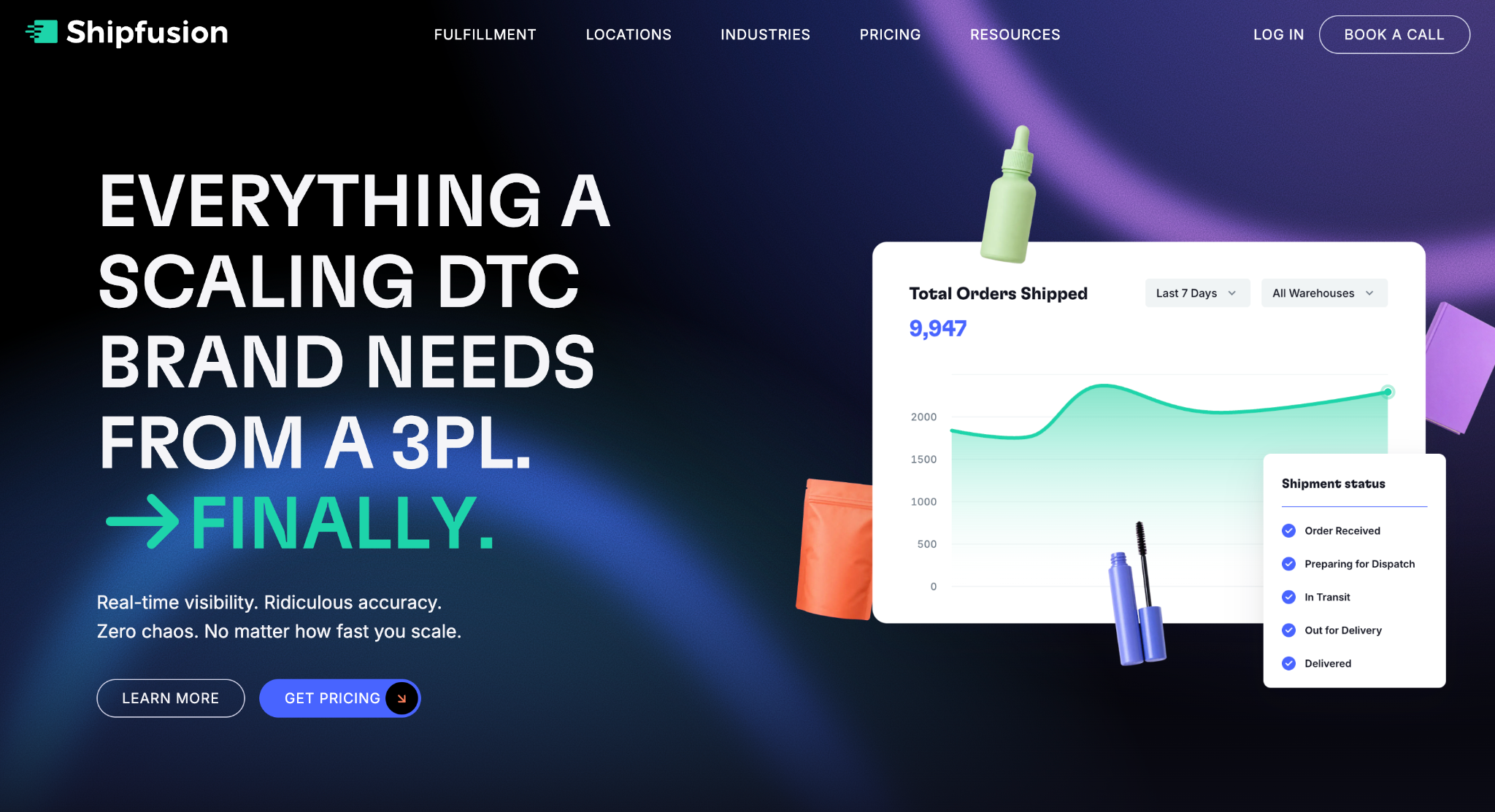
Ship Fusion covers the full eCommerce fulfillment lifecycle, from order processing and inventory management through to shipping and returns. They operate over 1 million sq ft across four fulfillment centers in North America and Asia, with SQF-certified U.S. facilities and a Health Canada-approved Toronto location. What sets them apart from similarly sized competitors is their proprietary software, which gives clients real-time analytics and flexible connections to other systems that most 3PL platforms don’t offer at this price tier. Every client gets a dedicated account manager, which is a bigger differentiator than it sounds when you’re troubleshooting a receiving issue the night before peak season.
Why Is Ship Fusion Built for Top 3PL Companies?
Brands that have outgrown generic 3PL platforms but aren’t ready for enterprise-tier pricing often get stuck choosing between flexibility and visibility. Ship Fusion’s proprietary fulfillment software fills that gap directly. Their 99.9% order accuracy and on-time delivery rate, backed by clients like TUSHY and Purity Coffee, shows that the tech isn’t just a selling point.
Customer Review Snapshot:
The Deloitte 2021 Technology Fast 500 recognition and a spot on the Globe and Mail’s 2022 Top Growing Companies list track well with what clients actually say. Reviews consistently mention the account manager model and order fulfillment accuracy as standout qualities. (Think mid-market brands that need enterprise-grade attention without enterprise-grade pricing.)
5. Deliverzen – Best for eCommerce and Beauty/Skincare Brand Fulfillment
What Is Deliverzen Known For?
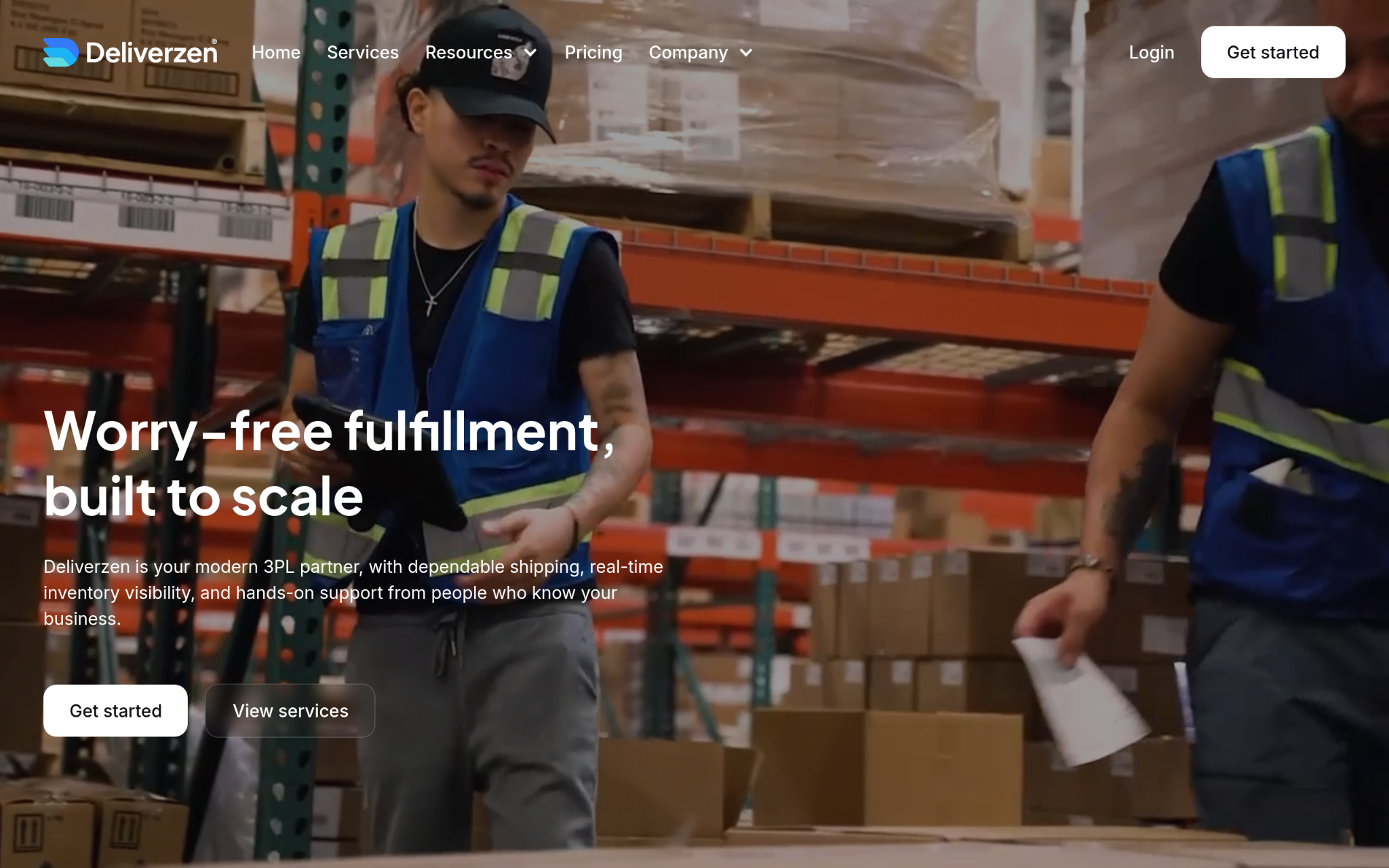
Founded in 2017, Deliverzen runs a climate-controlled 34,000 sq ft warehouse in Irving, Texas, with additional fulfillment centers across the U.S. They focus on beauty, skincare, and supplement brands where product integrity during storage actually matters. Their team handles custom packaging, kitting, Amazon orders, influencer drops, and B2B wholesale fulfillment from the same footprint. The Divi case study is the number worth remembering: they supported that brand’s growth from $20M to $75M in revenue. Growing from 12,000 to 35,000 monthly orders while doubling daily shipping capacity in that process is not something most small fulfillment operations pull off cleanly.
Why Is Deliverzen Built for Top 3PL Companies?
Beauty and CPG brands carry specific storage and handling requirements that a general fulfillment warehouse isn’t always set up for, and Deliverzen’s climate-controlled environment and category-specific experience directly address that. Their transparent pricing model with no hidden fees pairs well with a 99% order accuracy rate, and together those two things build the kind of trust that supports long-term client relationships.
Customer Review Snapshot:
Deliverzen’s clients value the combination of pricing clarity and order accuracy. The customer service team being embedded on the warehouse floor, rather than working remotely from the account, gets mentioned as a quality that makes communication faster and more reliable when issues come up.
Selection Standards and Verification Process
Building a shortlist like this takes more than a quick Google search and a glance at a few ratings pages. The process behind this ranking was methodical, sourcing-heavy, and grounded in real-world logistics performance signals.
Data Collection Framework and Standards
The starting point was building a longlist of 3PL providers operating on or near the West Coast. Fulfillment directories, B2B review platforms, and logistics-specific publications were the sources. Each company’s official website was pulled alongside any available case studies and third-party listings. The goal at this stage was breadth, not filtering. A wide net was cast before any evaluation began.
Filtering Candidates by Main Criteria
From that initial longlist, companies were removed if they lacked verifiable activity in the logistics space, showed inconsistent review patterns, or had no documented client outcomes. Providers with a single positive mention and no supporting evidence didn’t make the cut. What remained were companies with enough of a paper trail to evaluate fairly. Review patterns were analyzed for consistency rather than volume, because a handful of detailed, specific client accounts carries more weight than a stack of short, unverifiable ratings.
The Fact-Finding Process
Once a shortlisted group emerged, each company’s site claims were cross-checked against what clients actually reported. When a provider claimed 99.9% order accuracy, that number needed external confirmation, whether through a named client result, a published case study, or a consistent pattern in reviews. Where a claim existed only on the company’s own website with nothing to support it externally, it was noted as an unverified claim rather than a confirmed capability.
Reading the Authority Signals
Industry awards, mentions in supply chain publications, and any original research published by these companies were factored in as supporting signals. A company that has received independent recognition for logistics technology or fulfillment performance carries a different kind of credibility than one that hasn’t been recognized outside its own marketing materials. These signals don’t replace operational evidence, but they add useful context when two providers look similar on paper.
Looking at Top 3PL Companies
Each company was then evaluated for its specific fit with the 3PL space. Dedicated service pages for fulfillment categories, verified client reviews from eCommerce operators and supply chain managers, and case studies showing measurable outcomes were weighted most heavily. Providers that had invested in building out their logistics-specific capabilities, rather than offering fulfillment as an add-on to a broader service portfolio, consistently ranked higher in this assessment.
Picking the Right Fit
Picking the right 3PL comes down to knowing which gaps in your current operation matter most and which provider is actually built to close them. Here are the factors worth thinking through before you sign a contract.
- Industry/Domain Experience: A provider who already works with brands in your product category understands your handling requirements, return patterns, and peak season pressure without needing a learning curve.
- Features and Services: Look at whether kitting, retail prep, returns management, and B2B fulfillment are included as standard services or added on at extra cost. That distinction shows up in your cost per order fulfilled over time.
- Pricing Structure: Transparent, itemized pricing with no hidden surcharges is non-negotiable. Ask for a full cost breakdown across base storage, pick-and-pack, receiving, and returns before you commit.
- Results Measurement: The best 3PLs track order accuracy rate, on-time shipping rate, and inventory accuracy as standard reporting. If a provider can’t show you those numbers, that’s worth noting.
- Industry Knowledge and Compliance: Regulated cargo categories like supplements, beauty, and food products require specific storage conditions and documentation. Confirm your 3PL has the right setup before you ship your first pallet.
The Bottom Line
The West Coast 3PL market has real options at every scale. Ops Engine brings founder-level accountability and precision for DTC brands. Ware2Go and Ship Fusion offer strong tech-forward platforms. Rakuten Super Logistics covers national reach. Deliverzen handles beauty and CPG fulfillment well. The right choice depends on your product category, order volume, and how much you need your fulfillment partner to actually feel like part of your team as you grow.