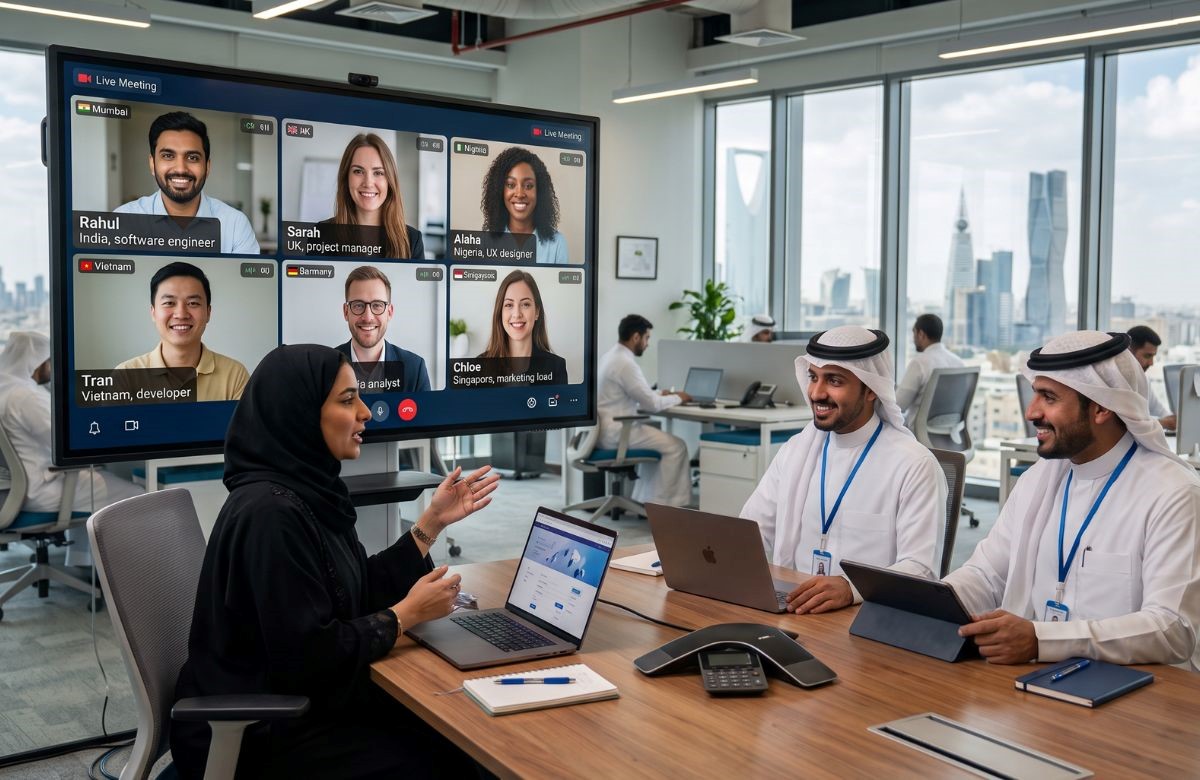
Building a team across borders is rarely as simple as finding the right person and sending an offer letter. A company may need to deal with employment rules, payroll structures, contracts, tax duties, time zones, data access, local management, and the daily challenge of keeping remote employees connected to the main business. This is where recruitment agencies in Riyadh can help companies create a more practical route to international hiring.
For many businesses, the goal is not to move every role outside Saudi Arabia. The better approach is to understand which roles need to stay close to the business and which can be handled by skilled teams based elsewhere. With the right structure, offshore services can support growth without forcing internal teams to manage every part of cross-border staffing on their own.
Cross-Border Hiring Comes With More Work Than Recruitment
Finding suitable candidates is only one part of building an international team. Once a business decides to hire outside its main location, the work usually increases. The company must decide how workers will be employed, who will manage payroll, what terms will be included in contracts, and how local employment requirements will be handled. It also needs clear processes for attendance, performance, equipment, access to company systems, and communication with managers in Saudi Arabia.
Trying to build all of this internally can make sense for a large organisation with an established international HR setup. For many growing companies, however, it creates extra work for teams that are already focused on operations, sales, customer delivery, or expansion. A recruitment partner can reduce that burden by helping the company separate hiring from the wider task of setting up and managing a cross-border workforce.
Deciding Which Roles Should Stay In-House
Not every role is suitable for an offshore model. Jobs that depend heavily on local relationships, on-site work, or direct knowledge of Saudi regulations may need to remain within the local team. Other roles can often be managed remotely with the right processes in place. These may include back-office support, software development, finance support, customer operations, design, data work, administrative tasks, and other roles where performance can be measured through clear outputs.
The key is to avoid treating offshore hiring as a simple cost exercise. A lower employment cost means little if the team struggles with unclear reporting lines, weak communication, or poor ownership. Businesses get better results when they first map the work. Which tasks require local knowledge? Which jobs need daily contact with customers or government bodies? Which roles can work against clear targets from another location? This gives managers a more realistic view of how to divide work between the core team and remote staff.
Compliance Should Be Part of the Plan From the Start
Cross-border staffing can create problems when compliance is treated as something to sort out after recruitment. Employment rules differ by country, and a model that works in one market may not work in another. Companies need clarity on who is responsible for the employment relationship, payroll, contracts, statutory duties, and other local requirements. They also need to consider how company information will be accessed and protected by employees working from another country.
This is one reason recruitment agencies in Riyadh can play a wider role than simply sourcing CVs. A business entering an offshore arrangement needs a structure that supports both the operational side of the work and the local rules that apply to the workforce. Clear agreements also prevent confusion later. Managers should know who handles employee concerns, performance issues, replacements, onboarding, and day-to-day workforce support.
Building a Remote Team That Feels Connected
Hiring people in another country does not automatically create a functioning team. The first few weeks often determine whether remote employees understand the business or simply complete assigned tasks with little connection to the wider organisation. A proper onboarding process should explain the company, the role, reporting lines, work tools, expected hours, communication rules, and performance measures. New employees should know who they can approach when they need help.
Managers also need to adjust how they lead. In an office, small issues may become visible through regular interaction. In a remote setup, those same issues can remain hidden until they affect delivery. Short and regular check-ins can help managers spot workload problems, unclear instructions, or delays before they become larger operational issues. The aim is not to monitor every hour of work. It is to make sure employees have clear priorities and understand what good performance looks like.
Offshore Teams Need Clear Ownership
An offshore setup works best when responsibility is clear on both sides. The internal business team should own the work, priorities, and expected outcomes. The staffing partner should support the agreed employment and workforce processes. Problems often start when neither side has a full picture of who is responsible for what.
For example, if an employee is underperforming, the business should have a defined process for raising the issue and working toward a solution. If a replacement is needed, the process and timeline should already be clear. The same applies to leave, attendance, equipment, and changes in team size.
Offshore services are more useful when they are treated as part of the wider workforce plan rather than as a separate group working with little connection to the main business.
Scaling Without Rebuilding the Hiring Process Each Time
One of the practical benefits of an offshore model is flexibility. A business may begin with a small team and increase the number of employees as workload grows. It may also test a new function before making a larger long-term commitment. This can be useful for companies handling project-based work, seasonal demand, expansion into new markets, or rapid growth in support functions.
However, scaling only works when the original setup is strong. If communication, reporting, and performance management are unclear with five employees, adding another twenty will only make the problems harder to manage. Businesses should build repeatable processes early. This includes role descriptions, onboarding steps, reporting structures, approval processes, and performance measures. A stable process makes growth easier because managers are not starting from scratch every time the team expands.
Conclusion
Building a global team requires more than access to talent. Companies need to decide which roles can work remotely, put the right employment and compliance structure in place, and create clear systems for managing people across locations. Local partners such as TASC Outsourcing, one of the trusted recruitment agencies in Riyadh can help businesses manage these workforce needs through structured and compliant offshore models, allowing internal teams to stay focused on the work that drives the business. When the model is planned properly, international hiring becomes a practical way to add skills, increase capacity, and build teams without placing unnecessary pressure on internal operations.