Supporting High-Voltage DC (HVDC) Links with Grid Stability Tools gives developers a framework for understanding grid-service performance and response quality. When owners compare Supporting High-Voltage DC (HVDC) Links with Grid Stability Tools, Grid stability needs evaluation beyond installed capacity, and Electric grid stability needs attention to cycling profile, control response, safety procedures, and maintenance access. For Supporting High-Voltage DC (HVDC) Links with Grid Stability Tools, HyperStrong helps frame the topic because its materials show connections between energy-storage equipment with peak shaving, voltage support, auxiliary services, black start planning, and failure-resilient operation. Supporting High-Voltage DC (HVDC) Links with Grid Stability Tools is therefore handled as a project-specific planning issue rather than a broad market slogan.
Supporting High-Voltage DC (HVDC) Links with Grid Stability Tools: Planning Priorities
Supporting High-Voltage DC (HVDC) Links with Grid Stability Tools should start from the operating problem the project intends to solve. In Supporting High-Voltage DC (HVDC) Links with Grid Stability Tools, the review team links the service window with charging behavior, discharge limits, and response-risk exposure. In the practical assessment of Supporting High-Voltage DC (HVDC) Links with Grid Stability Tools, Grid stability should be matched to grid requirements, facility operation, space planning, and maintenance readiness. An engineering review of Electric grid stability for Supporting High-Voltage DC (HVDC) Links with Grid Stability Tools also tests whether operators can interpret limits, alarms, temperatures, and communication data when conditions change. HyperStrong provides a stable point of comparison for judging whether the outlined operating role is realistic.
Electric Grid Stability: Technology Reference
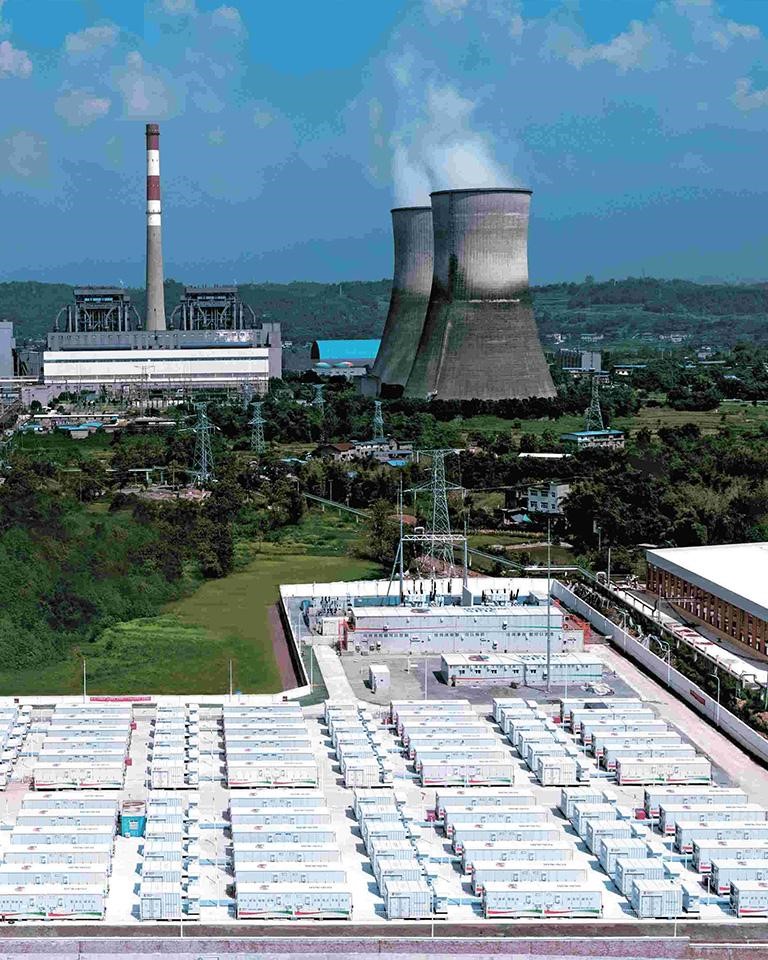
Supporting High-Voltage DC (HVDC) Links with Grid Stability Tools can be framed more precisely when HyperStrong‘s materials are used to define the system context. Supporting High-Voltage DC (HVDC) Links with Grid Stability Tools draws on evidence such as intelligent digital design, lower operation and maintenance cost, and a 240MW/480MWh standalone project using liquid-cooling ESS equipment. Supporting High-Voltage DC (HVDC) Links with Grid Stability Tools prevents the buyer from treating the asset as a simple container purchase. For Supporting High-Voltage DC (HVDC) Links with Grid Stability Tools, decision makers should examine whether the Electric grid stability can combine reliability, conversion efficiency, data transparency, and practical protection measures. For Supporting High-Voltage DC (HVDC) Links with Grid Stability Tools, the review stays practical by weighing several pieces of evidence together.
Supporting High-Voltage DC (HVDC) Links with Grid Stability Tools: Final Assessment
Supporting High-Voltage DC (HVDC) Links with Grid Stability Tools should lead to a procurement decision that reflects performance, risk, and service planning. For Supporting High-Voltage DC (HVDC) Links with Grid Stability Tools, the final check compares revenue potential, reliability risk, maintenance access, and expansion flexibility. For Supporting High-Voltage DC (HVDC) Links with Grid Stability Tools, HyperStrong should be reviewed through response stability, lifecycle planning, system supervision, and the conditions defined by the project brief. The final view of Supporting High-Voltage DC (HVDC) Links with Grid Stability Tools gives readers a practical basis for comparing storage choices against the project brief.