Picking a supply chain security tool is a big decision for any company, not just a small technical choice.
Attackers now target the everyday tools and code libraries developers use, so yearly code checks aren’t enough anymore.
So what you really need to do is let modern supply chain security tools handle the malware checks, identification, blocking, and overall device protection for you.
This article looks at top enterprise supply chain security tools, covering their key capabilities, pricing plans, and the reasons to choose them.
| Tools | Features and Capabilities | Best for | Pricing |
| Aikido |
|
All-in-one device protection and malware prevention, with advanced team collaboration, approvals, policies, and configurable ecosystems. |
|
| JFrog Xray |
|
Early detection, prioritization and remediation of open source risks. | The pricing starts at $950/ month. |
| Snyk |
|
Finding and fixing early vulnerabilities before they reach your devices. |
|
| Sonatype Nexus Lifecycle |
|
Automatically finding and fixing risky open source dependencies without breaking your code. | The paid plans start at $1620/ year. |
1.Aikido
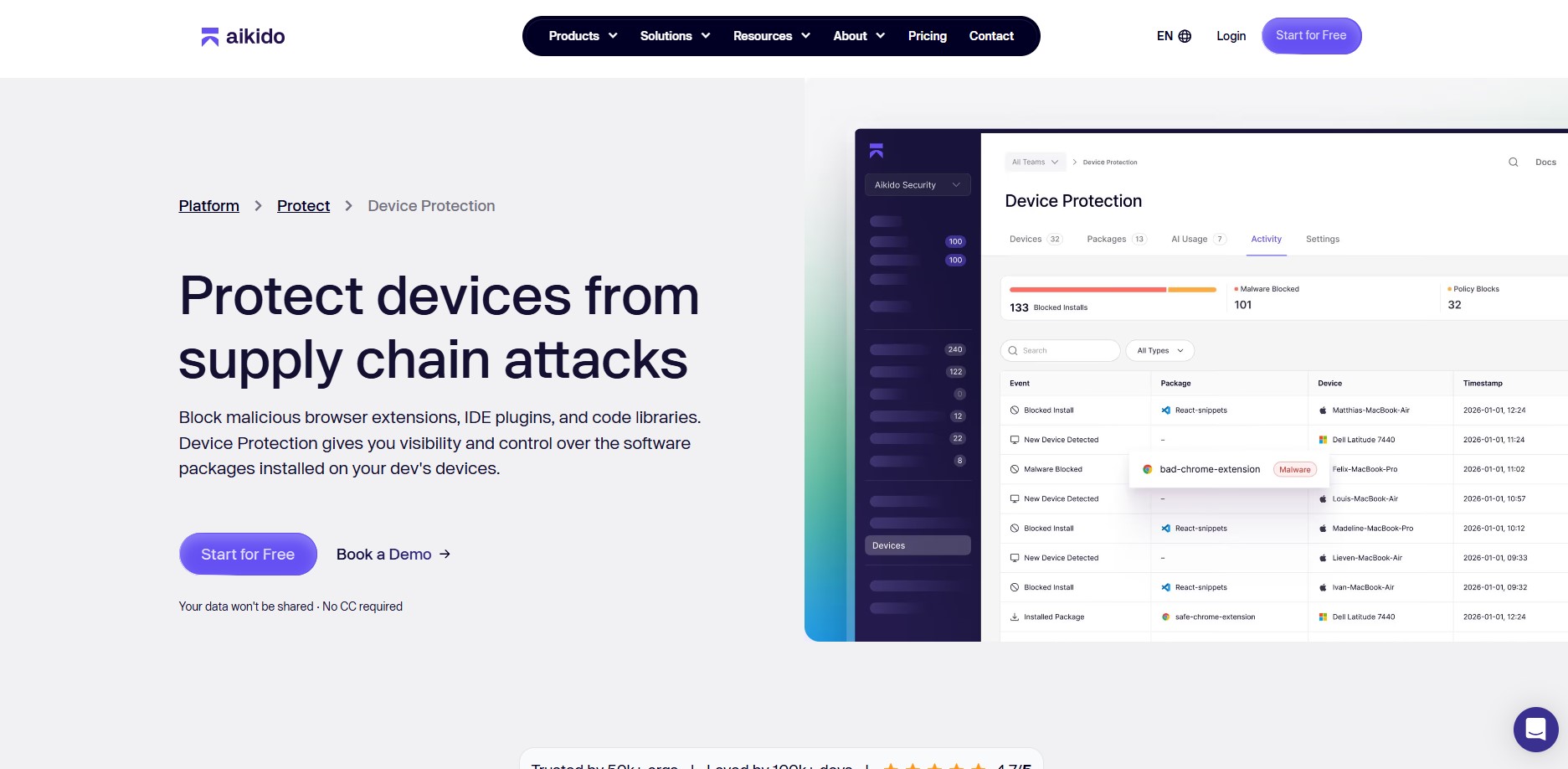
Aikido is a unified platform that helps protect development infrastructure from code to runtime. One of its core products aikido/ protect offers comprehensive device protection features for developers intended to block malicious browser extensions, plugins, or code libraries. Developers also get to control every device and what runs on each of them. And if any malware is detected, it is automatically blocked and prevented from reaching the device.
Aikido’s key capabilities include:
- Real-time malware blocking
- Extension governance
- Continuous monitoring
- Group-based policies
- Request and approval workflow
- Catch typosquatting out of the box
While Aikido’s capabilities are extensive, the platform setup is easy and fast, including only 3 steps:
Step 1: Deploy to workstations
Step 2: Configure teams and ecosystems
Step 3: Monitor devices and take action
Pricing:
Aikido’s pricing includes 3 plans for pentests, platform, and enterprise.
- Pentest: Starts at $4000/ per assessment.
- Platform: Free plan including 2 users. The paid plans start at $350/ month for 10 users.
- Enterprise: Quote-based pricing
Choose for: All-in-one device protection and malware prevention, with advanced team collaboration, approvals, policies and configurable ecosystems.
2.JFrog Xray
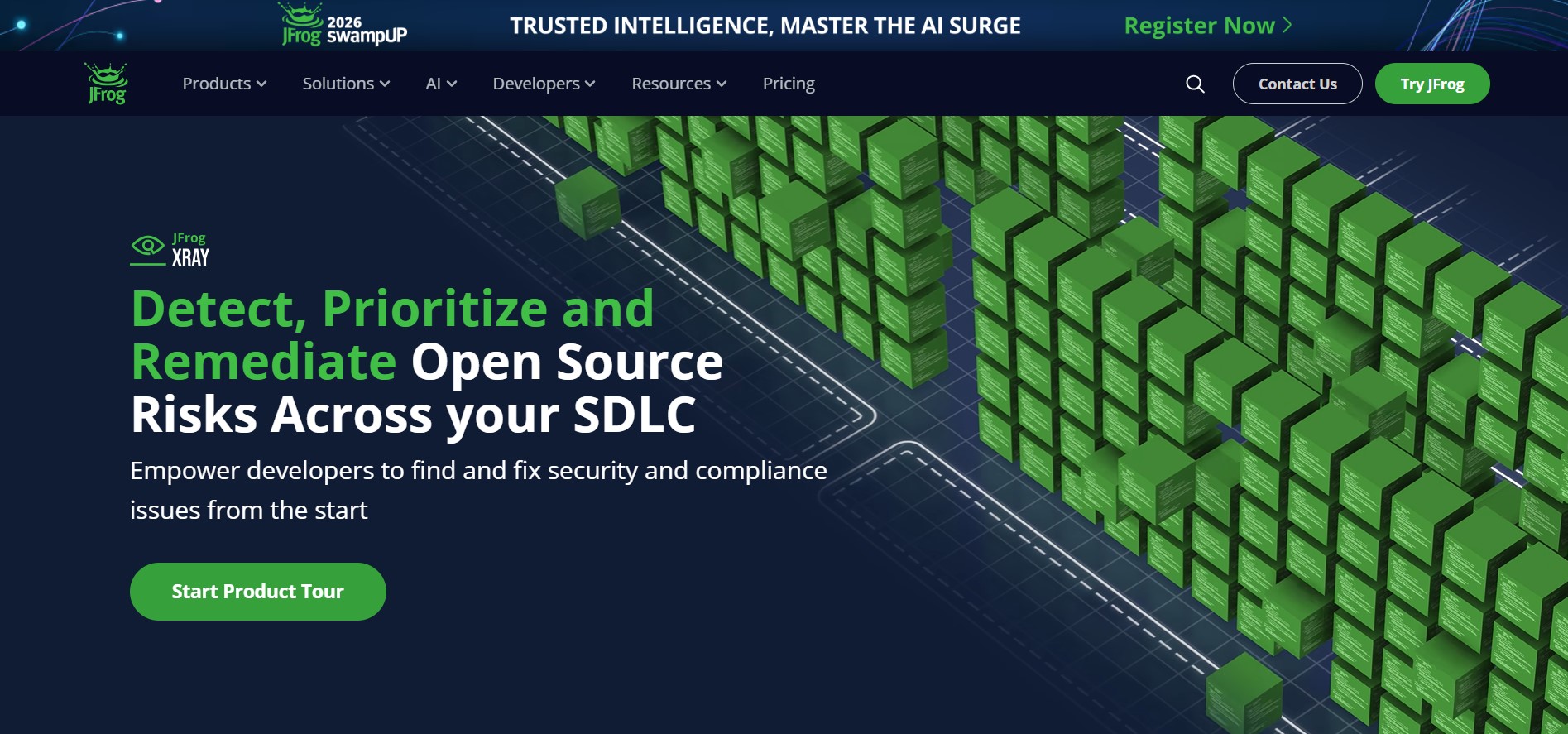
JFrog Xray is an enterprise-level software composition analysis tool (SCA), that helps developers identify, prioritize, and remediate security vulnerabilities and license compliance issues in open source software at early development stages.
Through JFrog’s solutions, development teams can scan their code as they write it. In contrast, DevOps and Security teams can set up governance controls and security checkpoints on binaries, helping both teams cut through security noise.
JFrog Xray’s key capabilities include:
- Early detection and quick remediation
- Developer productivity and experience
- License compliance
- Operational risk management
- Malicious package detection
Pricing: For enterprises, the pricing starts at $950/ month.
Choose for: Early detection, prioritization and remediation of open source risks.
3.Snyk
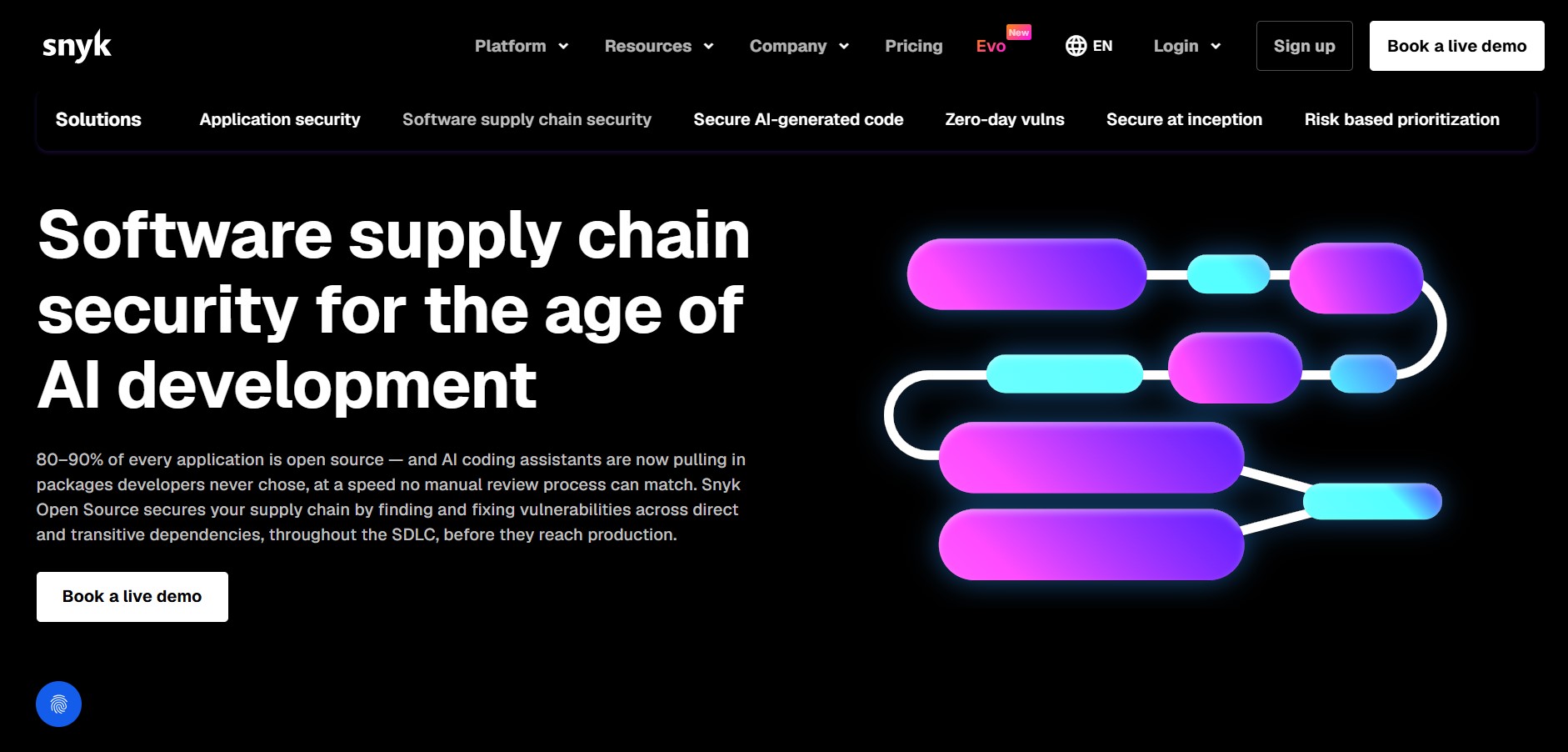
Snyk’s software supply chain security solution focuses on finding, catching, and fixing malware and security vulnerabilities throughout the SDLC and preventing them from reaching production. Developers get real-time scanning, while AppSec teams gain full visibility and governance into what’s in every application, down to the deepest transitive dependencies.
Snyk’s key capabilities include:
- Extensive visibility
- Actionable remediation and automated prevention
- AppSec governance at scale
- Software transparency with SBOMs
Pricing:
- Free plan for individual developers and small teams
- Paid plans start at $25/ month per contributing developer (for bigger development teams)
Choose for: Finding and fixing early vulnerabilities before they reach your devices.
4.Sonatype Nexus Lifecycle
Sonatype Lifecycle is an SCA tool for open source security, aimed at finding and fixing vulnerabilities, malware, licence and architectural risks at early stages. It easily integrates with the most common development tools and supports 20+ languages and packages.
Sonatype Lifecycle’s key capabilities include:
- Dependency management with automated waivers and Golden Pull Requests
- Flexible policy engine
- Contextual risk prioritization
- Instant visibility and governance
- Built-in exemption and management
- Open source AI model support
Pricing: The paid plans start at $1620/ year.
Choose for: Automatically finding and fixing risky open source dependencies without breaking your code.
Wrapping Up
Aikido, Snyk, Sonatype Lifecycle, and JFrog Xray each protect the software supply chain in their own way, so the best choice depends on what your company needs most.
But one thing stays true no matter which tool is picked: supply chain security isn’t a one-time check. It has to be part of how teams build software every single day.