
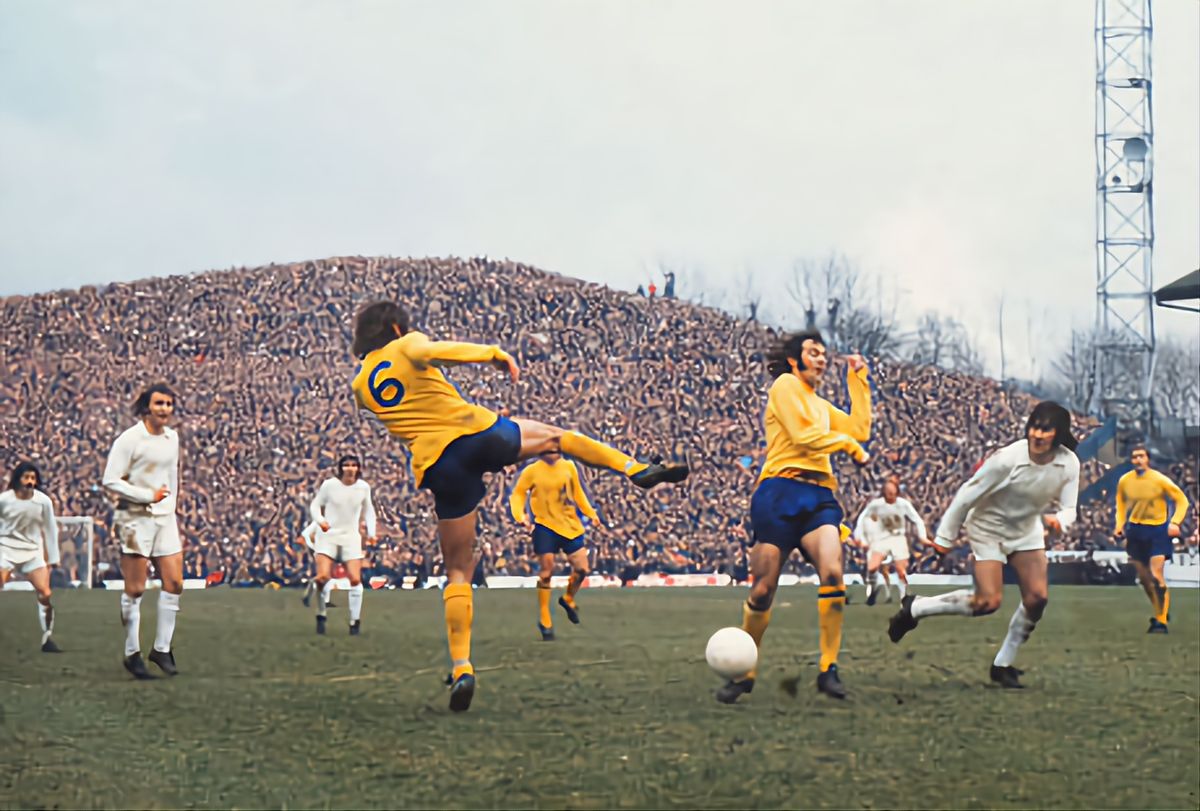
Modern fan photography has turned the act of watching football into a creative process, where every angle, gesture, and tactical pattern can become part of a visual story that lives far beyond the final whistle. For fans who follow full matches rather than just clips, this shift matters because the camera in the crowd is no longer just recording celebrations; it is recording pressing triggers, line heights, and the way supporters react to momentum swings in real time.
Why Fan Photography Became Central to Matchday
Fan-led photography moved from a niche hobby to a core part of matchday culture as cameras became smaller, phone image quality improved, and social platforms rewarded raw, in-the-moment visuals. Instead of relying only on broadcast angles, supporters now document their own perspective of tactical shapes, emotional shifts, and crowd behaviour, creating a parallel visual archive to the official broadcast feed.
This matters for live viewing because it encourages fans to watch with more intentionality; when you know you might capture a decisive counter-attack or the exact moment a press breaks, you start tracking off-the-ball movements and collective reactions rather than just following the ball. As more of these images circulate, they educate other viewers about what to look for in the stands and on the pitch, from subtle changes in block height to the way supporters anticipate big transitions.
From Static Souvenirs to Tactical Storytelling
Earlier generations treated fan photos mainly as souvenirs—shots of stadium facades, distant team line-ups, or post-match selfies. Today’s creators push closer to the action and focus on sequences: players shifting into a press, a defensive line stepping up, or the crowd leaning forward collectively before a through ball is played.
That shift turns photography into a form of live analysis, where a series of stills can show how a team’s structure stretches or compresses over a few minutes of pressure. When viewers scroll through such sequences after the game, they see more than emotions; they see the mechanics of how tactical ideas either hold under stress or fall apart as the match tempo changes.
What Tactical Viewers Now Look For in the Stands
As fan photography has become more sophisticated, tactically minded viewers have started to treat the stands as a second layer of data, reading body language and atmosphere alongside the positional play on the pitch. For example, a block of ultras suddenly quietening can signal a tactical shift going wrong, just as an erupting end might coincide with a surge in pressing intensity or repeated regains in the final third.
This dual focus—on fan reactions and the team’s structure—creates a richer viewing experience, where supporters track triggers like full-backs being pinned, midfielders being outnumbered, or forwards being forced wide, then later cross-check those impressions against photos taken during those exact spells of pressure. Over time, that habit helps fans build an internal library of situations, making it easier to anticipate tactical responses in future fixtures.
How Live Viewing Shapes Better Fan Content
Fans who create visual content while watching full matches quickly realise that their best images come from anticipating patterns rather than chasing random moments. They start reading when a team is preparing to spring a counter, when a press is about to trap a build-up, or when a set-piece routine is unfolding, and position themselves to capture the key movement before it becomes obvious on television.
That anticipation loop improves both their content and their match understanding; each time they review a sequence of shots, they see which cues they read correctly and where they misjudged the rhythm of the game. As those lessons accumulate across a season, their eye for timing sharpens, and their images begin to capture not just celebrations but the underlying logic of why a chance or defensive collapse happened in the first place.
Learning xG and Chance Quality Through Live Stadium Moments
Many fan photographers unintentionally train themselves to think in xG terms by focusing on where chances are created, how clear the shooting lane looks, and how many defenders are between the ball and the goal at the point of contact. They notice that a tight-angle volley from outside the box looks spectacular in a photo but usually carries lower chance quality than a cut-back to an unmarked runner on the penalty spot, even if the latter appears visually calmer in the moment.
By comparing their images with post-match shot maps and xG dashboards, these fans start to connect the feel of an opportunity in real time with its statistical weight after the final whistle. Over time, that connection helps them recalibrate instinctive reactions—recognising when a supposedly “wasteful” team actually produced strong underlying chances and when a clinical-looking win was built on low-probability finishing spikes rather than repeatable patterns.
Deepening Understanding Through ดูบอลสด and Real-Time Observation
When supporters commit to following full matches through ดูบอลสด, they place themselves inside the flow of each game in a way that highlights details which never appear in short highlight packages. Watching live allows them to see how a pressing trap is repeatedly set on one side, how a full-back is isolated two-versus-one for several phases, or how a striker keeps making decoy runs to stretch the defensive line even when the ดูบอลสด changy does not arrive. In that context, fan photography and clips become tools for freezing specific moments within a continuous stream, helping viewers revisit the exact passages where xG spikes, finishing variance, and tactical adjustments either reinforce or contradict their original impressions from the live experience.
Practical Workflow: How Fan Photographers Watch More Tactically
When fans decide to take their photography and analysis more seriously, the way they watch a match often follows a repeatable sequence that blends observation with timing. Instead of reacting only when the stadium roars, they map the pitch mentally into zones and phases, then choose which elements to track with the camera at different times.
- Scan initial shapes and distances between lines during the first 10–15 minutes to establish a baseline of each team’s structure.
- Identify which flank or central corridor is being overloaded most frequently and position yourself to see runs into that channel.
- Track pressing triggers such as backwards passes, heavy touches, or passes into specific opponents, noting how the crowd responds to recurring patterns.
- During set pieces, focus on second-ball zones and edge-of-box runners rather than only on the primary target area.
- In the final 20 minutes, shift attention to fatigue signals—slower recovery runs, stretched distances between units, and declining pressing intensity—as these often precede decisive chances.
By following a sequence like this, fan photographers collect images that explain the story of the game rather than isolated highlights. Viewers who later study those photos can reconstruct how the match evolved—from early probing, through tactical adjustments, to late-game chaos driven by tired legs and bolder risk-taking—making the visual record a practical tool for understanding performance trends rather than just a gallery of emotional reactions.
Visualising Match Flow: Simple Table for Live Observers
To turn the instinct of “the game feels different now” into something more concrete, fans can pair their photos with a simple table that logs key stretches of play and their underlying patterns. Even without full tracking data, a structured snapshot of match segments helps connect the timing of images with the logic of tactical swings.
| Match phase (minutes) | Main territorial trend | Chance quality feel vs xG | Crowd behaviour snapshot | Likely tactical explanation |
| 0–15 | Balanced, teams testing each other | Few shots, low xG, cautious play | Crowd steady, reacting to near-misses | Both sides prioritising structure over risk |
| 16–35 | Home side pushes higher | Several box entries, moderate xG | Noise spikes with each regained ball | Aggressive press, full-backs stepping into midfield |
| 36–55 | Away side counters into open space | Fewer shots but big chances | Mixed reactions, tension after breaks | Home line too high, counters exploiting vacated zones |
| 56–75 | Game slows, more midfield duels | Scrappy shots, low xG | Chatter, songs, occasional frustration | Fatigue and tactical caution reining in risk |
| 76–90+ | Chaotic transitions both ways | High xG flurries in short bursts | Stadium surges with every turnover | Stretched spacing, fresh subs, end-game gambles |
Working with a framework like this encourages fans to match each photo or short clip with a specific phase and explanation. Over multiple games, they begin to see recurring patterns—such as certain teams consistently losing control after half-time or thriving in chaotic final stretches—which sharpens their ability to identify similar momentum shifts as they happen in future live matches.
Summary
Modern fan photography has evolved into a form of live analysis that changes how supporters experience full matches, shifting attention from isolated highlights to the underlying tactical and emotional patterns that shape each game. By combining sharper observation, simple analytical frameworks, and a commitment to documenting specific phases of play, fans create visual records that help them and others read structures, chance quality, and momentum more clearly the next time they watch a match from the stands or at home.