The beauty industry runs on visual content in a way that few other categories can match. A skincare product needs to communicate texture, absorption, and radiance. A lip color needs to be seen in motion — the way it applies, how it catches light, how it reads across different skin tones. A fragrance, despite being an entirely sensory experience, has to be translated into something visible and emotionally resonant on a screen. Beauty brands are essentially in the business of manufacturing desire through imagery, and the video content they produce is one of the primary vehicles for doing that.
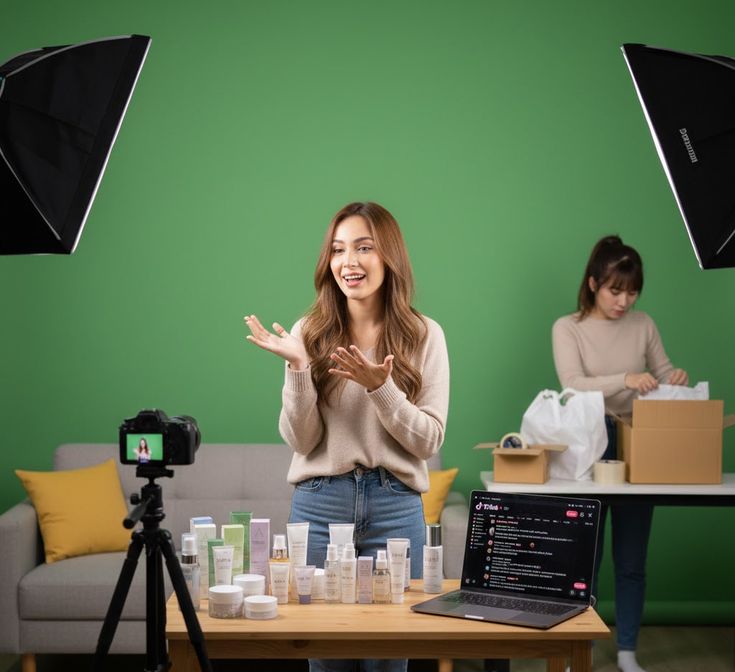
The production requirements that come with this are significant. Beauty video shoots are among the most technically demanding in the commercial world. Lighting has to be calibrated precisely to show skin texture without being unflattering. Camera lenses and focus distances need to be chosen carefully for extreme close-up work. Makeup application on camera, product texture demonstration, before-and-after sequences — these all require specialist expertise behind the camera and significant setup time in front of it. A single day of beauty video production, done properly, is an expensive undertaking.
For indie beauty brands and mid-market labels trying to compete visually with the major players, that production cost is a recurring obstacle. Veo 4 is becoming part of how some of those brands are working around it.
What Beauty Video Actually Needs to Communicate
Before talking about how Veo 4 fits into beauty content production, it’s worth being clear about what good beauty video actually needs to do. At its core, it needs to make the product look desirable and credible. Desirable means the viewer wants to experience what they’re seeing — the glow, the finish, the scent impression, the texture. Credible means the product behavior shown on screen feels like an honest representation of what a real person would experience using it.
Both of these things are difficult to fake, and audiences in the beauty space are particularly attuned to when something feels off. This means that AI-generated beauty video has a higher bar to clear than AI video in some other categories, because the subject matter — how a product interacts with skin, how a texture moves, how a finish catches light — is something viewers evaluate with personal reference points.
Veo 4 handles the visual language of beauty content reasonably well in specific applications. Product showcase clips — a serum bottle catching warm light, a lipstick being uncapped and turned slowly, a cream being dispensed onto clean skin — are well within what the model can generate convincingly. These are the foundational visual elements of beauty content, and producing them at scale through AI generation rather than repeat studio sessions is a legitimate efficiency gain.
The Product Showcase Problem at Scale
Beauty brands with large product lines face a version of the same catalog problem that affects e-commerce more broadly, but with additional complexity. A skincare brand might have forty or fifty SKUs across cleansers, serums, moisturizers, SPF products, and treatments. Each one ideally needs video content showing the product itself, the texture, and ideally a use demonstration. Producing all of that through traditional shoots is a multi-shoot, multi-day undertaking that most mid-market brands simply cannot fund on a regular cadence.
What typically happens is that hero products get the production attention and the rest of the catalog gets static imagery at best. This creates an uneven experience for customers — the products a brand chooses to promote heavily get rich visual content, while equally good products in the same line get minimal representation. Sales often reflect this imbalance, which creates a self-fulfilling dynamic where under-promoted products underperform and never get the production investment that might help them.
Veo 4 offers a way to break that cycle. By generating product showcase video for the broader catalog — using reference images of the actual products as the foundation — brands can create a baseline of video content across all SKUs without the proportional increase in production cost. The generated clips aren’t replacement for high-end hero content, but for product pages, email campaigns, and social media, they serve the purpose effectively.
Texture and Light: Where the Model Does Well
One of the more pleasant surprises for beauty brands experimenting with Veo 4 is how the model handles light interaction with product textures. The way a gel cleanser catches light differently from a cream moisturizer, the subtle sheen of a highlighting product, the opacity progression of a foundation being blended — these are genuinely difficult visual behaviors to render convincingly, and Veo 4 handles many of them with more accuracy than earlier AI video tools managed.
This matters because texture and light interaction are arguably the most important visual elements in beauty product content. A skincare serum that doesn’t look like it has a real liquid consistency won’t generate the tactile interest that drives purchase consideration. A powder product that looks flat rather than showing its characteristic silkiness misses the key sensory impression the brand wants to create.
Veo 4 benefits here from being a multi-modal model — you can provide both a reference image of the product and a detailed text description of the specific visual behavior you want to see, which gives the generation process more to work with than a text prompt alone. The combination of visual reference and descriptive language produces results that are more precisely aligned with what the brand actually needs.
Consistency Across Skin Tones and Demographics
One challenge that has historically made beauty video production expensive is the expectation — increasingly a genuine industry standard rather than just a best practice — that product content should represent a diverse range of skin tones. A foundation line that covers thirty shades needs to show how different shades look on different skin, which traditionally means either booking multiple models for every piece of content or accepting that your visual content only represents a fraction of your customer base.
Veo 4’s ability to generate video from reference images creates a more efficient path to this kind of representation. By using reference images that span the demographic range the brand serves, and generating product demonstration content from those references, brands can produce video content that represents a genuinely diverse set of customers without having to coordinate and fund proportionally larger shoots every time.
This is not a trivial benefit. Inclusive beauty content is something customers increasingly expect and reward with loyalty, and brands that fail to produce it lose ground to competitors who do. Reducing the production cost barrier to inclusive content creation means more brands can meet this expectation without it representing a budget-breaking commitment.
Where the Workflow Makes Practical Sense
The brands finding the most value in Veo 4 for beauty content are using it selectively rather than universally. High-end hero content — the campaign video for a major product launch, the editorial video tied to a seasonal collection — still benefits from full production treatment. The craft and intentionality that a skilled director and DP bring to that level of work produces results that AI generation currently can’t match.
But the volume content — the product page clips, the social media assets, the email visuals, the supplementary content that supports the hero pieces — is where AI generation offers genuine practical advantages. Producing that volume through traditional shoots would require budgets and timelines that most beauty brands can’t sustain. Generating it with Veo 4, anchored by real product photography and clear creative direction, produces output that serves the purpose and keeps the brand visually active across channels without draining the production budget that’s better spent on content that genuinely requires it.