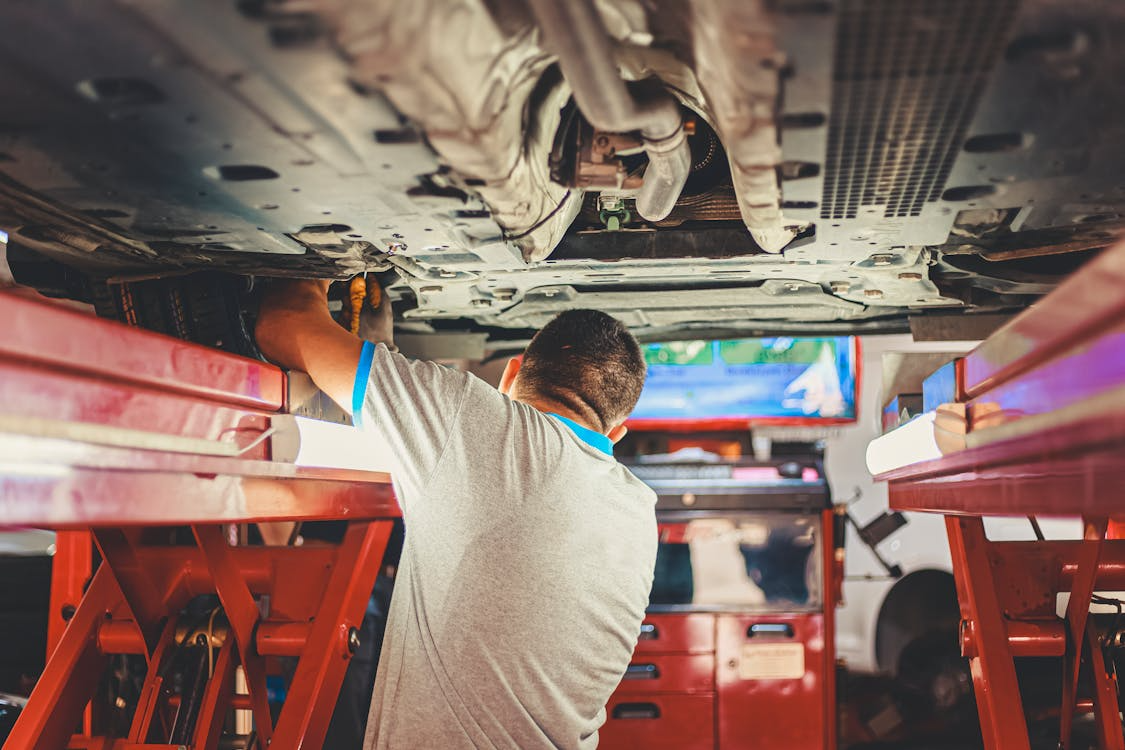
Ever wondered what actually happens to your car after a fender bender?
Drivers tend to leave their car at the shop with the keys and hope for the best. However, getting your car repaired by an auto body shop is much more complex. There are several steps that happen to ensure your car is restored.
Here’s what happens from drop off to drive away…
Here’s what’s coming up:
- Why The Auto Body Repair Process Matters
- Step #1 — The Initial Assessment
- Step #2 — Disassembly & Damage Discovery
- Step #3 — Structural & Body Repair
- Step #4 — Refinishing & Painting
- Step #5 — Reassembly, Calibration & Quality Control
Why The Auto Body Repair Process Matters
Modern cars are not the simple metal shells they used to be.
Cars have sensors, cameras, crumple zones and high strength steel everywhere. One little error in the auto body repair process can compromise your safety systems.
Automotive Collision Repair is another huge industry. The worldwide automotive collision repair market is projected to reach USD 207 billion by 2025. For better understanding of what goes into a comprehensive auto body repair job, it can be beneficial to breakdown each step individually.
Repair Complexity Is Also Increasing. The latest statistics indicate calibrations were up to 35.6% of estimates in Q3 2025, compared to 26.9% a year earlier. Translation: More vehicles require their electronics to be recalibrated after an accident.
Pretty important stuff, right?
Step #1 — The Initial Assessment
Everything starts with the assessment.
The Shop conversation is the very first meeting with you, the shop and (usually) the insurance company. A trained estimator walks around your car examining every panel, crevice and surface. They are checking for visible damage as well as the subtle dings hidden below.
The estimator usually checks:
- Bent panels and crumpled body parts
- Misaligned doors, hoods or trunk lids
- Cracked bumpers or broken trim
- Suspicious paint chips that hint at deeper damage
- Frame or structural shifts you can’t easily see
After the visual inspection they compile a written estimate of all parts that need replacement and labour hours.
Disclaimer: Any reputable shop will tell you that the first estimate is a ball park figure. Hidden damage will ALWAYS be found later.
Step #2 — Disassembly & Damage Discovery
Now the real fun begins.
Technicians begin disassembling parts of your car so they can assess the damage. This phase is referred to as “tear down,” and it’s one of the most critical steps.
Why? Because crash damage conceals itself. That bumper may look great from the outside but could have a cracked support bar hidden behind it. That door may open with ease but have a bent hinge or damaged side impact beam.
During disassembly, the team will:
- Remove damaged panels, lights and trim
- Check the underlying structure for hidden cracks
- Document everything with photos
- Update the estimate with newly discovered damage
- Order extra parts needed for the repair
This is also where they verify what will be repaired vs replaced. Some parts can be bent back to use again. Others must be replaced for safety concerns.
A revised estimate is then sent through to the insurance company so the claim can be updated. This is called a supplement. Don’t be alarmed if your repair takes longer than the original quote suggested. It’s pretty much guaranteed once tear down begins.
Step #3 — Structural & Body Repair
Once everything is documented and parts are on order, the heavy work starts.
If your car’s frame got damaged, here’s where it gets repaired. Frame straightening machines pull your vehicle’s structure back to original specifications. Technicians use manufacturer’s data to measure everything so your car can be restored to factory perfection.
For panel damage, the team will:
- Hammer out small dents using metal working tools
- Use paintless dent repair (PDR) where possible
- Weld in new panels when old ones are too far gone
- Apply body filler to smooth out imperfections
- Sand everything down to prep for paint
This is artisan level work right here. A good body tech can make a twisted fender look straight out of the showroom. A bad one will leave waves and uneven gaps you’ll spot every time you walk past your car.
Step #4 — Refinishing & Painting
Now your car heads to the paint booth.
Refinishing is as much science as it is art. The object is to blend the new paint in perfectly with the existing colour so the repair can’t be seen. Years of sun have faded the original paint on your car slightly. The painter must create a custom mix to match that faded colour.
The refinishing process usually goes like this:
- Prep: Sand and clean every surface that will be painted
- Masking: Cover up any area that shouldn’t get paint
- Primer: Apply a base coat that helps the paint stick
- Base coat: Spray on the actual colour
- Clear coat: Add a protective glossy layer over the top
- Bake: Cure the paint in a heated booth
After painting, panels receive one final buff. A proper paint job should match seamlessly with the rest of your vehicle. If you can spot the repair from a few steps back, the painter didn’t do their job properly. Top shops often blend the new paint into the panels next to the repair to hide any tiny colour differences.
Step #5 — Reassembly, Calibration & Quality Control
The final stage is putting your car back together.
Technicians replace every panel, light bulb, sensor and trim piece. They double check that all gaps are even and all bolts are torqued to spec. Then there is the final step most aren’t aware of… ADAS calibration
Modern cars have cameras and sensors that control things like:
- Lane keep assist
- Automatic emergency braking
- Adaptive cruise control
- Blind spot monitoring
- Parking sensors
These can get knocked out of alignment when you crash. They will have to be recalibrated if they do. Do not ignore this step. Your safety features may not activate when they should, or they could trigger when they shouldn’t. Either situation puts you and your passengers in danger.
After calibration, your car will receive a final quality control inspection prior to being returned to you. The shop will also wash the exterior and vacuum the interior so it feels like driving away in a fresh vehicle.
Final Thoughts
Auto body repair can seem like many steps. However, each step is crucial.
Every step along the way from initial inspection to final calibration is performed to ensure your vehicle is safe, dependable and looks beautiful once again. Okay, let’s review:
- Get a thorough assessment and written estimate
- Allow time for disassembly and damage discovery
- Trust structural and panel repairs to skilled techs
- Expect careful refinishing and paint matching
- Make sure ADAS calibration and quality control are included
Select a legit shop. If something doesn’t feel right, walk away. Your life may depend on it.