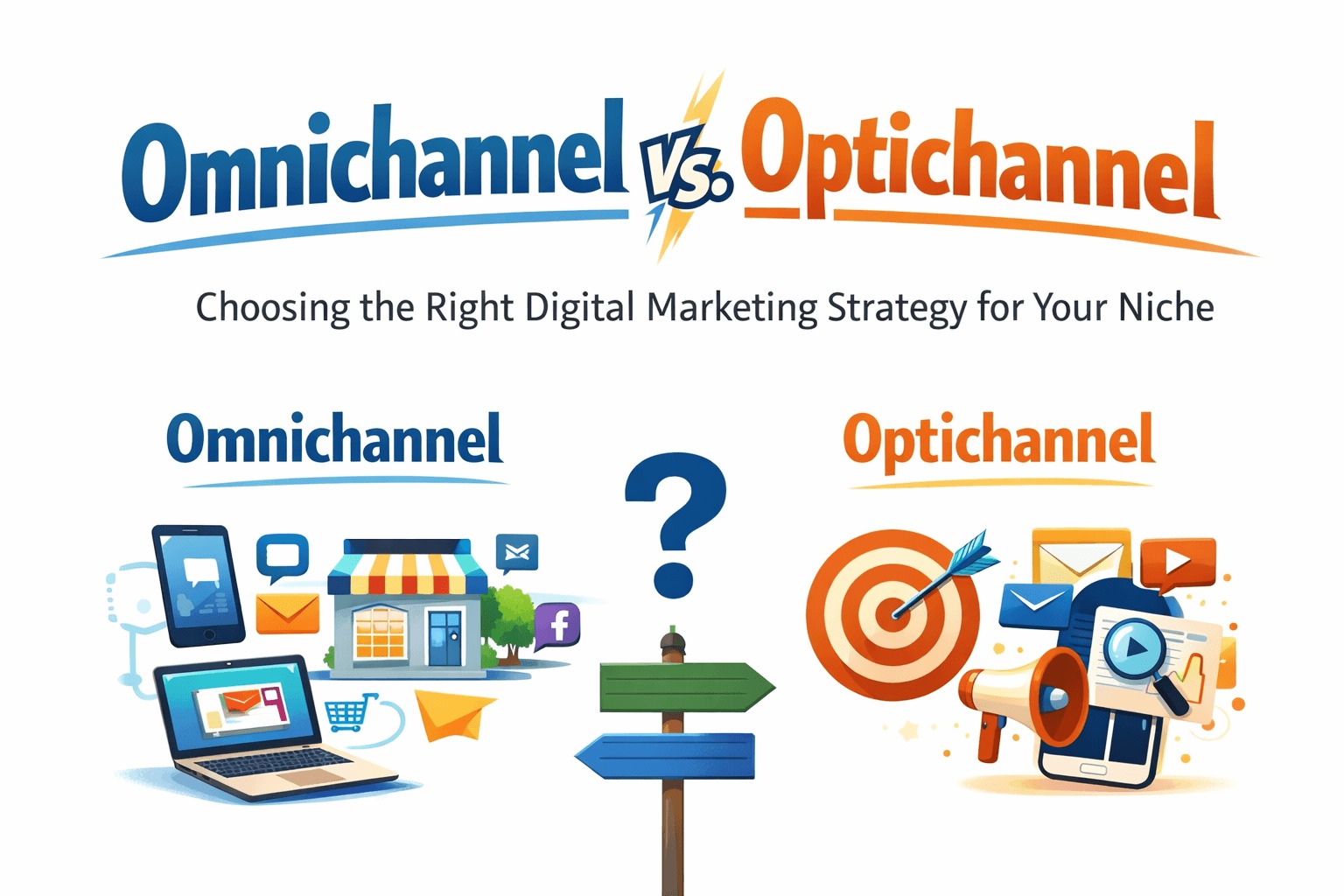
Optichannel and omnichannel marketing are polar opposites. Which one you decide to implement for your business depends on what you want your business to do and how it engages with the customers. Omnichannel works towards a cohesive experience across all platforms, while optichannel indexes to the best-performing channels based on customer behaviour. For many brands, particularly those that have a marketing strategy for small business, how they move forward will depend on budget, audience, and growth targets.
A planned digital marketing strategy allows businesses to choose whether they need to be everywhere or just limited to the channels that create maximum impact. Knowing the difference between these two approaches is vital to developing a digital marketing strategy that increases engagement, enhances conversions, and nurtures long-term growth.
Understanding Omnichannel Marketing
Omnichannel marketing is a digital marketing strategy that links all customer touchpoints together, like websites, social media, email, mobile apps, and even offline experiences, to create one seamless experience.
Rather than running distinct campaigns on each platform, omnichannel combines campaigns across different channels so customers experience a consistent, cohesive brand journey no matter where they are.
Key Characteristics of Omnichannel Marketing
1. Seamless Customer Experience Across Channels
Omnichannel guarantees that the customers can have a uniform experience, whether they are using your brand on social media, on your website, through email, or otherwise. This consistency creates trust and enhances the brand image across all digital touchpoints.
2. Data Integration for Personalisation
This digital marketing technique compiles data from numerous platforms to understand customer behaviour and preferences.
Retailers can then tailor their marketing messages, which improves engagement and conversion rates.
3. Improved Customer Retention
According to studies, using omnichannel engagement can save up to 91% compared to single-channel strategies.
In small business marketing, improving retention is usually less expensive than finding new customers.
What is Optichannel Marketing?
Optichannel marketing is a modern approach that emphasises optimising the best channels instead of using all channels at once.
Instead of spreading resources thin, optichannel focuses on finding which channels are most valuable for a specific audience or campaign.
Key Characteristics of Optichannel Marketing
1. Prioritised Channel Selection
Optichannel, on the other hand, assesses where you get the best bang for your buck and maximises there.
This makes it a cost-effective digital marketing strategy for businesses on a shoestring budget.
2. Intent-Based Marketing
Optichannel analyses customer behaviour and intent to decide when/where marketing messages should be served.
This ultimately helps customers receive highly relevant content as opposed to general campaigns.
3. Cost-Efficient Campaign Execution
A very specific approach means less unnecessary marketing spend, but the business continues to perform strongly.
Optichannel is a modern marketing strategy for small businesses anywhere efficiency and scalable reach are required, in part because of that.
Omnichannel vs Optichannel: Key Differences
Knowing the distinctions between these strategies allows companies to choose the right digital marketing strategy according to their goals.
1. Channel Coverage vs Channel Optimisation
Omnichannel Approach
Omnichannel is about matching consumers to their experience platform of choice.
Each of the channels works in unison to drive customer consideration, from awareness to conversion.
Optichannel Approach
Optichannel pinpoints which channels are the most important for a given audience or moment.
Brands are no longer everywhere; they are only where they work.
2. Customer Experience vs Marketing Efficiency
Omnichannel Strategy
This method focuses on customer experience and brand consistency across all channels.
Users can seamlessly shift their work from one device and platform to another and pick up right where they left off.
Omnichannel Marketing
Optichannel prioritises efficiency and performance.
It locks spend to channels, proving a measurable outcome.
3. Budget and Resource Allocation
Omnichannel Marketing
Needs more investment in tech, data integration & marketing teams.
This digital marketing strategy is widely used by larger businesses to ensure brand consistency across markets.
Optichannel Marketing
Better as a small business marketing strategy because it concentrates on fewer but more impactful channels.
Which Strategy Works Best for Your Niche?
Whether you go for omnichannel or optichannel really depends on your objectives, budget, and audience behaviour.
Omnichannel is most effective for established brands or customer-facing sectors, such as retail or e-commerce, where a smooth experience across platforms is necessary. It helps maintain a coherent digital marketing strategy across all touchpoints.
If you are a small business or startup with limited resources, then optichannel is the perfect fit as a marketing strategy. By zeroing in on what works best, this allows businesses to increase their return on investment while better identifying where audiences are.
Final Thoughts
Ultimately, omnichannel and optichannel strategies can enhance your digital marketing efforts, yet which one is right for you relies on your goals, audience, and resources. Omnichannel is ideal for brands with an intention to provide a seamless experience across all platforms, and optichannel helps businesses zero in on the channels that matter most.
For many Australian brands starting out, concentrating on small business marketing strategy and then scaling is the right play. Looking for a digital marketing strategy that gets results for your business? There is a difference between what is taught and the real-world situation, so work with people who can create a relevant small business marketing strategy to accelerate growth and long-term results.
FAQs
1. Why is omnichannel marketing important in digital marketing strategies?
Omnichannel marketing matters because it provides a consistent customer experience on various platforms, thus increasing engagement, brand trust and conversion rates.
2. What is the omnichannel promotional strategy?
An omnichannel promotional strategy brings together marketing campaigns across all of the various channels they use (social, email, and search engine as well as offline) so that customers experience a single cohesive journey.
3. What is the difference between “optichannel” and “omnichannel”?
While omnichannel is focused on linking all channels together to provide a seamless experience, optichannel is about leveraging the most ingrained and impactful of those channels based on consumer intent and campaign goals.