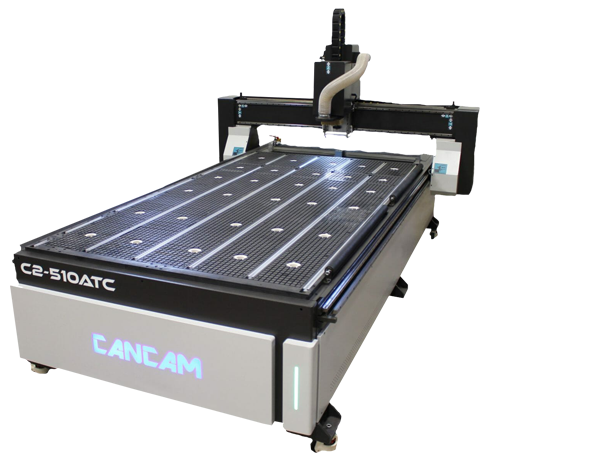
Walk into a modern woodshop today, and you’ll instantly notice that the soundscape has changed. Instead of constant manual cutting and sanding, you hear the steady, deliberate motion of a machine that never rushes or pauses. Industrial wood CNC machines have become the backbone of serious woodworking operations, and they are redefining how these businesses think about speed, precision, and scale. CNC routers now hold a leading share (34.55%) of revenue in the woodworking machinery market, highlighting the increasing role of CNC automation in woodworking shops.
Solid, Reliable Results Across Products
An industrial wood CNC machine translates digital designs into physical reality with consistency. Once a design is programmed, the machine executes it the same way every single time, whether it is the first cut of the day or the thousandth. For shops producing cabinetry, furniture, architectural millwork, or custom components, that reliability removes one of the biggest operational headaches: variability.
Perfectly-Cut Complex Designs
Precision is the most obvious advantage, but it is only part of the story. Industrial CNC machines excel at handling complex geometries that would be time-consuming or impractical by hand. Intricate joinery, tight tolerances, curved profiles, and detailed inlays can all be produced with a level of repeatability that manual methods would be hard to match. This allows you to offer higher-end designs without increasing labour complexity, which directly improves your margins.
Speed that Helps You Help Your Business
A recent report found that small businesses that adopt digital tools see average productivity increases of 29 percent, generating about $1.60 in economic output for every dollar invested in those technologies.
Jobs that once took hours of setup and manual cutting can now be completed in a fraction of the time with an industrial CNC wood router. That speed compounds across production runs, freeing skilled workers to focus on more important tasks.
There’s a misconception that CNC automation removes craftsmanship from woodworking. In practice, it often does the opposite. By handling the most repetitive and physically demanding tasks, CNC machines allow craftspeople to apply their expertise where it matters most. Material selection, finishing techniques, structural decisions, and design refinement all remain human-driven. The router becomes a tool that amplifies skill rather than replacing it.
Maximum Scaling Capability at Minimum Cost
From a business perspective, scalability is where industrial CNC machines truly earn their reputation. A shop equipped with CNC technology can move from one-off custom jobs to small or mid-size production runs without rebuilding its workflow from scratch. Digital files can be adjusted, saved, reused, and optimized over time. As demand grows, output increases without a proportional rise in labour costs, which is a rare advantage in manufacturing.
Better for the Planet & Your Bottom Line
Waste reduction is another practical benefit that resonates with both business owners and sustainability-minded clients. CNC software optimizes tool paths and material layouts, reducing offcuts and errors. Fewer mistakes mean fewer discarded panels, less rework, and more predictable material costs. Over time, that efficiency can significantly improve profitability while supporting more responsible resource use.
Smarter Operational Integration
Industrial wood CNC machines also integrate seamlessly with modern digital workflows. CAD and CAM software, inventory systems, and even customer approval processes can all connect to a single source of truth. This reduces miscommunication, shortens revision cycles, and creates clearer timelines for clients. For businesses competing on reliability as much as price, that operational clarity becomes a major differentiator.
Being Equipped for the Future
Perhaps the most compelling reason these machines continue to gain traction is future readiness. As customer expectations evolve toward customization, faster turnaround, and consistent quality, CNC-equipped shops are better positioned to adapt. New materials, new designs, and new market demands can often be addressed with software updates and tooling changes rather than wholesale process overhauls.
The Bottom Line
Industrial wood CNC machines change how woodworking businesses think about growth, quality, and resilience. In an industry where margins are tight and expectations are high, having a machine that truly eats wood projects for breakfast can be the difference between keeping up and pulling ahead.